What Makes Lifting Machinery Safer on Crowded Sites?
On crowded construction, mining, or infrastructure sites, lifting machinery becomes safer when engineering precision meets disciplined site control.
For quality control and safety managers, the challenge is not only preventing overloads or mechanical failure, but managing proximity and change.
This article explains the technologies, procedures, and decision intelligence that improve stability, visibility, and accountability in confined, high-risk lifting environments.
The real safety question is not the crane alone
When people search this question, they usually need more than a list of crane features or compliance phrases.
They want to know which controls actually reduce incidents when space is limited, schedules are compressed, and multiple trades overlap.
For safety managers, safer lifting machinery means predictable behavior under pressure, verified capacity, visible hazards, and enforceable work boundaries.
For quality control teams, it also means traceable inspection records, repeatable lifting procedures, and fewer uncontrolled deviations during critical operations.
The core judgment is clear: equipment safety improves most when machine intelligence, lift planning, ground control, and human discipline work together.
Load control starts with knowing the true working conditions
Overload protection is essential, but crowded sites often create risks before the rated capacity is even challenged.
Short-radius lifts, uneven ground, wind exposure, and obstructed swing paths can reduce safe margins faster than operators expect.
Modern lifting machinery is safer when load moment indicators, rated capacity limiters, and boom angle sensors are correctly calibrated.
These systems help operators see when a lift approaches unsafe combinations of radius, load weight, boom length, and configuration.
However, safety managers should not treat electronic protection as a substitute for pre-lift verification and disciplined execution.
The load weight, rigging weight, hook block, wind area, and dynamic factors should be confirmed before the lift begins.
Quality teams should check whether the documented configuration matches the real machine setup, including counterweights, outriggers, mats, and attachments.
Many serious incidents begin with small assumptions that are never challenged until the machine is already under load.
Ground stability is the hidden foundation of safe lifting
On congested sites, people often focus on overhead hazards while underestimating what is happening beneath the machine.
Crawler cranes, mobile cranes, and other lifting systems rely on stable bearing conditions to maintain their calculated capacity.
Backfilled trenches, temporary access roads, wet soil, underground utilities, and slab edges can all compromise the lifting base.
Safer lifting machinery depends on ground bearing assessments that are practical, documented, and updated when site conditions change.
Outrigger mats, crane pads, steel plates, or engineered platforms should be selected according to load distribution requirements.
Safety managers should require evidence, not assumptions, when a crane is positioned near excavations, slopes, culverts, or underground voids.
For crawler equipment, the travel path matters as much as the lifting position, especially during pick-and-carry operations.
A controlled lift plan should define ground preparation, exclusion zones, monitoring responsibilities, and stop-work triggers for settlement or cracking.
Visibility technology reduces blind spots, but only with site rules
Blind spots become more dangerous when pedestrians, vehicles, materials, scaffolds, and temporary structures compete for the same workspace.
Cameras, proximity sensors, radar systems, and anti-collision devices can significantly improve awareness around lifting machinery.
For tower cranes and large mobile cranes, zoning systems help prevent hooks, jibs, or loads from entering restricted areas.
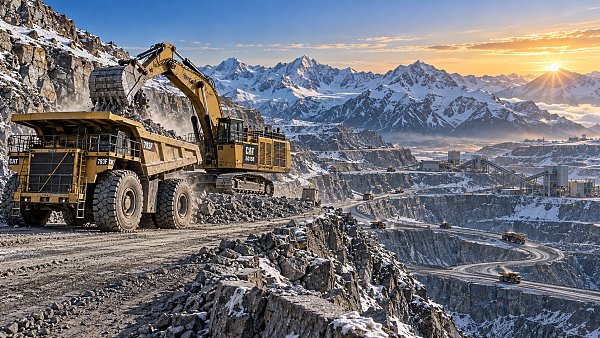
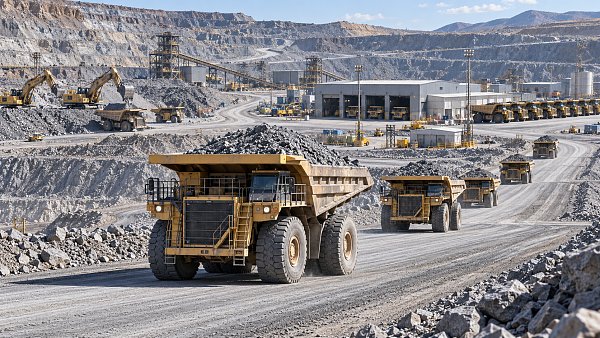
On industrial and mining sites, collision avoidance becomes especially important where haul trucks, excavators, and lifting equipment operate together.
Yet visibility technology works best when it supports clear operating rules, rather than becoming another ignored alarm source.
Safety managers should review alarm thresholds, display placement, operator training, and response procedures before relying on these systems.
Signalers and spotters remain essential where loads travel near workers, structures, live traffic, or existing plant equipment.
The safest sites use technology to remove uncertainty, while still requiring human confirmation at critical decision points.
Exclusion zones must be designed, not improvised
One of the most effective controls on crowded sites is also one of the most frequently weakened.
Exclusion zones often fail because they are marked casually, moved without approval, or ignored during schedule pressure.
Safe lifting machinery operations require exclusion zones that reflect the actual swing radius, load path, landing area, and failure consequence.
A narrow tape barrier may be insufficient if the load could shift, fall, rotate, or strike nearby structures.
The zone should account for dropped objects, tag line movement, counterweight swing, boom deflection, and emergency lowering needs.
Supervisors should communicate who may enter the zone, under what conditions, and who has authority to stop entry.
On multi-contractor sites, access control should be coordinated through permits, daily briefings, and visible field leadership.
The goal is not simply to keep people away, but to prevent unplanned interaction between people, machines, and suspended loads.
Lift planning should match the complexity of the lift
Not every lift requires the same engineering depth, but every lift requires a plan that fits its risk.
Routine lifts still need clear communication, inspected rigging, confirmed landing areas, and understood roles among the crew.
Critical lifts require deeper review, especially when loads are heavy, expensive, irregular, tandem-lifted, or near live operations.
A practical lift plan should define the machine configuration, load details, rigging method, radius, route, weather limits, and personnel roles.
It should also include contingency actions for communication loss, sudden wind, equipment alarms, ground movement, or blocked access.
Quality control personnel add value by verifying that the approved plan matches field execution before and during the lift.
When the site changes, the lift plan should change with it, rather than remaining a document in a folder.
The strongest organizations treat lift planning as a live control process, not a paperwork ritual before work starts.
Rigging quality is where small errors become large failures
Many lifting failures are not caused by the crane itself, but by rigging mistakes that reduce the system capacity.
Wrong sling angles, damaged shackles, poor edge protection, and incorrect attachment points can overload components unexpectedly.
Safer lifting machinery depends on rigging systems that are inspected, certified, compatible, and suitable for the load geometry.
Safety managers should require clear identification of working load limits, inspection status, rejection criteria, and storage practices.
For irregular components, the center of gravity should be calculated or verified before the load leaves the ground.
Trial lifts remain useful because they reveal balance problems, unexpected rotation, or rigging stretch under controlled conditions.
Tag lines should be used carefully, with workers positioned away from pinch points, snap-back zones, and moving equipment.
Good rigging control turns lifting from an improvised activity into an engineered transfer of force and movement.
Operator competence must include crowded-site judgment
A certified operator may understand the machine, but crowded sites demand additional judgment about timing, communication, and surroundings.
Operators need enough authority to pause a lift when visibility, wind, ground conditions, or worker behavior becomes unsafe.
They should be familiar with the specific lifting machinery model, installed safety systems, control responses, and emergency procedures.
Training should include real site scenarios, such as simultaneous vehicle movement, restricted slewing, radio failure, and changing exclusion zones.
Signalers, riggers, and supervisors also need aligned expectations, because one skilled operator cannot compensate for a disorganized crew.
Pre-task briefings should identify the communication method, command hierarchy, emergency stop signal, and conditions requiring immediate suspension.
In high-noise environments, radios, hand signals, and visual confirmation should be tested before the load is lifted.
Competence is not only technical ability; it is the discipline to slow down when the site becomes unpredictable.
Digital monitoring creates accountability when used correctly
Telematics and digital fleet systems now allow managers to review lifting behavior rather than relying only on observations.
Data from lifting machinery can show overload events, bypass attempts, operating hours, configuration changes, and maintenance needs.
For quality control teams, these records support audits, incident investigations, preventive maintenance, and supplier performance evaluation.
For safety managers, trend data helps identify risky habits before they become serious events or near misses.
However, digital monitoring must be connected to action, otherwise it becomes another unused dashboard in the organization.
Managers should define which alerts require immediate response, which trends require coaching, and which events require formal investigation.
Remote monitoring can also support projects using large cranes across multiple sites, where specialist oversight is limited.
The value is strongest when machine data is combined with inspection findings, lift permits, weather records, and supervisor reports.
Maintenance discipline protects safety margins
Crowded sites give machines less tolerance for unexpected failure, because there are more people and assets nearby.
Preventive maintenance is therefore a safety control, not merely a cost management activity for equipment owners.
Wire ropes, hooks, brakes, hydraulics, slew systems, limit switches, and structural components need inspection according to duty severity.
Heavy lifting applications in infrastructure, energy, mining, and petrochemical projects often impose fatigue that exceeds routine assumptions.
Quality managers should examine whether maintenance records are complete, current, and aligned with manufacturer recommendations and local regulations.
Any bypassed safety device, deferred repair, or undocumented modification should trigger immediate review before further lifting operations continue.
Third-party inspections are valuable for critical lifts, but they should supplement, not replace, daily operator checks.
The safest organizations create a culture where reporting defects is rewarded, not treated as an obstacle to production.
Weather and environment need measurable limits
Wind is one of the most important environmental factors for lifting, especially with large panels, blades, tanks, or formwork.
On crowded sites, a swinging load can create immediate danger even when the crane remains structurally stable.
Lift plans should define wind speed limits, gust monitoring methods, and who decides whether work continues or stops.
Rain, snow, fog, dust, lightning, and extreme temperatures can also affect visibility, ground stability, communication, and equipment response.
Mining and infrastructure projects often face remote conditions where weather changes faster than formal reporting systems can react.
Using anemometers, local forecasts, and field observations together gives managers a more realistic risk picture.
Environmental limits should be objective enough to prevent arguments when production pressure rises near the end of a shift.
Clear stop criteria protect both workers and managers by removing ambiguity from high-consequence decisions.
Procurement choices affect safety long before the lift
Safety managers are often involved after equipment arrives, but safer outcomes begin during equipment selection and contracting.
When choosing lifting machinery, buyers should examine capacity, safety systems, service support, operator environment, and data availability.
A machine with advanced protection but poor local maintenance support may create unacceptable downtime and risk exposure.
Contractors should also evaluate whether the supplier provides qualified operators, documented inspections, lift engineering, and emergency support.
For crowded urban or industrial sites, compact footprint, precise controls, and effective visibility aids may matter more than maximum capacity.
Total cost of ownership should include incident risk, permit delays, maintenance quality, training needs, and productivity under restricted conditions.
The best procurement decisions balance lifting power with control precision, documentation quality, and compatibility with the site environment.
This is where strategic equipment intelligence helps organizations compare machines beyond brochures and basic load charts.
A practical checklist for safer crowded-site lifting
Before work begins, confirm that the lift plan reflects the current site layout, ground condition, and equipment configuration.
Verify the load weight, rigging arrangement, center of gravity, lifting points, and landing location with responsible personnel present.
Inspect the lifting machinery, safety devices, rigging gear, communication tools, and access controls before the load is connected.
Establish exclusion zones that match the load path, swing radius, counterweight movement, and possible failure consequences.
Confirm that the operator, signaler, riggers, supervisors, and nearby contractors understand the timing and stop-work conditions.
Monitor wind, visibility, ground movement, unauthorized entry, and equipment alarms continuously during the lifting operation.
After the lift, record deviations, near misses, equipment alerts, and improvement points while the information remains fresh.
This simple cycle helps teams turn each lift into a source of learning rather than only a completed task.
Conclusion: safety comes from controlled interaction
Lifting machinery becomes safer on crowded sites when every interaction is controlled: load, machine, ground, worker, weather, and plan.
No single technology can replace disciplined execution, but modern sensors, telematics, and protection systems strengthen human decision-making.
For safety and quality managers, the most useful question is not whether the machine is powerful enough.
The better question is whether the entire lifting system remains stable, visible, documented, and controllable under real site conditions.
When engineering precision is matched with site discipline, crowded lifting operations become more predictable, auditable, and resilient.