
Are crawler cranes for wind power worth the added cost?
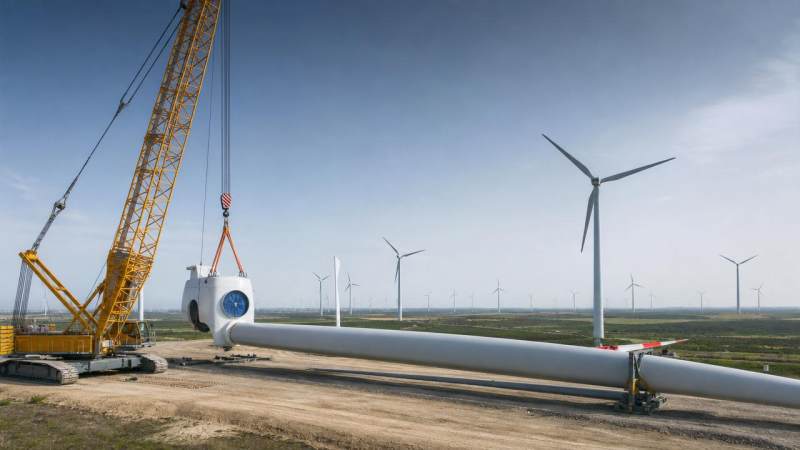
Are crawler cranes for wind power worth the added cost? In many cases, yes—but only when project conditions actually require their advantages. For enterprise decision-makers, the premium is justified not by headline lifting capacity alone, but by whether crawler cranes reduce installation risk, protect schedule certainty, and improve total project economics.
That is the real search intent behind this question. Buyers are not looking for a generic comparison of crane types. They want to know when the higher upfront cost translates into lower total cost of execution, faster turbine erection, safer operations, and fewer expensive delays across complex wind projects.
For this audience, the key concerns are practical and financial. They want to understand how crawler cranes for wind power affect CAPEX, mobilization, site preparation, weather tolerance, productivity, maintenance exposure, and contractor coordination. They also need a decision framework for choosing between crawler cranes and alternative lifting solutions.
The most useful content, therefore, is not broad theory. It is a business-oriented analysis of where crawler cranes create measurable value, where they do not, and which project variables should drive procurement decisions. That is what this article focuses on.
Short answer: crawler cranes are worth the extra cost when they reduce bigger costs elsewhere
For wind power developers, EPC contractors, and fleet planners, the core issue is simple: a crane that costs more on paper may still be the cheaper strategic choice in execution. If a crawler crane shortens erection time, lowers weather-related disruption, or avoids rework and heavy logistics bottlenecks, the premium can be economically rational.
On the other hand, not every wind project needs the full capability of a large crawler crane. On smaller onshore projects with accessible roads, moderate hub heights, and straightforward lifts, less expensive alternatives may deliver acceptable performance at lower initial cost. The business case depends on site complexity and installation requirements.
In other words, crawler cranes for wind power are not automatically “worth it.” They are worth it when their stability, lifting performance, and site adaptability solve problems that would otherwise create larger financial penalties. Decision-makers should evaluate them as risk-control assets, not just as lifting machines.
What enterprise decision-makers are really paying for
When companies pay a premium for crawler cranes for wind power, they are purchasing more than tonnage. They are buying a combination of lifting envelope, stability under demanding conditions, operational consistency, and the ability to work effectively on uneven or constrained project sites.
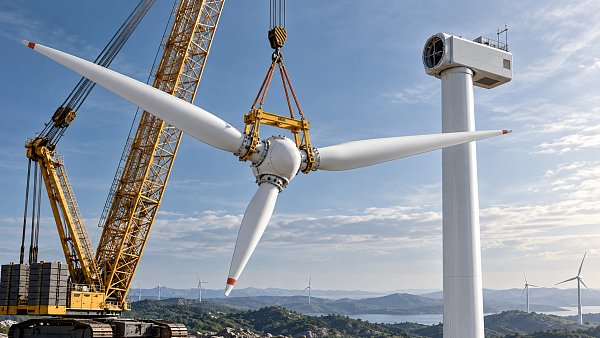
Wind turbine installation is increasingly shaped by taller towers, heavier nacelles, larger hub components, and longer blades. As turbine dimensions grow, the crane stops being a generic subcontract item and becomes a strategic execution factor. Margins for error narrow, while the financial impact of a failed or delayed lift becomes much larger.
That is why premium crane costs should be linked to avoided losses. These may include schedule overruns, prolonged crew standby, component storage delays, road congestion, additional crane reassembly, and weather-driven idle time. In many projects, those hidden costs exceed the difference in day rate or rental price.
For management teams, the right question is not “What does the crane cost?” but “What does the wrong crane cost the project?” That shift in perspective is essential when evaluating wind installation equipment at utility scale.
Where crawler cranes create the strongest value in wind power projects
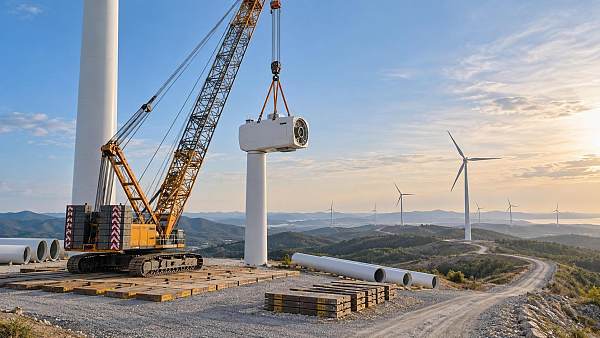
Crawler cranes tend to deliver the strongest return in projects with challenging terrain, limited ground conditions, large component weights, or aggressive construction schedules. Their design allows them to distribute loads effectively and maintain stability on sites that are less forgiving than standard industrial pads.
In remote onshore wind farms, logistics often define project economics. Components arrive over long distances, weather windows can be narrow, and access roads may be imperfect. A crane that can handle difficult positioning and maintain efficient lift cycles under these conditions can protect overall project throughput.
Another major value area is high-capacity lifting for modern turbines. As hub heights increase and nacelle weights rise, the operational flexibility of a crawler crane becomes more important. If the crane can complete critical lifts without introducing additional setup stages or auxiliary equipment, the installation process becomes simpler and less risky.
Crawler cranes also help when project sequencing must remain tight. If turbine deliveries, civil works, electrical teams, and commissioning schedules are interdependent, delays in erection can ripple across the entire project. A more capable crane may therefore create value by preserving coordination across multiple contractors.
When the added cost may not be justified
There are also clear situations where crawler cranes for wind power may be more capability than the project needs. Smaller turbines, lower hub heights, stable ground, and easy site access reduce the value of premium lifting performance. In such cases, the cost advantage may shift toward alternative crane solutions.
If the site has strong infrastructure, minimal transport constraints, and a wide installation schedule, decision-makers may be able to accept slower setup or lower lifting flexibility. The economic logic changes when the cost of delay is modest and the physical demands of the lift are manageable.
Over-specifying crane capacity can quietly erode margins. Higher mobilization costs, more complex assembly, and unnecessary equipment scale can burden a project without delivering proportional benefit. That is why equipment selection should be tied to actual engineering requirements and execution risk, not to a preference for maximum capability.
This is especially true in competitive bidding environments. If a developer or EPC contractor builds a crane strategy around capabilities the project will rarely use, the result may be weaker commercial performance rather than stronger reliability.
The real cost comparison: rental price versus total project economics
A narrow cost comparison often leads to poor decisions. Looking only at rental rates or mobilization invoices misses the broader economic picture. Wind projects are highly sensitive to time, coordination, and risk. The relevant metric is total installed cost per turbine, not simply crane cost per day.
For example, a lower-cost crane that requires longer assembly, more site preparation, or more weather-dependent lift windows may create expensive secondary effects. Labor continues to accrue, transport assets remain occupied, and downstream work packages may have to wait. The visible savings on crane hire can disappear quickly.
By contrast, a higher-cost crawler crane may reduce overall project cost if it improves lift productivity or limits disruption. Even a small reduction in installation time per turbine can materially improve economics across a multi-turbine project, especially when grid connection and revenue timelines are tight.
Executives should therefore build a full cost model that includes crane mobilization, assembly, lift rate, standby exposure, weather risk, road and pad preparation, crew utilization, and the impact of schedule delay on project cash flow. That model usually reveals whether the premium is strategic or unnecessary.
How crawler cranes affect schedule certainty
In wind power, schedule certainty often has more strategic value than small savings in line-item equipment costs. Financing milestones, power purchase obligations, seasonal construction windows, and transmission access all increase the cost of delay. Crane choice can have a direct effect on those variables.
Crawler cranes can improve schedule reliability by handling demanding lifts with fewer compromises. Their lifting stability and site mobility support efficient work sequencing, which matters when projects must maintain momentum across dozens of turbine positions. Reduced interruption at one stage can stabilize the full construction chain.
This matters especially in regions with volatile weather. If a crane can complete lifts faster once weather windows open, crews can use those windows more effectively. Over a full project, that can produce meaningful gains in schedule confidence and reduce the financial stress associated with uncertain completion dates.
For executive teams, this is not just an operations issue. Better schedule certainty improves stakeholder credibility, strengthens lender confidence, and reduces claims risk between project participants. Those benefits are difficult to capture in a basic procurement spreadsheet, but they are real.
Risk control is often the hidden reason the premium makes sense
One of the strongest arguments for crawler cranes for wind power is risk mitigation. Wind projects involve high-value components, strict safety expectations, and complex lift planning. A lifting failure or major delay can damage more than just the installation budget—it can affect insurance, reputation, and contractual relationships.
Crawler cranes are often selected because they provide a stronger margin of operational confidence in heavy, high-elevation lifts. That confidence matters when handling blades, nacelles, and tower sections where misalignment, instability, or repeated repositioning can increase the chance of incident.
From a management perspective, paying more for lower operational risk is often justified when the value of the components being lifted is extremely high. The replacement cost of damaged equipment, combined with project interruption, can outweigh a significant crane premium very quickly.
In addition, stronger lift capability can reduce the need for workaround strategies. The fewer improvised adjustments required on site, the lower the exposure to safety incidents, engineering compromise, and execution drift. For many decision-makers, this is where the investment case becomes most convincing.
Key variables to evaluate before choosing crawler cranes for wind power
Decision-makers should evaluate crawler cranes through a structured project lens. The first variable is turbine specification: hub height, nacelle weight, blade length, and tower configuration. As these parameters increase, the need for high-performance lifting solutions grows rapidly.
The second variable is site condition. Ground bearing capacity, slope, access quality, internal road geometry, and pad layout all influence whether a crawler crane’s characteristics create real operational advantage. Difficult terrain tends to increase the value of crawler-based solutions.
Third is project scale and sequencing. A large multi-turbine installation amplifies the economic effect of small productivity gains. If each lift cycle becomes even modestly more efficient, the cumulative benefit can be substantial over the full campaign.
Fourth is schedule sensitivity. If delay affects financing, grid connection, revenue start dates, or penalty exposure, the premium for a more capable crane may be easy to justify. Where time risk is expensive, reliability becomes a financial asset.
Finally, companies should consider contractor capability and local market support. The best crane strategy is not only about the machine itself, but also about the availability of experienced crews, transport coordination, spare parts access, and service responsiveness in the region of deployment.
A practical decision framework for executives
For enterprise readers asking whether crawler cranes for wind power are worth the added cost, a useful approach is to score the project across five dimensions: lift complexity, site difficulty, schedule sensitivity, component value, and delay cost. If most of these factors are high, the premium is often justified.
If only one or two factors are high, the decision becomes more nuanced. In that situation, management should compare at least two realistic crane strategies using scenario-based cost modeling rather than relying on supplier claims or benchmark assumptions from unrelated projects.
It is also wise to test the downside case. Ask what happens if weather delays increase, if road conditions deteriorate, or if one crane strategy creates lower daily productivity than expected. The crane option that looks more expensive initially may prove more resilient under stress.
In boardroom terms, this is a capital allocation decision under uncertainty. The objective is not to minimize visible equipment cost. It is to optimize project delivery economics while protecting safety, schedule, and contractual performance.
Conclusion: worth the cost when they protect execution, not when they merely add capability
Crawler cranes for wind power are worth the added cost when they solve real project constraints and reduce larger hidden costs. Their value becomes strongest on projects with larger turbines, difficult terrain, narrow weather windows, tight schedules, and high financial exposure to delay or lift failure.
They are less compelling when project conditions are simple, installation demands are moderate, and lower-cost lifting solutions can meet technical needs without creating meaningful schedule or safety risk. In those cases, paying for extra capability may not improve total returns.
For enterprise decision-makers, the smartest evaluation method is to move beyond upfront crane price and focus on total project impact. When assessed through the lens of productivity, risk control, and lifecycle economics, crawler cranes often justify their premium—but only in the right wind power context.
That is the final judgment: do not buy the biggest crane strategy by default, and do not reject premium lifting capability on day-rate logic alone. The right answer lies in whether the crane improves execution quality enough to protect the full value of the project.
Related News
 Oct 06, 2026Selecting Petrochemical Overhead Cranes for Hazardous Areas and Heavy Process LoadsPetrochemical overhead cranes for hazardous areas: learn how to match capacity, duty, controls, corrosion protection, and maintenance access for safer, reliable lifts.
 Oct 05, 2026Tunneling Equipment Specification Planning: Key Criteria for Ground and Project RisksEquipment specification planning tunneling: learn how to match TBM systems to ground risks, geometry, safety, logistics, and lifecycle cost for more reliable project delivery.
 Oct 04, 2026Nuclear Lifting Equipment Cost: Budgeting for Compliance, Testing, and Lifecycle RiskNuclear lifting equipment cost explained: budget for compliance, proof-load testing, installation, documentation, and lifecycle risk to make confident procurement decisions.
 Oct 03, 2026How to Assess TBM Manufacturers for Hard-Rock Tunneling Projects?Choose the right tunnel boring machine manufacturer for hard-rock projects. Explore key criteria for design, lifecycle cost, factory quality, and service support.
Structural Load Expert
Weekly Insights
Stay ahead with our curated technology reports delivered every Monday.