
How to compare crawler cranes specifications before bidding

Before submitting a bid, technical evaluators need more than a basic datasheet. They need a disciplined method to compare crawler cranes specifications with lift plans, site limits, risk controls, and delivery targets.
A strong comparison process reduces selection errors, protects schedule certainty, and improves cost realism. In complex heavy-lift work, the wrong interpretation of crawler cranes specifications can distort both technical scoring and commercial assumptions.
For projects tracked by TF-Strategy, the real value lies in connecting machine parameters with engineering context. That means reading crawler cranes specifications as operational evidence, not just as brochure data.
Why bidding scenarios change how crawler cranes specifications should be compared
The same rated capacity can mean very different performance outcomes. Wind installation, refinery modular lifting, and nuclear construction place different demands on boom configuration, ground pressure, and erection logistics.
That is why comparing crawler cranes specifications without scenario framing creates hidden risk. A crane may look competitive on paper, yet fail under transport limits, tail swing constraints, or weather exposure.
A useful review starts with five project questions:
- What is the heaviest lift, and at what radius?
- Which boom and jib combinations are actually permitted on site?
- How much assembly space and support equipment are available?
- What are the transport, terrain, and weather restrictions?
- How much downtime risk can the schedule absorb?
Scenario 1: Wind power projects require height, radius, and stability balance
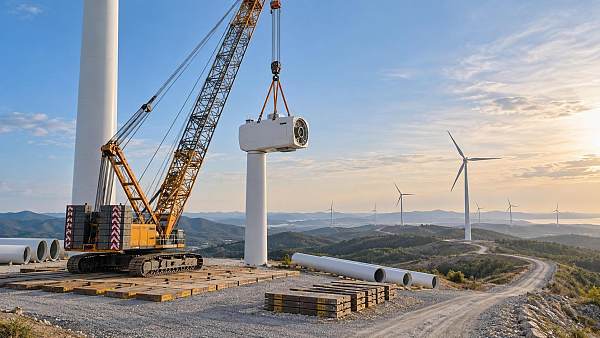
In wind projects, crawler cranes specifications must be checked against hub height, blade length, and narrow installation windows. Maximum capacity alone is not enough for turbine component handling.
Critical items include main boom length, fixed jib options, derrick system compatibility, and rated load charts at actual working radii. Wind conditions and frequent moves between pads also matter.
What matters most in wind farm bidding
- Capacity at required hook height, not headline tonnage.
- Travel readiness between turbine positions.
- Ground bearing pressure on temporary access roads.
- Assembly time for long boom systems.
- Wind speed limits during component lifts.
If a bid compares crawler cranes specifications only by nominal lifting class, it may underestimate setup duration and support crane needs. That often affects the true cost per installed turbine.
Scenario 2: Petrochemical and refinery work depends on confined lifting accuracy
Refinery and petrochemical sites create a different comparison logic. Here, crawler cranes specifications must be reviewed with space restrictions, live-plant interfaces, and stricter lift path control.
Large modules may require high precision at medium radii. Tail swing, boom interference, and counterweight layout can become more important than top-end lifting capacity.
Key judgment points for process plant projects
- Operating footprint within congested plant zones.
- Fine load control and multi-hoist configuration.
- Counterweight handling and installation sequence.
- Transport split weights for restricted access roads.
- Compliance with lift planning and safety monitoring systems.
In this scenario, better crawler cranes specifications often mean better controllability and site fit, not necessarily the biggest machine. Precision can outrank pure tonnage during technical evaluation.
Scenario 3: Nuclear and mega infrastructure projects prioritize risk margins
Nuclear projects, bridge segments, and heavy civil packages require a conservative review standard. Here, crawler cranes specifications must support redundancy, traceability, and long-duration performance consistency.
These projects often emphasize duty cycles, load moment margins, emergency systems, and digital monitoring integration. Technical scoring may reward low uncertainty more than aggressive performance claims.
Parameters that deserve extra scrutiny
- Load chart transparency for specific configurations.
- Redundant safety devices and alarm logic.
- Track record in critical infrastructure environments.
- Maintenance intervals and spare parts response.
- Data logging for lift verification and compliance reviews.
How different scenarios change the required crawler cranes specifications
A practical method to compare crawler cranes specifications before bidding
A structured review should translate project demands into comparable technical checkpoints. This keeps the evaluation fair and makes hidden trade-offs easier to identify.
- Define the critical lift cases by weight, radius, height, and path.
- Map each lift case to exact boom and counterweight configurations.
- Check crawler cranes specifications against actual load charts, not summary sheets.
- Review transport dimensions, module weights, and assembly requirements.
- Assess site bearing pressure, travel capability, and weather limitations.
- Score serviceability, spare parts access, and operator support.
- Convert findings into schedule risk and total ownership impact.
This method helps turn crawler cranes specifications into decision-ready evidence. It also aligns engineering review with commercial bidding logic.
Recommended specification checkpoints for stronger scenario fit
Common mistakes when reading crawler cranes specifications
Several bidding errors appear repeatedly across heavy industry projects. Most come from comparing simplified figures instead of configuration-specific performance.
- Assuming maximum capacity equals usable site capacity.
- Ignoring boom change time and erection support needs.
- Overlooking transport restrictions for remote or urban sites.
- Missing wind, slope, or ground condition limitations.
- Treating service support as secondary during evaluation.
When these gaps are missed, crawler cranes specifications can appear equivalent even when project outcomes will differ sharply. That can affect safety margin, schedule resilience, and final lifting cost.
Next steps for more reliable crane comparison and bid preparation
The best bid reviews connect technical data, project conditions, and execution strategy in one matrix. That approach makes crawler cranes specifications easier to compare with consistency and fewer assumptions.
Start by building a scenario-based checklist for each major lift. Then test every candidate crane against lift charts, site logistics, and operational constraints rather than relying on headline ratings.
For organizations following global heavy equipment intelligence, TF-Strategy supports this deeper view by linking machine parameters, construction methodology, and infrastructure demand. The result is a more confident, evidence-based path from specification review to bid submission.
Related News
 Oct 06, 2026Selecting Petrochemical Overhead Cranes for Hazardous Areas and Heavy Process LoadsPetrochemical overhead cranes for hazardous areas: learn how to match capacity, duty, controls, corrosion protection, and maintenance access for safer, reliable lifts.
 Oct 05, 2026Tunneling Equipment Specification Planning: Key Criteria for Ground and Project RisksEquipment specification planning tunneling: learn how to match TBM systems to ground risks, geometry, safety, logistics, and lifecycle cost for more reliable project delivery.
 Oct 04, 2026Nuclear Lifting Equipment Cost: Budgeting for Compliance, Testing, and Lifecycle RiskNuclear lifting equipment cost explained: budget for compliance, proof-load testing, installation, documentation, and lifecycle risk to make confident procurement decisions.
 Oct 03, 2026How to Assess TBM Manufacturers for Hard-Rock Tunneling Projects?Choose the right tunnel boring machine manufacturer for hard-rock projects. Explore key criteria for design, lifecycle cost, factory quality, and service support.


Structural Load Expert
Weekly Insights
Stay ahead with our curated technology reports delivered every Monday.