
Lifting Machinery Rental vs Purchase: Which Option Fits Short-Term Projects?
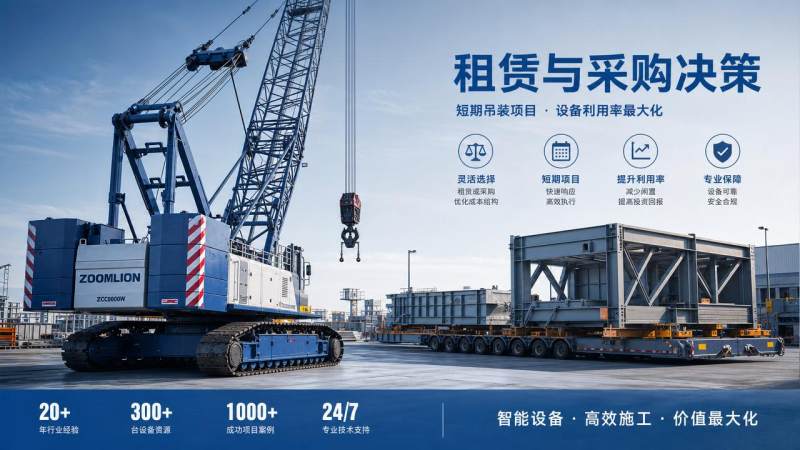
Lifting Machinery Rental or Purchase: Why This Choice Matters on Short-Term Jobs
For temporary lifting work, the wrong equipment strategy can erode margins faster than many teams expect.
That is why lifting machinery rental is often compared with outright purchase before any crane, hoist, or heavy lifting unit is booked.
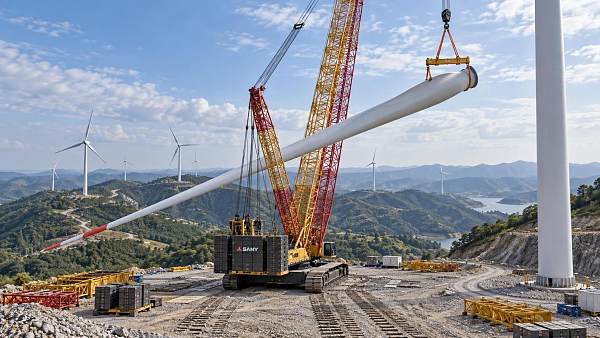
In short-duration construction, industrial shutdowns, wind component handling, or plant installation, cost is only one part of the decision.
Availability, transport timing, operator access, maintenance responsibility, and resale risk can matter just as much.
This is especially true in heavy sectors tracked by TF-Strategy, where crawler cranes and ultra-large lifting assets serve projects with tight schedules and high consequence downtime.
A practical comparison helps separate cases where lifting machinery rental protects cash flow from cases where ownership creates lower total cost.
When does lifting machinery rental make more sense than buying?
The simplest answer is utilization.
If the equipment will be used for a short window, renting usually reduces financial exposure.
A purchase spreads value over years.
A short-term project may only need that value for a few weeks or months.
In actual projects, lifting machinery rental becomes attractive under several conditions.
- The lifting plan is temporary, seasonal, or tied to a single installation phase.
- Load requirements are unusual, requiring a higher-capacity machine than normal operations justify.
- Storage, transport, and idle time would be expensive after the job ends.
- Cash preservation matters more than asset accumulation in the current cycle.
- Compliance, inspection, or maintenance support is easier through a specialist rental fleet.
For tunnel, mining, petrochemical, and wind projects, peak lifting demand often arrives in concentrated stages.
That pattern favors lifting machinery rental because the equipment works intensely, then exits the site.
Buying makes less sense when the machine becomes a parked asset immediately after handover.
Is purchase ever the better answer for a short-term project?
Yes, but the reasons are usually operational, not emotional.
Some short-term jobs sit inside a longer sequence of similar work.
A six-month project may be only the first package in a two-year pipeline.
In that case, purchase can outperform lifting machinery rental over the full program horizon.
Ownership may also work when site conditions demand constant access to a customized unit.
That includes special attachments, specific lifting geometry, or integration with internal maintenance practices.
Another factor is market tightness.
If regional crane supply is constrained, rental rates may spike and delivery windows may stretch.
Under those conditions, a planned purchase can secure control.
Still, ownership only works financially if the machine keeps moving across future jobs.
A quick decision table for short-term lifting
A compact side-by-side view often clarifies the decision faster than broad cost discussions.
What costs are often missed in the rental versus purchase comparison?
This is where many decisions go off track.
The headline rental rate or purchase price is rarely the real comparison.
A more useful method is to compare delivered lifting capacity against all project-linked costs.
For lifting machinery rental, hidden items may include mobilization, demobilization, standby charges, insurance differences, overtime use, and site delays.
For purchase, the overlooked list is often longer.
- Financing cost during and after the project.
- Inspection, certification, and scheduled maintenance.
- Operator training or third-party staffing.
- Storage, preservation, and transport between jobs.
- Depreciation and uncertain resale timing.
- Downtime risk if spare parts are not locally available.
In heavy industry, downtime can be more expensive than either option.
That is why TF-Strategy’s market view often links equipment choice with logistics, service networks, and project sequencing, not price alone.
A low purchase price loses its appeal if a critical lift is delayed during commissioning or module assembly.
How should short-term project risk influence the equipment decision?
Risk is often the tie-breaker.
When the project scope may change, lifting machinery rental usually offers a safer path.
A rental fleet allows capacity changes if lift plans are revised, component weights increase, or access conditions change.
That flexibility matters in complex earth engineering and industrial assembly, where site realities can shift after planning.
Purchase exposes the project to a different risk profile.
If the selected machine ends up oversized, undersized, or poorly matched, the asset remains on the books after the mistake becomes visible.
There is also timing risk.
A new unit may involve lead times, import procedures, and setup work that do not suit a fast-moving short-term contract.
Rental, by contrast, can transfer part of that readiness burden to the supplier.
The key question is not only “Which option is cheaper?”
It is also “Which option contains the cost of being wrong?”
Common decision mistakes worth avoiding
- Treating a one-off lifting phase as if it were a permanent fleet need.
- Ignoring idle time after project completion.
- Comparing rental rates with purchase price, but excluding support costs.
- Assuming every rental unit has equal availability or service quality.
- Overlooking the impact of load chart margins, ground conditions, and transport constraints.
What is the most practical way to decide before issuing a PO?
A useful decision process starts with project facts, not supplier preference.
Begin with lift duration, utilization hours, load range, lift radius, mobilization distance, and schedule sensitivity.
Then test both options against those conditions.
For lifting machinery rental, confirm actual fleet availability, replacement commitments, maintenance response time, and all chargeable extras.
For purchase, model the full ownership period, even if the current project is short.
That includes future redeployment assumptions, not just this month’s budget line.
Where project values are high, a structured review can reduce guesswork.
- Estimate total cost per productive lifting hour.
- Score flexibility if project scope changes.
- Check supplier service depth in the actual region.
- Review delay exposure if the machine becomes unavailable.
- Stress-test the resale or redeployment assumption.
This is where market intelligence is valuable.
In sectors followed by TF-Strategy, equipment selection is increasingly shaped by tender timing, regional fleet density, energy transition projects, and service ecosystem maturity.
Those signals can shift the balance between lifting machinery rental and ownership faster than internal cost models alone.
So which option fits most short-term projects?
For most short-duration jobs, lifting machinery rental is the more practical choice.
It limits capital lock-up, reduces idle asset risk, and offers flexibility when schedules or lifting requirements shift.
Purchase becomes stronger when the “short-term” label hides repeat demand, stable utilization, and clear long-range fleet value.
A sound decision usually comes from comparing total ownership logic with real project duration, not from choosing the cheaper-looking quote.
Before moving forward, map the lifting scope, quantify productive hours, and verify support assumptions on both sides.
That approach leads to a better decision than price comparison alone, especially in high-value infrastructure and heavy industrial work.
Related News
 Sep 14, 2026What Drives Surface Mining Equipment Cost Across a Mine’s Operating Life?Surface mining equipment cost depends on fleet matching, fuel, wear, maintenance, availability, and rebuild timing. Explore lifecycle strategies that protect output and margins.
 Sep 13, 2026Crawler Crane Application Analysis for Wind Farms, Bridges, and Confined SitesCrawler crane application analysis for wind farms, bridges, and confined sites—optimize lift paths, ground conditions, access, and schedules for safer project delivery.
 Sep 12, 2026Open-Pit Mining in North America: Key Project Risks and Planning PrioritiesOpen-pit mining North America: uncover key risks and planning priorities for geology, permitting, water, fleet strategy, and resilient project delivery.
 Sep 11, 2026TBM Systems in Southeast Asia: Key Selection Factors for Variable Ground ConditionsTBM systems Southeast Asia: discover key selection factors for variable ground, pressure control, monsoon resilience, and safer tunnel delivery.

Structural Load Expert
Weekly Insights
Stay ahead with our curated technology reports delivered every Monday.