When Do Crawler Cranes Beat Mobile Cranes on Site?
Choosing between crawler cranes and mobile cranes is rarely a simple capacity comparison. For technical evaluators, the real decision depends on ground bearing pressure, lift radius, setup constraints, pick-and-carry requirements, wind exposure, and project sequencing.
Crawler cranes often outperform mobile cranes when stability, heavy lifts, and long-duration site productivity matter more than rapid road travel. This article examines the practical site conditions where crawler cranes become the stronger engineering choice—and where mobile cranes may still deliver better operational value.
The short answer: crawler cranes win when the site rewards stability
Crawler cranes usually beat mobile cranes when the project involves heavy components, long radii, soft ground, repeated lifting, or limited tolerance for repositioning delays.
Mobile cranes are stronger when road mobility, fast mobilization, compact setup, and short-duration lifting dominate the project economics and technical constraints.
For technical evaluators, the correct question is not which crane is “better.” The better question is which crane protects the lift plan.
A crawler crane is fundamentally a site-production machine. It is designed to remain on site, move under load, and deliver stable lifting cycles.
A mobile crane is fundamentally a flexible deployment machine. It can travel quickly between locations and complete many short assignments efficiently.
Once a project shifts from occasional lifting to engineered heavy-lift sequencing, crawler cranes often become the more predictable and safer platform.
Ground bearing pressure: the first technical filter
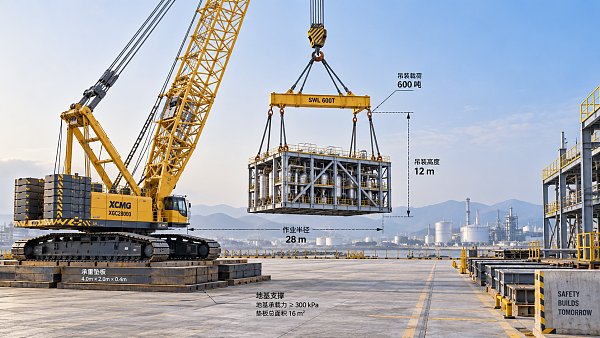
Ground bearing pressure is often the earliest sign that crawler cranes may outperform mobile cranes. Tracks distribute loads across a wider contact area.
Mobile cranes concentrate reactions through outriggers. Even with mats, the outrigger load path can create demanding local bearing pressure requirements.
On weak soil, reclaimed land, industrial brownfield areas, or temporary platforms, the tracked footprint can reduce ground improvement requirements.
This advantage becomes more important when the crane must work in several positions across the site rather than one prepared lifting pad.
Evaluators should compare actual load cases, not nominal crane classes. Maximum ground pressure may occur at different boom angles, radii, or counterweight configurations.
If the project needs extensive matting, piling, or repeated pad construction for a mobile crane, crawler cranes may lower total site preparation cost.
Lift radius and chart utilization: where capacity really changes
Crane capacity is only meaningful at a specific radius, boom length, counterweight, ground condition, and configuration. This is where many comparisons fail.
A mobile crane may show attractive headline capacity, but its practical rating can fall quickly as radius, boom length, and site restrictions increase.
Crawler cranes are often selected for work where the load must be placed farther from the crane centerline without excessive compromise.
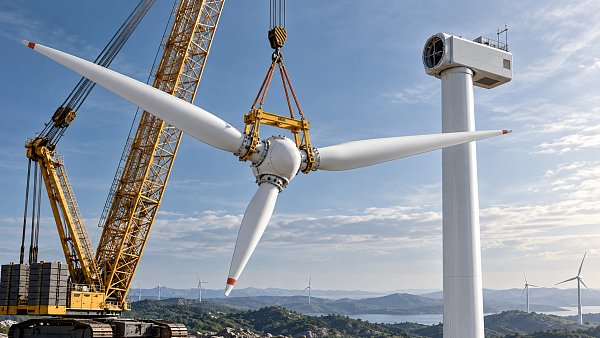
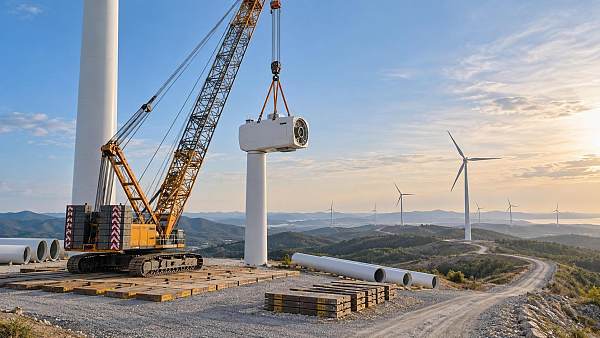
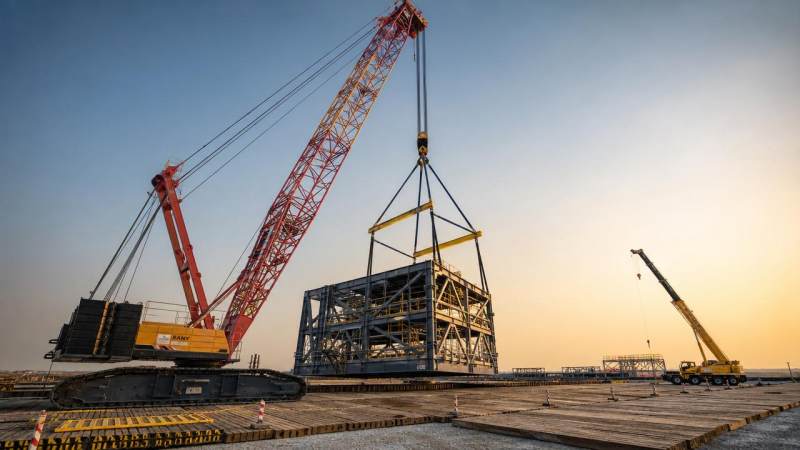
Examples include setting petrochemical modules, lifting wind turbine components, installing bridge girders, or handling precast elements across a broad work zone.
The crawler crane’s lattice boom and stable base can provide better chart performance for heavy lifts at longer radii.
Technical evaluators should examine the highest-risk lifts first. If those lifts favor crawler cranes, secondary lifts can often be planned around them.
Pick-and-carry capability: a major advantage on complex sites
One of the clearest advantages of crawler cranes is the ability to travel with a suspended load, within engineered limits.
This pick-and-carry capability can reduce the need for repeated rigging, trailer repositioning, or intermediate laydown handling on congested projects.
Mobile cranes generally require outriggers for rated lifting. That means they must stop, level, deploy outriggers, lift, retract, and reposition.
On repetitive work fronts, the accumulated time loss can become significant, especially when the schedule depends on many similar lifts.
Crawler cranes can move along the work face while maintaining production rhythm. This supports bridge construction, marine works, plant assembly, and precast erection.
However, pick-and-carry must be engineered carefully. Travel path bearing capacity, load swing, slope, turning radius, and visibility all require assessment.
Setup time is not always in favor of mobile cranes
Mobile cranes are usually faster to arrive and begin work, especially for short jobs with established access and simple lifting points.
That advantage can disappear when the crane needs multiple setups, engineered mats, road closures, counterweight transport, or complex access control.
Crawler cranes require assembly, boom erection, counterweight installation, and transport logistics. For a single small lift, this rarely makes sense.
For long-duration projects, the initial assembly cost is spread across many lifts, making crawler cranes more competitive over the full schedule.
Evaluators should calculate setup time per productive lift, not just initial mobilization. This gives a clearer productivity comparison.
If the crane remains central to the construction sequence for weeks or months, crawler cranes often deliver better operational continuity.
Wind exposure and large surface-area loads
Wind conditions can strongly influence crane selection, especially when lifting blades, tanks, panels, formwork tables, or large modular structures.
Crawler cranes can offer a stable lifting platform for heavy and wind-sensitive components, particularly when configured with appropriate boom systems.
The advantage is not unlimited. Wind limits still depend on manufacturer guidance, load geometry, rigging method, and site-specific procedures.
Mobile cranes may still perform well in wind-managed operations, especially for short lifts where exposure duration is limited.
But for repetitive lifts of large components, crawler cranes can reduce operational interruptions caused by repositioning and setup constraints.
Evaluators should check allowable wind speed for the exact load case, not rely on general crane class assumptions.
Site congestion: when fewer repositioning events matter
Congested sites often favor crawler cranes when movement corridors are predictable and lifting coverage can be planned from a central work zone.
Mobile cranes need outrigger space, tail swing clearance, access routes, and stable setup areas. These requirements may conflict with active trades.
In industrial shutdowns, refineries, ports, and energy projects, the cost of blocked access can exceed the crane rental difference.
A crawler crane may occupy more continuous space, but it can reduce repeated disruption by staying integrated into the site logistics plan.
Technical evaluators should map crane movement together with material delivery, worker access, exclusion zones, and emergency routes.
The best crane is often the one that creates the fewest schedule conflicts, not the one with the lowest daily rate.
Heavy modules and engineered lifts: crawler cranes provide planning confidence
Crawler cranes are frequently preferred for critical heavy lifts because their stability, configuration options, and lifting charts support engineered planning.
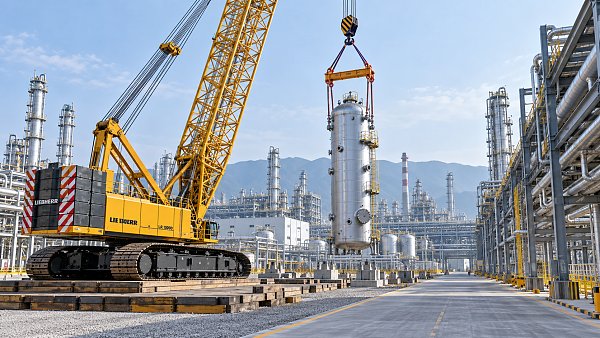
Typical applications include nuclear plant modules, petrochemical vessels, wind turbine erection, large bridge segments, and offshore fabrication components.
These lifts are rarely isolated crane operations. They involve transporters, rigging frames, temporary works, survey control, and detailed contingency planning.
In such environments, crane predictability becomes a risk-control tool. Small uncertainties can affect schedule, safety, and contractual delivery.
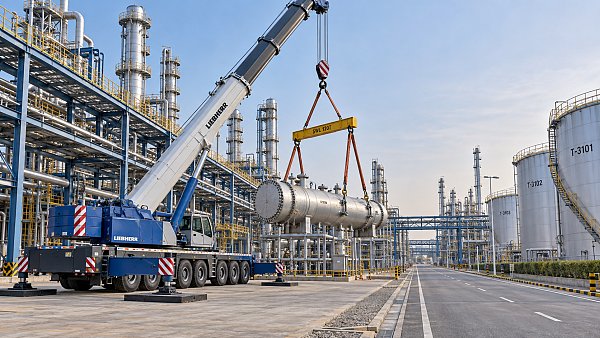
Mobile cranes can handle demanding engineered lifts too, particularly all-terrain cranes with high capacity and sophisticated control systems.
Yet when repeated high-capacity lifts define the project, crawler cranes commonly provide the stronger foundation for technical assurance.
When mobile cranes still deliver better value
Crawler cranes are not automatically the superior choice. Mobile cranes remain highly effective when lifts are short, dispersed, or access-driven.
If the crane must serve multiple sites in one week, road mobility can outweigh the stability advantages of tracked equipment.
Mobile cranes also suit urban service work, maintenance lifts, utility tasks, small structural steel packages, and emergency replacement operations.
Where site ground is strong, lifting radii are modest, and outrigger setup is simple, a mobile crane may deliver lower total cost.
Fast deployment can be decisive when delay costs are high but the actual lifting scope is limited.
The strongest evaluation therefore compares total mission cost, including transport, permits, matting, assembly, standby, rigging, crew, and lost production time.
The decision checklist technical evaluators should use
Start with the heaviest and most radius-sensitive lifts. These cases usually determine whether crawler cranes are technically justified.
Next, assess ground capacity along every crane position and travel path. Include temporary fills, underground services, voids, slopes, and weather effects.
Then compare productivity across the entire lift sequence. Count repositioning events, outrigger cycles, boom changes, rigging changes, and access interruptions.
Evaluate whether pick-and-carry capability removes material handling steps. Each eliminated transfer can reduce time, labor, damage risk, and coordination complexity.
Review transport and assembly logistics honestly. Crawler cranes need space, components, assist cranes, and time before productive lifting begins.
Finally, test the plan against safety margins, wind limits, exclusion zones, rescue access, and interface risks with other active operations.
Total cost of ownership is not the same as rental rate
Many crane decisions are distorted by comparing daily rental rates instead of total cost to complete the lifting scope.
Crawler cranes may cost more to mobilize, but they can reduce preparation, repeated setup, handling steps, and schedule variability.
Mobile cranes may appear cheaper, but multiple visits, road permits, mats, escorts, and traffic management can change the economics.
For contractors, the financial question should be tied to production: how many safe, approved lifts can be completed per shift?
For owners, the focus should include delivery certainty. A crane that protects the critical path may justify a higher visible cost.
Technical evaluation should therefore combine lifting engineering with commercial modeling, rather than treating crane selection as a procurement shortcut.
Common mistakes when comparing crawler cranes and mobile cranes
The first mistake is comparing maximum rated capacity without matching radius, boom length, counterweight, configuration, and ground condition.
The second mistake is ignoring site movement. A crane that looks efficient at one position may become inefficient across thirty lifts.
The third mistake is underestimating ground preparation. Outrigger reactions can require substantial temporary works, especially on weak or variable soils.
The fourth mistake is separating crane choice from construction sequence. The crane should support the method, not force inefficient method changes.
The fifth mistake is treating mobilization as a standalone cost. It must be divided across the productive value created during the project.
A disciplined comparison reduces these errors by using lift studies, ground reports, time-motion assumptions, and realistic schedule constraints.
Practical rule of thumb for site selection
Choose crawler cranes when the site needs stable heavy lifting, long-radius performance, pick-and-carry movement, and sustained production from one work platform.
Choose mobile cranes when the work needs rapid arrival, road travel, compact deployment, and multiple short lifts across separated locations.
If ground improvement becomes excessive for mobile crane outriggers, recheck crawler crane feasibility before finalizing the lift plan.
If the lifting scope is central to the critical path, prioritize predictability, not only the lowest quoted crane cost.
If the crane will sit idle between occasional lifts, a mobile crane or smaller temporary solution may be more rational.
The best decisions come from comparing the entire lifting mission, including technical margins, schedule impact, and site logistics.
Conclusion: crawler cranes beat mobile cranes when productivity depends on controlled force
Crawler cranes outperform mobile cranes when the job rewards stability, ground load distribution, long-radius capacity, pick-and-carry capability, and continuous site production.
They are especially valuable in heavy infrastructure, energy, petrochemical, bridge, marine, and modular construction projects with repeated engineered lifts.
Mobile cranes remain the better choice for many short-duration, road-mobile, access-driven lifting tasks with straightforward ground and setup conditions.
For technical evaluators, the winning crane is the one that best supports the lift plan, site sequence, safety case, and commercial outcome.
When stability and controlled heavy lifting define the project, crawler cranes are not just another crane option. They become the site’s production backbone.