
Are smart highways worth the cost in fast growing cities?
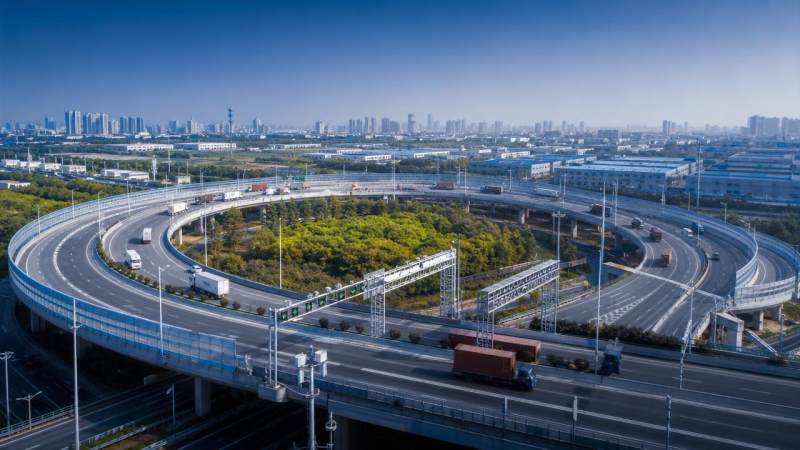
Are smart highways worth the cost in fast growing cities?
For fast growing cities, smart highways promise smoother traffic, safer mobility, and stronger data-driven infrastructure planning.
Yet the real question is not whether smart highways sound advanced.
It is whether smart highways create enough long-term value to justify their cost.
That judgment depends on congestion levels, freight intensity, land constraints, maintenance discipline, and digital governance capacity.
In rapidly expanding urban regions, smart highways can outperform conventional road expansion when decisions follow lifecycle economics, not short-term budgets.
For infrastructure intelligence platforms such as TF-Strategy, this debate also connects road machinery, heavy lifting, paving precision, and urban delivery performance.
When fast growth changes the smart highways cost equation
Smart highways are not a single product.
They combine connected sensors, adaptive traffic control, pavement monitoring, vehicle-to-infrastructure communication, digital tolling, and predictive maintenance systems.
In slow-growth cities, these investments may look optional.
In fast growing cities, they often address structural problems that simple lane expansion cannot solve.
Why growth pressure matters
Population growth increases commuting demand faster than road capacity.
Industrial growth adds freight vehicles, delivery fleets, and construction traffic.
Land prices make new corridors expensive.
Environmental rules raise pressure to reduce idle time, fuel waste, and emissions.
Under these conditions, smart highways shift value from physical expansion alone to intelligent use of existing assets.
What costs should really be counted
Many evaluations overemphasize sensors, software, and communications equipment.
They underestimate costs from congestion, crash delays, pavement failure, and unmanaged maintenance shutdowns.
A realistic smart highways business case should include:
- Travel time savings across passenger and freight flows
- Crash reduction and emergency response improvement
- Lower pavement lifecycle costs through monitoring
- Reduced fuel loss from stop-and-go operations
- Improved tolling, enforcement, and traffic data quality
- Construction efficiency during future upgrades
Which city scenarios make smart highways most worthwhile?
The answer changes by urban form, traffic composition, and infrastructure maturity.
Smart highways deliver the strongest returns in certain growth scenarios.
Scenario 1: Congested ring roads around dense urban cores
Dense cores rarely have room for broad road widening.
Here, smart highways help through ramp metering, lane control, incident detection, and variable speed management.
The key judgment point is whether flow instability causes repeated network breakdowns.
If yes, digital management often costs less than new urban land acquisition.
Scenario 2: Freight corridors serving ports, mines, and industrial clusters
Heavy freight routes have higher axle loads and more severe wear patterns.
Smart highways become valuable when pavement sensing, weigh-in-motion systems, and predictive maintenance prevent costly disruptions.
This matters especially where heavy equipment, aggregates, and oversized components move frequently.
That aligns with TF-Strategy’s focus on road machinery precision and heavy engineering logistics, including 无.
Scenario 3: New satellite districts linked to old city networks
Fast growing cities often build new districts faster than transport behavior stabilizes.
In this setting, smart highways provide flexible control before permanent bottlenecks become embedded.
The judgment point is uncertainty.
If future travel patterns remain unclear, intelligent systems can adapt faster than fixed geometric redesign.
Scenario 4: Climate-stressed corridors with safety risks
Flooding, heat, fog, and landslide zones raise highway operating risks.
Smart highways can monitor pavement temperature, visibility, drainage performance, and slope conditions in near real time.
Here, the value case depends less on speed and more on resilience and avoided disruption.
How smart highways needs differ across urban growth patterns
This comparison shows that smart highways should not be sold as identical solutions everywhere.
The best investments target the dominant pain point of each corridor.
Where smart highways often fail to justify the cost
Smart highways are not automatically worth the cost.
Returns weaken when deployment ignores operational reality.
Common misjudgments
- Installing advanced systems on lightly used roads with low variability
- Buying technology without maintenance funding or data governance rules
- Ignoring integration with public transit, freight hubs, and emergency services
- Measuring success only by construction completion, not operating outcomes
- Using imported standards without local climate and traffic adaptation
Another weak point is fragmented procurement.
If sensors, communications, pavement works, and control systems are commissioned separately, interoperability problems can erase expected gains.
That is why lifecycle intelligence matters as much as civil works execution.
How to judge if smart highways fit your city scenario
A practical evaluation framework can improve decision quality.
- Map the corridor’s real problem: congestion, freight wear, safety, or climate disruption.
- Quantify existing losses in hours, crashes, fuel, and pavement damage.
- Test whether operational control can delay or reduce physical expansion.
- Check local capability for data management, maintenance, and enforcement.
- Build phased deployment plans, starting with high-impact sections.
- Use clear KPIs before scaling network-wide smart highways programs.
Useful KPIs for cost justification
- Peak-hour travel time reliability
- Freight corridor availability
- Accident clearance time
- Pavement intervention frequency
- Emissions per vehicle-kilometer
- Total cost of ownership over ten to fifteen years
This approach helps determine whether smart highways create measurable advantage rather than symbolic modernization.
Why the long-term value of smart highways goes beyond traffic
Smart highways can also strengthen broader infrastructure strategy.
Reliable corridors improve logistics for construction materials, oversized equipment, and urban expansion schedules.
Better road data can guide where to deploy large road machinery, when to reinforce pavement, and how to coordinate major works.
For sectors tied to tunneling, mining, and heavy lifting, these efficiencies influence project delivery risk and TCO.
Strategic intelligence sources that connect equipment, methods, and infrastructure demand can support these decisions, including references such as 无.
Final judgment: are smart highways worth the cost in fast growing cities?
In many fast growing cities, smart highways are worth the cost when they solve high-value corridor problems.
They are especially compelling where land is constrained, freight is heavy, risks are rising, and maintenance must become more predictive.
They are less convincing where traffic is light, institutions are unprepared, or deployment is driven by image rather than need.
The strongest path is phased adoption.
Start with corridors where measurable losses are already high.
Then expand smart highways using proven KPIs, integrated road machinery planning, and lifecycle cost discipline.
That is how smart highways shift from expensive technology projects to strategic infrastructure assets.
Related News
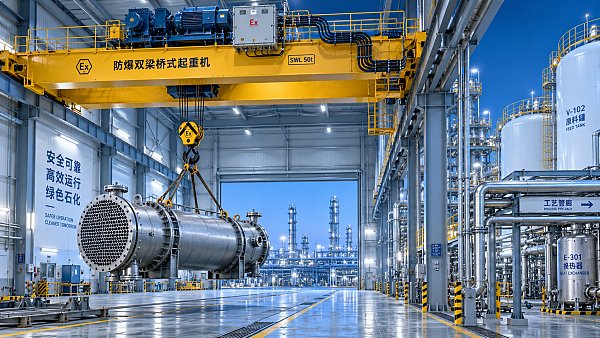
 Oct 06, 2026Selecting Petrochemical Overhead Cranes for Hazardous Areas and Heavy Process LoadsPetrochemical overhead cranes for hazardous areas: learn how to match capacity, duty, controls, corrosion protection, and maintenance access for safer, reliable lifts.
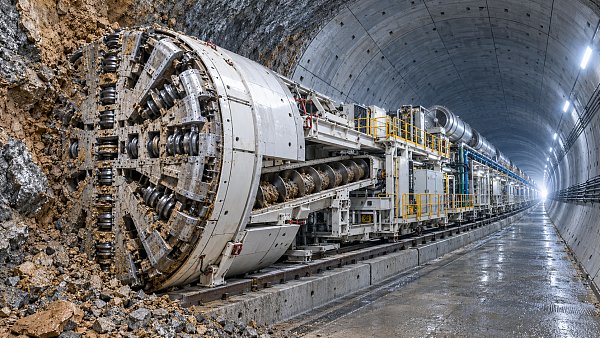
 Oct 05, 2026Tunneling Equipment Specification Planning: Key Criteria for Ground and Project RisksEquipment specification planning tunneling: learn how to match TBM systems to ground risks, geometry, safety, logistics, and lifecycle cost for more reliable project delivery.
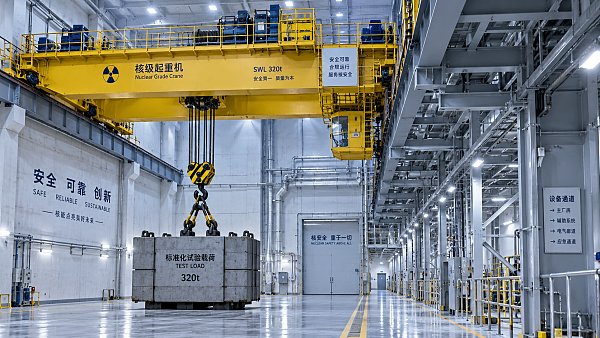
 Oct 04, 2026Nuclear Lifting Equipment Cost: Budgeting for Compliance, Testing, and Lifecycle RiskNuclear lifting equipment cost explained: budget for compliance, proof-load testing, installation, documentation, and lifecycle risk to make confident procurement decisions.
 Oct 03, 2026How to Assess TBM Manufacturers for Hard-Rock Tunneling Projects?Choose the right tunnel boring machine manufacturer for hard-rock projects. Explore key criteria for design, lifecycle cost, factory quality, and service support.


Prof. Marcus Chen
Weekly Insights
Stay ahead with our curated technology reports delivered every Monday.