
Global Construction Trends in 2025: Labor Shortages, Green Building, and CAPEX Shifts
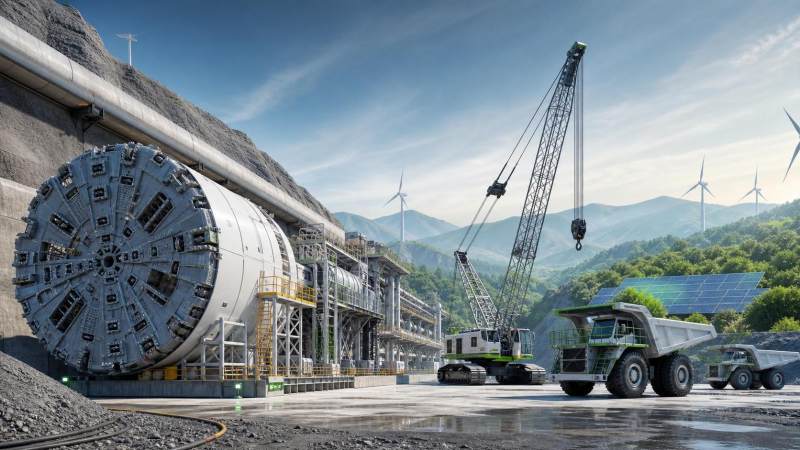
In 2025, global construction trends are no longer shaped by demand alone. They are being redirected by labor scarcity, tighter carbon rules, and CAPEX moving toward projects with stronger strategic and energy value.
That shift matters across transport, mining, utilities, industrial plants, and urban expansion. It also matters for heavy equipment planning, because project viability now depends on workforce access, compliance readiness, and asset productivity.
Seen through the lens of TF-Strategy, the topic is especially relevant where machinery intensity is high. TBM systems, crawler cranes, road machinery, mining trucks, and ultra-large excavators all sit at the intersection of cost, schedule, safety, and energy transition.
Why 2025 feels different from previous cycles
Earlier construction cycles were often judged by financing conditions and material prices. Those still matter, but the current phase is broader and more structural.
Many markets face aging field crews, slower trade replacement, stricter environmental permitting, and pressure to localize critical supply chains. At the same time, governments and private investors are prioritizing energy, logistics, and resilience.
This is why global construction trends in 2025 are closely tied to national competitiveness. Infrastructure is no longer only a development tool. It is also a security, decarbonization, and productivity instrument.
Labor shortages are changing project economics
Labor shortages are not simply causing wage inflation. They are changing how projects are designed, sequenced, procured, and mechanized.
Where labor availability is uncertain, contractors increasingly prefer methods that reduce dependence on large site crews. That favors prefabrication, automated monitoring, remote operations, and equipment with higher output per operator.
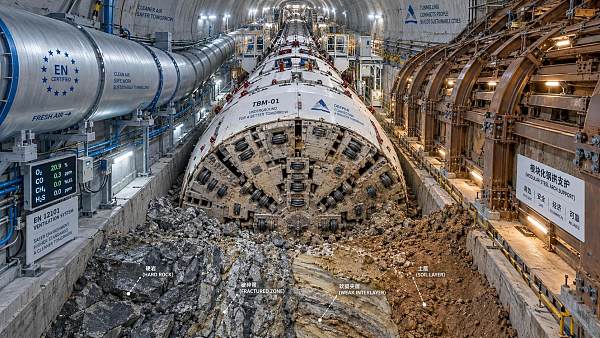
In tunneling, this can accelerate interest in advanced TBM systems, cutter head material upgrades, and digital control layers that reduce downtime. In mining and earthmoving, larger machines with better cycle efficiency help protect production when staffing remains tight.
The commercial effect is significant. Delays tied to crew shortages can erase the savings gained from cheaper bids. As a result, total cost of ownership is becoming more important than headline purchase price.
What labor pressure usually affects first
- Project schedules become less predictable, especially during installation and commissioning.
- Safety exposure rises when experienced crews are replaced too quickly.
- Maintenance quality may decline, increasing equipment idle time.
- Training budgets and digital support requirements move higher.
Green building is moving from policy language to procurement reality
Another defining element in global construction trends is the move from broad sustainability commitments to measurable project requirements.
Green building in 2025 is not limited to office developments with certification targets. It now extends to transport corridors, underground works, industrial foundations, and heavy civil packages.
Owners increasingly ask for embodied carbon data, cleaner site operations, recycled inputs, and better lifecycle performance. Bidders that cannot document these factors risk losing position even when pricing is competitive.
This matters for heavy industry because equipment choices influence emissions, fuel demand, rework risk, and construction precision. A road machine that delivers tighter paving tolerance or a crane setup that reduces repeated lifts can contribute to both cost and carbon goals.
Where green building has practical impact
CAPEX is shifting toward strategic infrastructure
A third force behind global construction trends is capital reallocation. Not every segment is expanding at the same speed, and not every asset class is receiving the same confidence.
CAPEX is flowing toward energy security, grid modernization, critical minerals, water systems, transport bottlenecks, and urban resilience. Projects linked to these priorities usually attract faster policy support and stronger long-term funding logic.
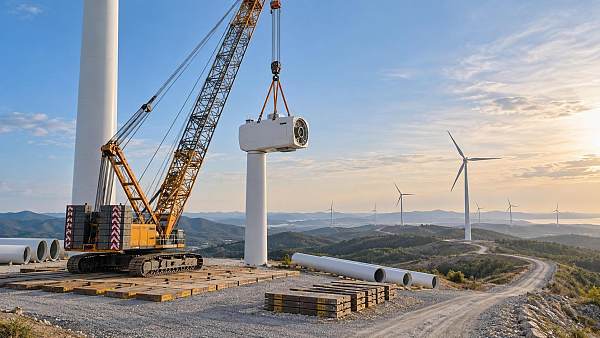
This reallocation affects equipment demand patterns. More investment in renewable energy and transmission can lift crane utilization. Mining CAPEX tied to transition minerals can support large excavators and mining dump trucks. Underground transit and utility expansion can sustain TBM demand.
At the same time, speculative or non-core developments may face slower approval, tighter financing, and more cautious procurement.
Reading CAPEX signals more accurately
Capital plans now need to be read at three levels: announced budgets, executable tender pipelines, and machinery-specific deployment windows. The gap between policy headlines and field activity can be large.
This is where intelligence platforms such as TF-Strategy become useful. Tracking project tenders, raw material inputs, remote-control technology, and equipment evolution helps separate durable demand from short-lived noise.
What these shifts mean for heavy equipment and delivery models
Global construction trends are not abstract market themes. They directly influence fleet composition, supplier selection, project phasing, and contract structures.
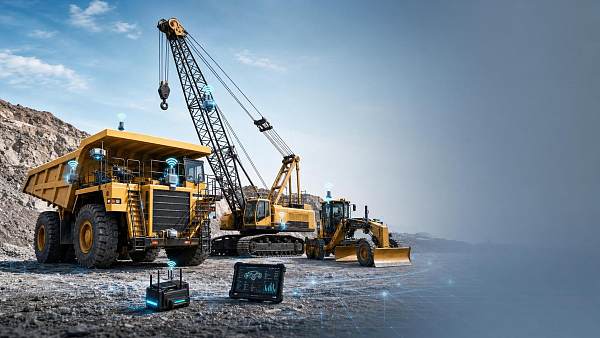
In practical terms, the market now rewards equipment that combines productivity, digital visibility, lower operating cost, and easier compliance reporting. That applies across tunneling, lifting, haulage, paving, and extraction.
For example, 5G-enabled remote excavation can reduce labor dependence in difficult environments. Improved TBM cutter head materials may extend service intervals. Pure electric mining trucks can shift the economics of haulage where power access and emissions rules align.
The delivery model is changing as well. More projects are evaluating service capability, spare parts resilience, software support, and operator training before confirming machinery packages.
A practical framework for interpreting global construction trends
The best reading of global construction trends starts with a simple question: which pressures are temporary, and which ones will reshape operating assumptions for years?
A workable framework usually includes several checks.
- Test labor dependence by activity, not by project total.
- Measure green requirements at bid level, not only at policy level.
- Compare CAPEX announcements with tender conversion speed.
- Review asset productivity together with maintenance and training support.
- Assess whether digital features produce measurable schedule or safety gains.
This approach reduces the risk of reacting to headlines without understanding execution constraints. It also improves capital discipline when market conditions remain uneven across regions.
Where to focus next
The most useful response to global construction trends in 2025 is not broad optimism or broad caution. It is sharper selection.
Focus on segments where labor-saving methods, green compliance, and strategic CAPEX overlap. That is often where project continuity, equipment utilization, and margin protection are strongest.
It is also worth building a tighter view of machine-level indicators: energy source, maintenance interval, remote operability, parts localization, and suitability for stricter site standards. Those details increasingly shape project outcomes.
A clear next step is to review live project pipelines, compare technology pathways, and define which infrastructure themes deserve priority capital attention. In a market driven by precision, timely intelligence becomes part of execution itself.
Related News
 Sep 16, 2026Infrastructure Equipment Market Reference: Demand, Pricing, and Supplier BenchmarksInfrastructure equipment market reference for buyers: assess demand signals, total cost, pricing risks, and supplier benchmarks for tunnels, mining, cranes, and road projects.
 Sep 15, 2026How to Evaluate Infrastructure Equipment Suppliers for Complex Project RequirementsInfrastructure equipment solutions supplier evaluation guide for complex projects: assess technical fit, lifecycle cost, reliability, local support, and contract risk.
 Sep 14, 2026What Drives Surface Mining Equipment Cost Across a Mine’s Operating Life?Surface mining equipment cost depends on fleet matching, fuel, wear, maintenance, availability, and rebuild timing. Explore lifecycle strategies that protect output and margins.
 Sep 13, 2026Crawler Crane Application Analysis for Wind Farms, Bridges, and Confined SitesCrawler crane application analysis for wind farms, bridges, and confined sites—optimize lift paths, ground conditions, access, and schedules for safer project delivery.
Prof. Marcus Chen
Weekly Insights
Stay ahead with our curated technology reports delivered every Monday.