
How Global Infrastructure Spending Is Shaping Equipment Demand and Project Risk
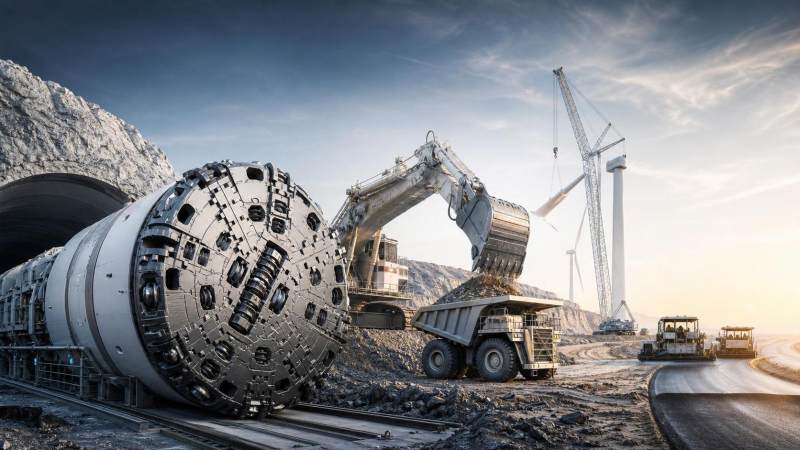
Global infrastructure is no longer a volume story alone
Global infrastructure spending is expanding, but the market signal is more nuanced than a simple rise in project counts.
Capital is moving toward complex corridors, energy transition assets, resilient transport links, and strategic mineral supply chains.
That shift is reshaping equipment demand across tunneling, open-pit mining, heavy lifting, road building, and heavy haulage.
For companies tracking global infrastructure, the real question is not whether demand is rising.
The harder question is where demand is becoming more specialized, more time-sensitive, and more exposed to execution risk.
This is why heavy equipment intelligence now matters as much as headline investment data.
A tunnel package, a mine expansion, and a wind logistics corridor may all sit inside global infrastructure plans.
Yet each requires different machine parameters, supply timing, operator capability, and maintenance resilience.
From TF-Strategy’s perspective, the strongest market advantage comes from connecting project intent with equipment reality.
Why the demand picture is changing faster now
Recent global infrastructure programs are being shaped by three forces at the same time.
Governments want growth, asset resilience, and energy security.
Private capital wants bankable schedules, lower lifetime cost, and clearer operating visibility.
Technology suppliers are pushing digitalization, electrification, and higher precision into equipment fleets.
The result is a market where global infrastructure spending is increasingly selective rather than evenly distributed.
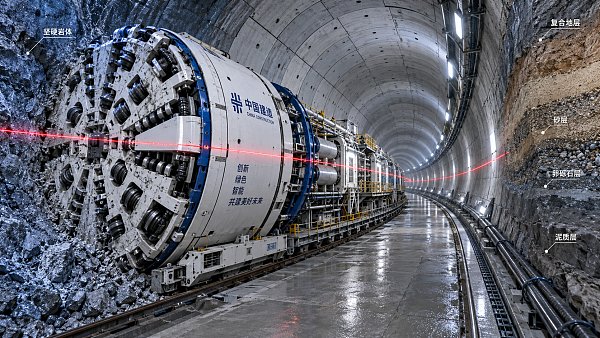
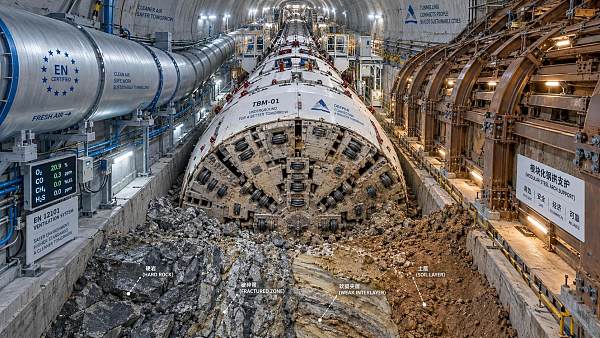
Urban rail tunnels need TBM performance matched to mixed geology and dense utility environments.
Open-pit mines need ultra-large excavators and mining dump trucks aligned with ore quality, haul road conditions, and decarbonization pressure.
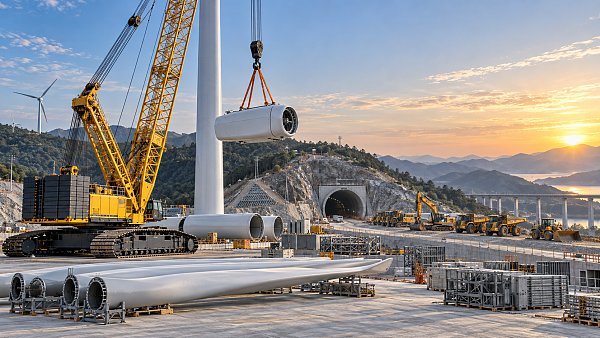
Wind, nuclear, and petrochemical projects need crawler cranes sized for heavier components and narrower installation windows.
Large road machinery is also changing, because paving quality now ties directly to smart highway performance and lifecycle expectations.
- Project portfolios are moving toward technically demanding assets.
- Procurement cycles are increasingly influenced by delivery certainty.
- Equipment selection is shifting from capacity focus to fit-for-scenario logic.
- Risk management is now linked to data, materials, and field adaptability.
The new spending wave is favoring capability over fleet size
One of the clearest signals in global infrastructure is the move away from broad fleet expansion.
Buyers are giving more weight to machine uptime, controllability, energy profile, and integration with jobsite planning.
That sounds obvious, but the implications are deeper than standard efficiency language.
For TBM projects, cutter head material iteration and geological adaptability can determine whether schedule buffers survive first contact underground.
For ultra-large excavators, hydraulic stability and continuous-duty performance decide whether mine output assumptions remain credible.
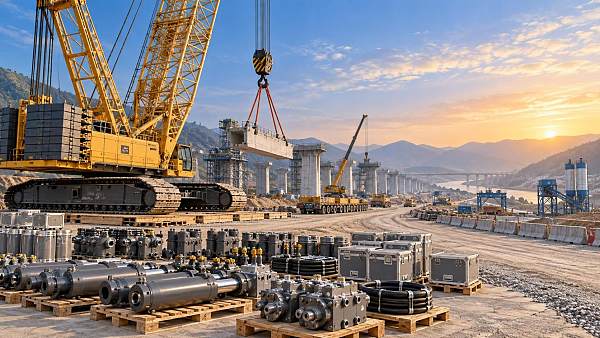
For crawler cranes, lifting charts alone are no longer enough.
Transport constraints, site assembly logic, and wind condition tolerance increasingly affect final equipment choice.
This is where global infrastructure spending starts to shape equipment demand in very practical ways.
Money enters the sector at a macro level, but demand becomes real through technical filters.
Project risk is spreading beyond the construction site
A second shift is less visible, but more consequential.
Project risk in global infrastructure is no longer centered only on field execution.
It now begins earlier, inside supply chains, financing assumptions, component availability, and technical specification decisions.
This matters because major equipment is arriving in projects with longer dependency chains.
A delayed bearing, a specialty steel bottleneck, or a change in emissions compliance can disrupt critical path planning.
More importantly, those disruptions no longer stay local.
They can alter financing drawdowns, subcontractor sequencing, and final delivery credibility.
From recent market behavior, several risk channels stand out.
Specification risk is rising
In a busy market, rushed specifications often lock projects into equipment that fits the tender, not the terrain.
That gap is especially dangerous in TBM deployment, heavy haulage, and high-capacity lifting packages.
Lead-time risk is becoming strategic
Global infrastructure pipelines are crowding the same manufacturing slots for specialized heavy equipment.
When orders converge, delivery timing becomes a strategic variable, not a procurement detail.
Operating risk is shifting with new technology
5G remote-controlled excavation, electric mining trucks, and digital fleet systems promise better control.
They also require stronger integration, training discipline, and data reliability than many legacy operations expect.
Different equipment categories are reacting in different ways
It is tempting to read global infrastructure demand as a single curve.
In practice, each heavy equipment category is responding to a different combination of funding logic and project pressure.
That is why category-level intelligence matters.
- TBM demand reflects urban density, rail expansion, water transfer, and geology-linked risk pricing.
- Ultra-large excavators follow commodity confidence, stripping ratios, and mine electrification strategy.
- Crawler cranes benefit from bigger turbines, modular industrial construction, and heavier energy components.
- Large road machinery tracks corridor maintenance budgets and performance standards, not only new highway miles.
- Mining dump trucks are being re-evaluated through payload efficiency, altitude performance, and energy transition economics.
TF-Strategy’s advantage in this environment is not simply monitoring sectors independently.
It comes from stitching together physical machine parameters, construction methodology, and strategic demand signals across global infrastructure.
That broader view helps explain why some markets look strong on paper yet remain difficult in execution.
What deserves closer attention over the next cycle
The next phase of global infrastructure spending will likely reward companies that can interpret demand quality, not just demand quantity.
A few signals deserve sustained attention.
Watch tender language, not only spending headlines
Project announcements create optimism, but tender details reveal the true equipment path.
Requirements around emissions, automation, uptime support, and transport limitations often appear there first.
Track materials and component dependencies
Critical wear parts, specialized steels, and powertrain systems increasingly influence project timing.
This is especially relevant when global infrastructure programs accelerate in parallel across regions.
Reassess TCO under new operating assumptions
Energy costs, idle time, digital support, and labor availability are changing the TCO equation.
A lower purchase price can quickly become secondary if uptime or adaptation costs rise later.
Treat intelligence as an operating tool
In heavy industry, strategic information is most useful when it reduces uncertainty before capital is committed.
That includes reading geological signals, fleet fit, delivery exposure, and technology maturity together.
The more practical response is disciplined adaptation
The current global infrastructure cycle offers strong opportunity, but it also punishes generic planning.
Demand is real, yet it is becoming more technical, more region-specific, and less forgiving of mismatch.
That makes disciplined adaptation more valuable than broad optimism.
A sensible next step is to map capital flows against actual equipment constraints.
Then compare project ambition with machine suitability, supply resilience, and operating readiness.
For those following global infrastructure through the lens of heavy machinery, that approach turns noise into judgment.
It also creates a clearer basis for phased planning, technical benchmarking, and risk-aware execution.
The market is still moving, and the most useful response is to keep refining assumptions as project signals evolve.
That is where informed observation becomes practical advantage.
Related News
 Sep 19, 2026Mining Truck Technology Trends: What Fleet Managers Should Prioritize for 2026Mining truck technology trends for 2026: prioritize electrification, autonomy, predictive maintenance, and road intelligence to improve fleet uptime, safety, and cost control.
 Sep 17, 2026How TBM Guidance Technology Maintains Alignment Through Curves and Variable GroundTunnel boring machine guidance technology helps teams maintain precise alignment through curves and variable ground, reducing risk, improving lining accuracy, and protecting schedules.
 Sep 16, 2026Infrastructure Equipment Market Reference: Demand, Pricing, and Supplier BenchmarksInfrastructure equipment market reference for buyers: assess demand signals, total cost, pricing risks, and supplier benchmarks for tunnels, mining, cranes, and road projects.
 Sep 15, 2026How to Evaluate Infrastructure Equipment Suppliers for Complex Project RequirementsInfrastructure equipment solutions supplier evaluation guide for complex projects: assess technical fit, lifecycle cost, reliability, local support, and contract risk.

Prof. Marcus Chen
Weekly Insights
Stay ahead with our curated technology reports delivered every Monday.