
Global Infrastructure Investment Trends: Which Sectors Are Attracting Capital and Why

Where Global Infrastructure Investment Is Moving Now
Global infrastructure investment is no longer chasing scale alone. Capital is moving toward assets that improve resilience, support decarbonization, and deliver measurable productivity over long operating cycles.
That shift matters across transport, power, mining, logistics, and the heavy equipment systems behind them. It also changes how projects are screened, financed, and delivered.
For anyone tracking global infrastructure investment, the key question is simple: which sectors attract capital consistently, and what makes investors stay confident through construction and operation?
The answer usually comes down to five things: policy support, cash flow visibility, supply chain security, equipment readiness, and long-term strategic relevance.
The Sectors Pulling in Capital First
Today’s global infrastructure investment pipeline is led by sectors that can prove both economic value and strategic necessity. The strongest capital magnets are not random. They fit larger national and industrial priorities.
- Grid expansion and power transmission attract capital because renewable buildout means little without delivery networks, substation upgrades, and cross-border balancing capacity.
- Urban rail, metros, and tunnels stay attractive where congestion is costly, land is constrained, and public authorities want lower-emission transport with predictable usage demand.
- Ports, freight corridors, and logistics nodes draw investment when trade routes shift, nearshoring accelerates, and governments prioritize resilient industrial supply chains.
- Mining infrastructure wins funding because copper, lithium, iron ore, and critical minerals remain essential to electrification, manufacturing security, and export revenue.
- Wind, nuclear, and large industrial energy projects gain capital when specialized lifting, transport, and construction ecosystems can reduce schedule uncertainty.
- Road modernization and smart highway projects remain investable where they improve freight efficiency, safety, and maintenance productivity rather than adding capacity blindly.
A common thread runs through all of them. Each sector needs reliable heavy machinery, disciplined construction methods, and strong technical intelligence before money moves at scale.
Why transport still holds a large share
Transport remains central to global infrastructure investment because it links productivity directly to mobility. Urban tunnels, rail systems, ports, and roads all shorten delivery time and reduce operating friction.
In dense cities and mountain regions, tunnel projects often look expensive upfront. Yet they become financeable when they unlock land value, remove bottlenecks, and extend network life for decades.
Why energy is gaining even faster
Energy is rising faster because decarbonization has moved from ambition to procurement. That means capital is flowing not only into generation, but also into transmission, storage, and industrial connection infrastructure.
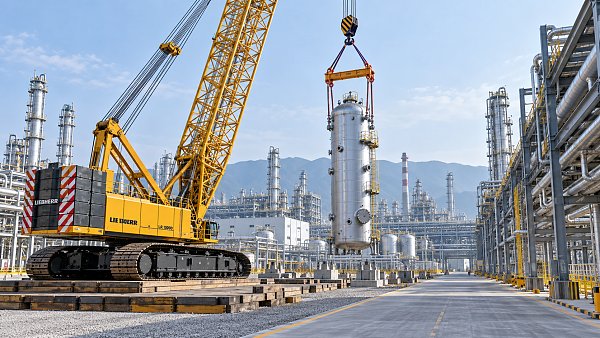
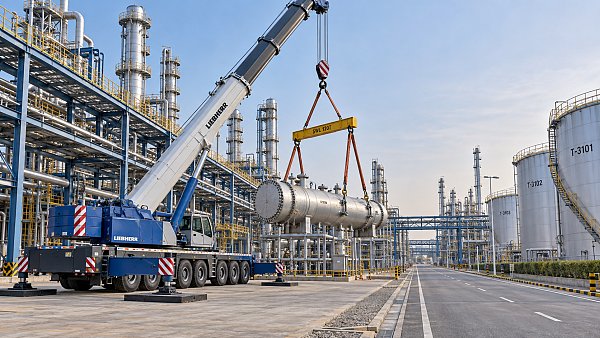
This is where crawler cranes, heavy haulage, and precision installation matter. A project may look attractive on paper, but execution risk can still reshape returns.
Why Heavy Equipment Ecosystems Matter More Than Before
One reason global infrastructure investment is becoming more selective is that investors now study equipment ecosystems, not just project headlines. Delivery capability has become a core valuation factor.
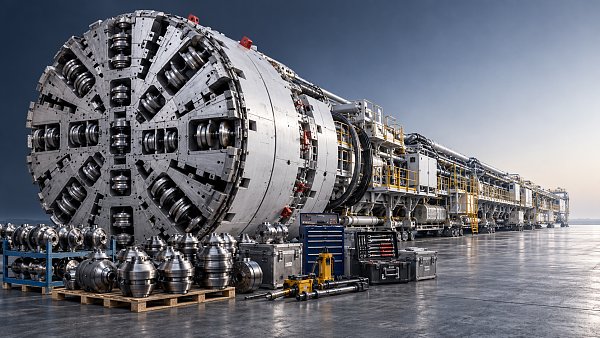
A tunnel project depends on more than civil design. TBM availability, cutter head material performance, geology response, spoil handling, and maintenance planning all shape commercial outcomes.
The same applies to open-pit mining, mega-lifting, and road construction. Capital prefers sectors where machine performance, operator skill, and construction sequencing are understood in practical detail.
That is why intelligence platforms such as TF-Strategy matter in the current market. The value is not only in news flow, but in connecting machinery parameters, construction logic, and investment timing.
- TBM-intensive projects attract stronger confidence when geology, cutter wear, spare supply, and tunneling methodology are reviewed before financing assumptions are finalized.
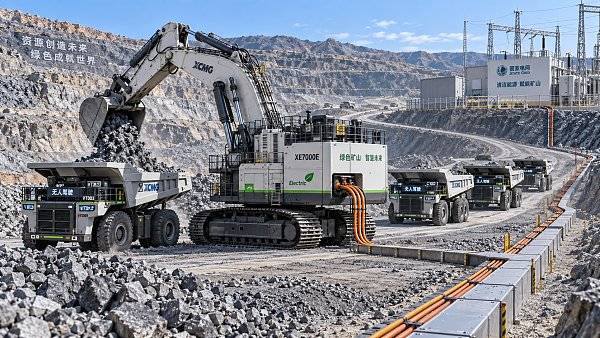
- Open-pit mining projects become more bankable when excavator productivity, haulage cycles, altitude conditions, and fuel or electrification pathways are quantified early.
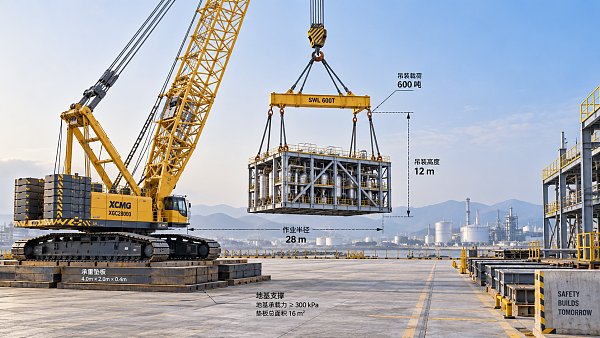
- Large lifting projects gain capital when crane selection, transport routes, component weights, and wind-window constraints are modeled into schedule risk.
- Road machinery programs look stronger when paving precision, maintenance intervals, and digital monitoring support lower lifecycle cost instead of headline capex savings.
What Investors Usually Want to See Before Capital Commits
Behind every major global infrastructure investment decision, there is a practical filter. Capital wants proof that a project can survive procurement pressure, supply disruption, and policy change.
This is where many surface-level market readings fail. They track announcements, but not execution depth. In global infrastructure investment, real quality often hides in operational detail.
Sectors Worth Watching Closely Over the Next Few Years
Some sectors already attract large pools of capital. Others are moving from niche interest to mainstream allocation. The following areas deserve closer tracking.
- Underground urban infrastructure is strengthening because dense cities need more mobility, utility resilience, and climate-adaptive construction below constrained surface space.
- Critical mineral corridors are drawing capital as resource nationalism, energy transition demand, and processing localization reshape global mining infrastructure investment.
- Grid-linked renewable installation keeps accelerating because transmission, foundations, and heavy lifting create visible construction demand beyond generation headlines.
- Electrified mining fleets are gaining attention where diesel cost, emissions targets, and remote operation technology can justify gradual fleet transition.
- Industrial logistics upgrades remain attractive because factories, ports, and freight yards need faster connections to support regionalized manufacturing networks.
A tunnel and underground scenario
When reviewing metro, water transfer, or mountain tunnel projects, it helps to check more than contract size. Geology uncertainty and TBM support capability often decide whether returns stay intact.
A strong signal is early alignment between design, machine selection, cutter life assumptions, and spoil logistics. If those pieces are disconnected, schedule risk rises quickly.
A mining and haulage scenario
In mining infrastructure investment, the resource alone is not enough. Haul roads, excavator productivity, dump truck utilization, and energy supply shape actual project competitiveness.
Projects in high altitude or extreme temperature zones need extra scrutiny. Equipment derating, tire life, charging or fueling strategy, and maintenance access can change economics materially.
Common Risks That Distort Global Infrastructure Investment Decisions
Even in strong sectors, mistakes often come from missing the operational middle. Big narratives are useful, but they do not replace field-level discipline.
- Overrating policy announcements without checking permit progress, land access, and contractor capacity can make global infrastructure investment pipelines look healthier than they are.
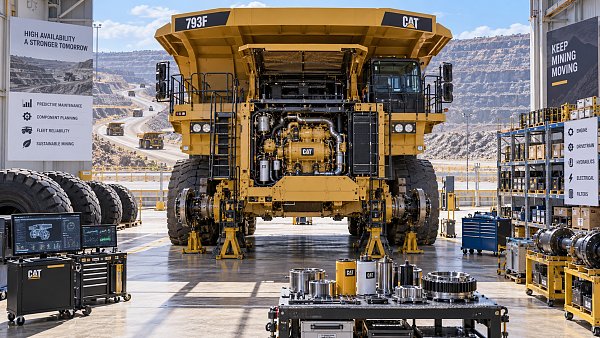
- Ignoring spare parts, wear components, and maintenance training often leads to unrealistic uptime assumptions in heavy equipment-dependent sectors.
- Treating low capex bids as real savings can hide future TCO pressure, especially in harsh mining, tunneling, and lifting environments.
- Assuming new technology is automatically bankable creates risk when remote control, electrification, or digital systems lack service depth.
- Missing geopolitical exposure in steel, energy, rare materials, or shipping routes can distort procurement timing and final asset returns.
One useful habit is to separate market attractiveness from delivery attractiveness. A sector may look excellent structurally, yet still face weak investability in a specific geography or execution model.
A Practical Way to Screen Opportunities Faster
A faster screening process for global infrastructure investment should connect macro logic with machinery reality. That reduces noise and makes cross-border comparisons more consistent.
- Start with strategic demand. Check whether the asset supports energy security, urban throughput, trade resilience, or mineral supply continuity.
- Map execution dependence. Identify whether TBMs, ultra-large excavators, crawler cranes, road machinery, or mining trucks are mission-critical.
- Test equipment readiness. Review supply lead times, service networks, operator skill, digital support, and replacement component availability.
- Stress lifecycle economics. Compare capex with uptime, energy use, maintenance burden, and productivity under local operating conditions.
- Track intelligence continuously. Tender flow, raw material supply, and technology shifts often change project quality before valuations fully adjust.
This is exactly the kind of layered view that TF-Strategy is built to support. Its focus on tunneling, mining, lifting, road machinery, and heavy haulage gives context that pure financial databases often miss.
For global infrastructure investment, that matters because project value is created where engineering precision and strategic timing meet. The closer analysis gets to that point, the better the judgment.
What to Do Next
The broad direction is clear. Global infrastructure investment is concentrating in sectors tied to decarbonization, logistics resilience, underground construction, and critical resource development.
But the smarter move is not to follow headlines alone. It is to test whether each opportunity has the machinery depth, construction logic, and lifecycle economics to support durable returns.
A practical next step is to build a short watchlist by sector, then compare projects using the same filters: strategic relevance, equipment readiness, schedule risk, and total cost performance.
That approach makes global infrastructure investment easier to read, easier to rank, and far more useful for real-world decision support.
Related News
 Oct 17, 2026Tunnel Boring Machine Supplier List: Compare TBM Types and Service CoverageExplore our tunnel boring machinery supplier list to compare EPB, slurry and hard rock TBMs, assess service coverage and lifecycle costs, and build a smarter procurement shortlist.
 Oct 16, 2026Heavy-Duty Petrochemical Lifting: Selecting Cranes by Load, Radius, and Site AccessExplore heavy-duty petrochemical lifting solutions. Compare cranes by load, radius, site access, and ground support to reduce project risk and optimize lifting costs.
 Oct 15, 2026Crane Selection for Petrochemical Turnarounds: Capacity, Radius, and Site AccessExplore petrochemical lifting solutions cranes can deliver, with expert guidance on capacity, working radius, and site access to help you plan a safer, more efficient turnaround.
 Oct 14, 2026High-Capacity Heavy Lifting Solutions: Matching Load, Radius, and Ground ConditionsDiscover heavy lifting solutions high capacity projects demand—compare load charts, working radius, and ground conditions to select a feasible, cost-effective system.
Prof. Marcus Chen
Weekly Insights
Stay ahead with our curated technology reports delivered every Monday.