
Tunnel Boring Machine Technology: Key Systems, Limits, and Selection Factors
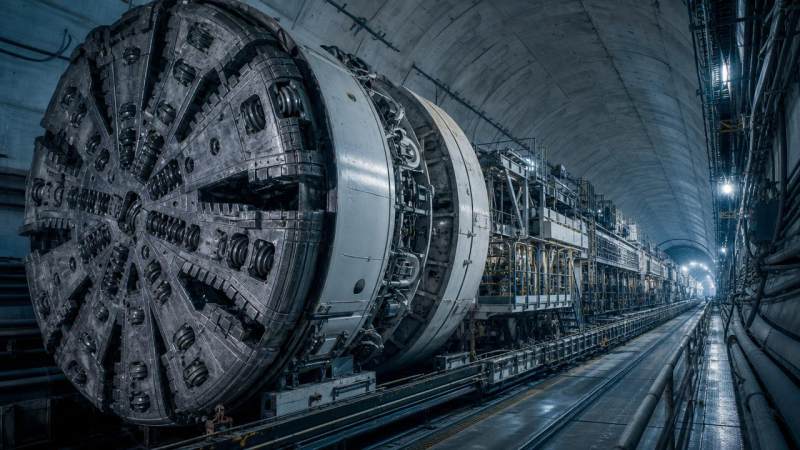
Tunnel boring machine technology has become a decisive factor in the cost, risk, and delivery performance of modern underground projects. For technical evaluators, understanding how cutterheads, thrust systems, segment erection, muck removal, guidance, and ground conditioning interact is essential before comparing TBM types or supplier claims. This article examines the key systems, operating limits, and selection factors that determine whether a TBM can perform reliably across specific geology, alignment constraints, and project objectives.
Why Tunnel Boring Machine Technology Is a System Decision, Not a Machine Label
Technical evaluators often begin with labels such as EPB, slurry, hard rock, or dual-mode TBM. That is useful, but incomplete.
Tunnel boring machine technology works as an integrated excavation platform where geology, pressure control, installed power, logistics, and lining strategy must fit together.
The evaluation question that matters most
The practical question is not which TBM is most advanced. It is which configuration can maintain face stability, acceptable advance rates, and predictable maintenance access.
For urban metros, mountain tunnels, hydropower works, utility corridors, and transport links, tunnel boring machine technology must be judged against site-specific constraints.
- Ground behavior: rock strength, abrasivity, groundwater pressure, mixed-face risk, boulders, squeezing ground, and fault zones.
- Alignment constraints: curve radius, gradient, overburden, shaft access, and allowable settlement near existing assets.
- Production constraints: muck transport distance, segment supply rate, cutter inspection access, and crew shift strategy.
- Commercial constraints: procurement schedule, spare parts availability, energy cost, disposal permits, and risk allocation.
TF-Strategy tracks these links through heavy equipment intelligence, connecting physical parameters with construction methods and infrastructure delivery strategy.
Key TBM Systems Technical Evaluators Should Verify
A TBM is best evaluated through interacting subsystems. Strong performance in one area cannot compensate for an unsuitable excavation concept.
The following table summarizes core systems in tunnel boring machine technology and the evaluation points that should be checked before procurement.
This table shows why tunnel boring machine technology cannot be validated only through installed power or diameter. Interfaces define reliability.
For example, high cutterhead torque has limited value if muck discharge, foam conditioning, or intervention procedures are poorly matched.
How Ground Conditions Define the Right TBM Type
Ground is the primary input for TBM selection. Bore logs, laboratory testing, hydrogeology, and construction records must be read together.
The real challenge is uncertainty. Tunnel boring machine technology must tolerate variation, not just average conditions described in tender documents.
Common TBM type comparison for procurement screening
The comparison below helps evaluators connect geology, face support, and operational limits before requesting supplier-specific configurations.
This comparison supports early screening, but final decisions require project-specific ground investigation and supplier engineering review.
For technical evaluators, tunnel boring machine technology should be judged by operating envelope, not by a single optimistic advance-rate figure.
Operating Limits That Often Decide Project Risk
Every TBM has a limit. The difficulty is finding whether that limit appears during normal production or only in rare conditions.
Tunnel boring machine technology evaluation should therefore include mechanical capacity, ground response, logistics, maintenance, and human factors.
Mechanical and geological limits
- Torque limit: insufficient breakaway torque can prevent restart after stoppage in sticky soil or blocky mixed ground.
- Thrust limit: low available thrust reduces penetration in strong rock and can increase cutter consumption.
- Face pressure limit: an inadequate pressure range increases settlement risk, blowout risk, or water inflow exposure.
- Wear limit: abrasive quartz content, cobbles, and fractured rock may drive cutter changes beyond planned maintenance windows.
- Support limit: segment design, grout performance, and shield tail sealing must match loading and convergence risk.
Production limits beyond the cutterhead
Many underperforming projects are not constrained by excavation power. They are constrained by ring building, muck haulage, spares, or shift coordination.
A good evaluation of tunnel boring machine technology includes the backup gantry, conveyor layout, segment handling, ventilation, and emergency access.
This is where TF-Strategy’s heavy-industry perspective is useful. TBM productivity is linked with cranes, road logistics, mining-style haulage thinking, and power systems.
Procurement Checklist: What to Ask Before Comparing Supplier Claims
Supplier brochures often describe performance under ideal assumptions. Technical evaluators need questions that expose hidden risks and interface gaps.
Use this procurement checklist to assess whether tunnel boring machine technology is being specified with enough operational detail.
A checklist changes the negotiation. It moves discussion from general capability to verifiable tunnel boring machine technology performance.
It also helps procurement teams avoid selecting a lower capital cost machine that creates higher delay, disposal, or maintenance exposure.
Cost Factors: Where Total Cost of Ownership Can Shift
TBM procurement is not a simple purchase price exercise. Total cost includes machine, consumables, jobsite systems, downtime, and risk response.
Tunnel boring machine technology affects cost through energy demand, cutter life, slurry treatment, segment damage, crew productivity, and schedule reliability.
Cost categories to model before award
- Capital cost: TBM body, backup system, launch equipment, spare tooling, control systems, and transport packages.
- Consumables: disc cutters, scrapers, foam agents, bentonite, grease, grout, seals, filters, and wear plates.
- Site systems: power supply, ventilation, water treatment, slurry separation, muck disposal, lifting equipment, and segment storage.
- Risk allowances: interventions, ground treatment, standby shifts, redesign, additional monitoring, and emergency works.
An expensive machine may reduce risk if it improves access, supports mixed-mode operation, or protects against known geological transitions.
Conversely, over-specification can lock projects into unnecessary complexity, especially where ground conditions are stable and logistics are straightforward.
Compliance, Safety, and Data Requirements in TBM Evaluation
Compliance is not only a documentation requirement. It influences design reviews, site acceptance, operator training, and emergency procedures.
Tunnel boring machine technology should be reviewed against applicable local regulations and recognized engineering practices for machinery safety and underground construction.
Practical compliance focus areas
- Machine safety systems should include guarding, emergency stops, fire detection, evacuation routes, and lockout procedures.
- Electrical and hydraulic systems should be documented with maintainable schematics and inspection procedures.
- Pressure operations should address hyperbaric intervention, pressure monitoring, and medical readiness where relevant.
- Environmental controls should cover spoil handling, groundwater management, slurry discharge, and noise or vibration monitoring.
- Digital records should support traceability for ring installation, ground pressure, advance parameters, and incident review.
General references may include ISO machinery safety principles, IEC electrical practices, and national tunneling or occupational safety requirements.
Evaluators should avoid treating compliance as a final paperwork step. It must be built into specifications from the start.
Common Misconceptions About Tunnel Boring Machine Technology
Misinterpretations lead to weak specifications, unrealistic schedules, and disputes. The following points appear frequently in technical and commercial reviews.
Misconception 1: Larger installed power always means better performance
Power matters, but usable performance depends on torque delivery, cutterhead design, ground support, cooling, and muck removal capacity.
Misconception 2: Historical advance rates can be copied directly
Reference projects are useful only when geology, diameter, depth, logistics, crew model, and intervention access are comparable.
Misconception 3: Dual-mode design removes geological risk
Dual-mode tunnel boring machine technology increases flexibility, but mode transitions still require planning, time, tools, and trained operators.
Misconception 4: The TBM supplier alone controls project success
Success also depends on the contractor’s method statement, monitoring, spare parts discipline, segment quality, and ground response decisions.
FAQ for Technical Evaluators
These questions reflect common search and procurement concerns around tunnel boring machine technology in complex infrastructure programs.
How do I choose between EPB and slurry TBM technology?
Start with permeability, groundwater pressure, grain size distribution, settlement sensitivity, and disposal constraints. EPB often suits conditioned soils.
Slurry systems are commonly considered for permeable ground and high water pressure, but separation plant footprint and treatment cost must be evaluated.
What parameters are most important in hard rock TBM evaluation?
Uniaxial compressive strength, rock mass rating, abrasivity, fracture frequency, water inflow, cutter load, and support installation rate are central.
Tunnel boring machine technology for hard rock should also be assessed for gripper reaction, cutter change access, and backup conveyor reliability.
How early should TBM selection begin?
Selection should begin during feasibility or reference design, before shaft size, alignment, spoil strategy, and segment design become fixed.
Late TBM decisions often create interface changes that affect civil works, logistics, procurement lead time, and project risk allocation.
What data should be monitored during TBM operation?
Key data includes face pressure, torque, thrust, advance rate, cutterhead speed, screw or slurry flow, grout volume, and guidance deviation.
When tunnel boring machine technology is digitally instrumented, evaluators can detect trend shifts before they become schedule-impacting failures.
Future Trends: Digital, Electric, and Intelligence-Led TBM Decisions
The next phase of tunnel boring machine technology is moving toward more connected, data-driven, and energy-conscious underground construction.
Remote diagnostics, 5G-assisted monitoring, predictive cutter wear models, automated guidance, and improved material technology are changing evaluation criteria.
What this means for technical procurement
- Specifications should define data ownership, export formats, cybersecurity, and reporting obligations before machine delivery.
- Energy efficiency should be reviewed across the complete system, including pumping, ventilation, conveyors, and separation plants.
- Cutterhead materials and wear protection should be matched to expected abrasivity instead of selected from standard packages only.
- Lifecycle decisions should include reusability, refurbishment potential, and adaptation for future alignments or ground types.
TF-Strategy’s Strategic Intelligence Center observes these shifts across TBM, mining, lifting, road machinery, and heavy haulage ecosystems.
That cross-sector view helps evaluators see how power systems, materials, controls, logistics, and commercial demand reshape underground project delivery.
Why Choose TF-Strategy for TBM Technology Intelligence
Technical evaluators need more than news. They need structured intelligence that connects machine parameters with geology, delivery risk, and procurement decisions.
TF-Strategy focuses on tunnel boring machine technology through the lens of power and precision in global heavy industry.
Consultation topics we can support
- Parameter confirmation for cutterhead, thrust, torque, face pressure, muck removal, and segment handling requirements.
- TBM type screening for EPB, slurry, hard rock, and dual-mode applications under specific geological uncertainty.
- Supplier comparison frameworks covering performance assumptions, lead time, spare parts strategy, and interface responsibilities.
- Delivery schedule review, including assembly sequence, launch readiness, commissioning, and maintenance windows.
- Compliance and documentation review for machinery safety, digital monitoring, environmental controls, and project acceptance needs.
If your team is preparing a TBM tender, technical review, or risk workshop, TF-Strategy can help clarify decision logic before commitments harden.
Contact TF-Strategy to discuss tunnel boring machine technology selection, parameter validation, customized intelligence reports, delivery planning, or quotation communication support.
Related News
 Oct 17, 2026Tunnel Boring Machine Supplier List: Compare TBM Types and Service CoverageExplore our tunnel boring machinery supplier list to compare EPB, slurry and hard rock TBMs, assess service coverage and lifecycle costs, and build a smarter procurement shortlist.
 Oct 16, 2026Heavy-Duty Petrochemical Lifting: Selecting Cranes by Load, Radius, and Site AccessExplore heavy-duty petrochemical lifting solutions. Compare cranes by load, radius, site access, and ground support to reduce project risk and optimize lifting costs.
 Oct 15, 2026Crane Selection for Petrochemical Turnarounds: Capacity, Radius, and Site AccessExplore petrochemical lifting solutions cranes can deliver, with expert guidance on capacity, working radius, and site access to help you plan a safer, more efficient turnaround.
 Oct 14, 2026High-Capacity Heavy Lifting Solutions: Matching Load, Radius, and Ground ConditionsDiscover heavy lifting solutions high capacity projects demand—compare load charts, working radius, and ground conditions to select a feasible, cost-effective system.
Prof. Marcus Chen
Weekly Insights
Stay ahead with our curated technology reports delivered every Monday.