
Global Infrastructure Projects in 2025: Funding Shifts, Regional Demand, and Supply Chain Risks
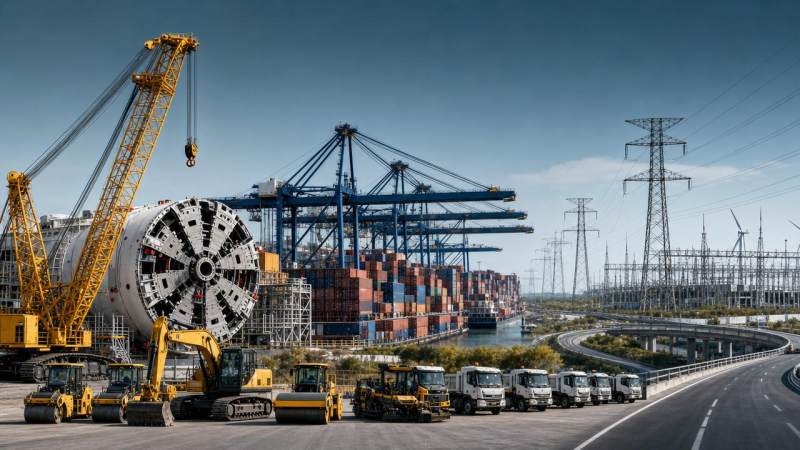
Global infrastructure projects are moving into a less predictable cycle
In 2025, global infrastructure projects no longer follow a simple expansion story.
Capital is still flowing, but it is flowing differently.
Some markets are accelerating through energy transition, logistics upgrading, and urban transport renewal.
Others are slowing because financing costs, political risk, or imported equipment exposure have become harder to manage.
That is why global infrastructure projects now demand closer reading of funding structure, regional timing, and equipment readiness.
The more interesting shift is not whether projects exist.
It is whether they can move from announcement to execution without delay, redesign, or cost escalation.
For sectors tracked by TF-Strategy, this matters immediately.
TBM deployment, open-pit mining expansion, crawler crane utilization, and road machinery demand all depend on project certainty, not headline volume alone.
Recent signals suggest that physical delivery capacity is becoming as important as financial commitment.
Why funding shifts are becoming the first filter
The funding model behind global infrastructure projects is changing faster than many project pipelines suggest.
Public budgets remain important, but blended finance is taking a larger role.
Development banks, sovereign funds, export credit agencies, and private capital are reshaping deal structures.
This creates more opportunity, but also more conditions attached to delivery.
Projects tied to decarbonization, grid resilience, strategic minerals, and transport security are finding money faster.
Traditional projects with weaker policy alignment are facing longer approval cycles.
In practical terms, capital is rewarding strategic relevance.
It is also rewarding projects that can prove schedule realism and supply chain visibility.
- Energy and transmission corridors are attracting priority funding because they support industrial competitiveness and grid stability.
- Mining infrastructure linked to copper, lithium, and iron ore remains active where permitting and logistics are manageable.
- Urban tunneling and rail projects still move forward, but lenders are asking harder questions about procurement timing and cost control.
- Ports, roads, and intermodal links gain momentum when they can show measurable trade or defense value.
This funding environment changes how global infrastructure projects should be read.
A large announced value is no longer enough.
The stronger signal is the quality of capital behind it, and the conditions attached to disbursement.
Regional demand is not moving in one direction
Demand across global infrastructure projects is increasingly uneven.
That unevenness is shaping where heavy equipment fleets will be under pressure.
Asia continues to generate volume through metro systems, highways, water transfer, and industrial parks.
However, the mix is changing toward more technically demanding and schedule-sensitive work.
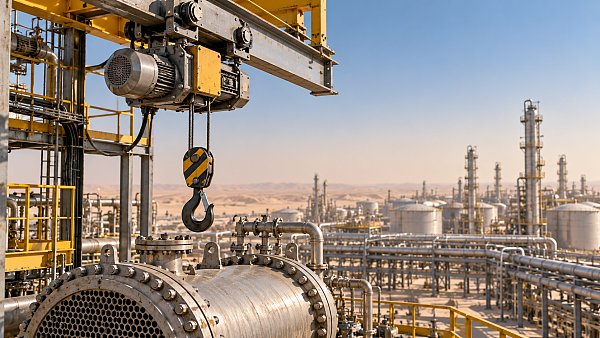
The Middle East remains strong in giga-projects, logistics nodes, and energy-linked construction.
There, ultra-large lifting machinery and specialized road equipment stay central.
Latin America shows selective strength where mining, transport corridors, and port expansion align with export economics.
Africa presents long-term opportunity, but project timing is more exposed to financing and import constraints.
Europe and North America remain active, though demand is being redirected toward grid upgrades, replacement infrastructure, and energy supply security.
For global infrastructure projects, regional demand now has to be judged by project type, not only market size.
Supply chain risk is shifting from disruption to structural constraint
The supply chain picture in 2025 is less chaotic than during earlier shocks.
But it is not stable in the old sense.
Lead times for critical components still fluctuate.
Steel grades, hydraulic systems, electronic controls, tires, and cutter tools remain exposed to regional bottlenecks.
Shipping routes may be open, yet insurance, customs friction, and rerouting costs can still alter delivery economics.
This is especially relevant for global infrastructure projects using high-value machinery with limited substitute options.
A delayed TBM cutterhead material upgrade is not the same as a delayed commodity part.
A crawler crane waiting on a specific control module can hold up an entire wind or petrochemical sequence.
That is why risk has become more structural than episodic.
The issue is less about one-off disruption and more about persistent concentration in key inputs.
Where the pressure shows up first
- Component localization requirements can limit supplier flexibility.
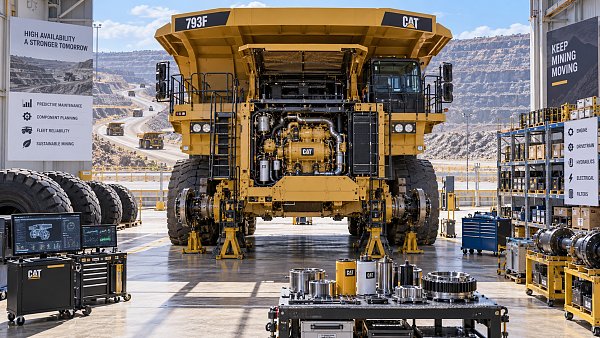
- Energy equipment and mining fleets compete for overlapping steel, powertrain, and electronics capacity.
- Higher compliance standards slow substitution when original parts are unavailable.
- Remote sites amplify downtime because maintenance logistics remain thin.
For TF-Strategy’s coverage areas, supply chain intelligence is becoming part of project feasibility, not just procurement support.
The biggest impact is happening between planning and execution
The most visible impact on global infrastructure projects is not always cancellation.
More often, it appears as phasing changes, equipment resequencing, or scope compression.
This matters because those shifts change cost structures without always changing the headline project value.
Urban tunnel works may proceed, yet launch timing changes because imported systems arrive late.
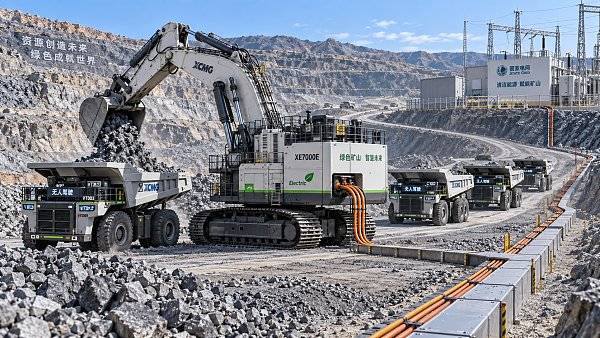
Mining expansions may be approved, yet truck fleet mobilization is staged to match power and haul road readiness.
Large lifting programs may hold contract value, yet actual crane utilization depends on fabrication progress and marine transport windows.
In road construction, material cost swings can alter paving strategy and replacement cycles.
So the real question around global infrastructure projects is becoming operational depth.
How resilient is the execution model when one variable moves?
What deserves closer attention over the next few quarters
A few signals now matter more than broad optimism.
They help separate visible pipelines from executable demand in global infrastructure projects.
- Watch whether financing reaches notice-to-proceed, not only memorandum stage.
- Track equipment allocation by region, especially for TBM systems, crawler cranes, and large haulage fleets.
- Compare tender language for local content, emissions, and digital monitoring requirements.
- Review raw material exposure for cutter tools, high-strength steel, and tire supply.
- Measure project resilience through spare parts planning, service coverage, and logistics redundancy.
This is where intelligence platforms with engineering context become more useful.
TF-Strategy’s value lies in linking project direction with machinery parameters, construction methods, and delivery risk.
That perspective helps make sense of why two projects with similar budgets can carry very different execution profiles.
A practical reading of 2025 starts with adaptability
The 2025 outlook for global infrastructure projects is not weak.
It is selective, conditional, and far more operationally demanding.
Funding is moving toward strategic assets.
Regional demand is real, but uneven.
Supply chain risk remains present, though in more concentrated forms.
That combination favors decisions built on verified project signals, equipment visibility, and staged contingency planning.
The most effective next step is to build a sharper market map.
Identify which global infrastructure projects are capital-secure, which regions are pulling heavy equipment faster, and which supply nodes could disrupt delivery.
From there, compare technical requirements, timing windows, and service support assumptions before commitment hardens.
In this cycle, better judgment comes from connecting strategy with machinery reality.
Related News
 Oct 27, 2026Construction Equipment Efficiency: How to Reduce Idle Time on JobsitesBoost construction equipment efficiency with smarter scheduling, telematics, and safe shutdown practices. Discover how to reduce idle time and fuel waste on your jobsite.
 Oct 26, 2026How TBM Electrical Systems Distribute Power and Protect Against FaultsExplore how TBM equipment electrical systems distribute power, coordinate fault protection, and maintain essential services. Learn what to check for safer, more reliable tunneling.
 Oct 25, 2026Comparing Industrial Equipment Suppliers: Lead Times, Warranties, and ServiceMake a smarter industrial equipment supplier comparison. Explore lead times, warranty coverage, and service support to reduce downtime risk and choose with confidence.
 Oct 24, 2026Choosing Lifting Equipment for Middle East Petrochemical Plants in Hazardous AreasExplore petrochemical lifting equipment Middle East plants can rely on. Compare hazardous-area certification, capacity, and heat limits to make informed procurement decisions.
Related News

Prof. Marcus Chen
Weekly Insights
Stay ahead with our curated technology reports delivered every Monday.