
Mining Industry Developments Shaping Capital Planning and Project Risk
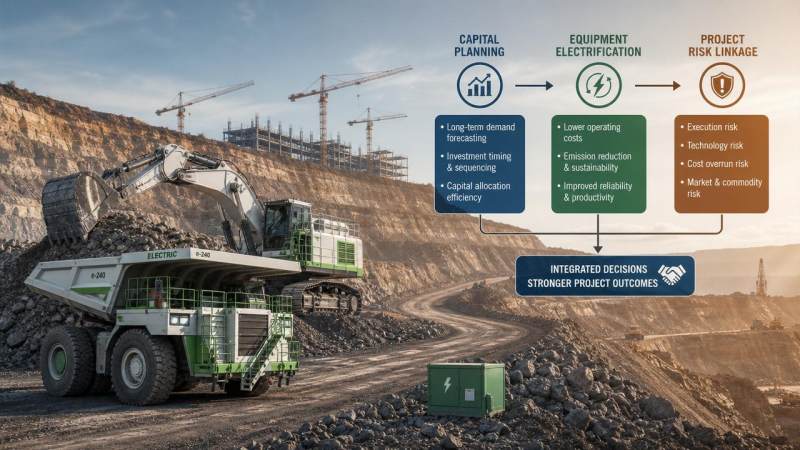
Mining industry developments now influence far more than production forecasts. They shape capital timing, contractor selection, fleet design, permitting assumptions, and the resilience of large infrastructure-linked projects. For operations tied to open-pit mining, heavy haulage, and adjacent construction systems, the current cycle is defined by tighter financial discipline, faster technology shifts, and a sharper need to read project risk before it becomes a cost overrun.
Why mining developments now carry broader strategic weight
The phrase mining industry developments no longer refers only to commodity price movements or new ore discoveries. It now covers equipment electrification, automation maturity, supply chain reliability, emissions pressure, labor availability, and the changing economics of mine development.
That wider lens matters because mining projects sit inside a larger heavy industry network. Ultra-large excavators, mining dump trucks, road machinery, crawler cranes, and even tunnel boring systems increasingly share the same capital constraints, component bottlenecks, and digital operating models.
This is where a cross-sector view becomes practical. Intelligence that connects machine parameters, construction methods, and infrastructure strategy gives a clearer picture of project readiness than mine economics alone.
Capital planning is becoming more selective
Capital planning in mining used to rely heavily on reserve quality, expected throughput, and commodity outlook. Those factors still matter, but they are no longer enough to support reliable investment timing.
Mining industry developments have introduced a new layer of decision pressure. Equipment lead times can alter project sequencing. Power availability can determine whether an electrification plan is realistic. Haul road design can affect the economics of autonomous or battery-supported fleets.
In practice, better capital planning now depends on linking asset assumptions with execution conditions. A mine may look attractive on paper, yet become fragile if its fleet strategy depends on unavailable components, weak charging infrastructure, or a contractor base without digital operating capability.
What changes inside the investment model
- Initial capex must be tested against escalation in steel, tires, power systems, and transport costs.
- Schedule assumptions need to reflect longer procurement windows for critical heavy equipment.
- Operating models should account for software, connectivity, and remote-control support costs.
- Return expectations must include downtime risk caused by parts concentration or vendor dependency.
Technology shifts are rewriting risk profiles
One of the most important mining industry developments is the move from purely mechanical performance to integrated performance. Fleet value is now measured through uptime, automation compatibility, energy efficiency, and data visibility.
Pure electric mining trucks, hybrid support systems, and remote-controlled excavation are no longer experimental signals. They are becoming planning variables, especially where labor access is difficult or emissions targets influence financing decisions.
Yet technology reduces some risks while introducing others. Automation can lower safety exposure and improve cycle consistency. At the same time, it can increase reliance on communications infrastructure, software integration, and workforce retraining.
The same pattern appears across heavy infrastructure. A TBM project, an open-pit expansion, and a crane-intensive energy build may all depend on similar questions: Which systems are mature, which suppliers are bankable, and where does technical complexity exceed local execution capacity?
The market is watching a more complex set of signals
Commodity cycles still shape investment appetite, but current mining industry developments are also being driven by non-price indicators. Power policy, environmental approval timelines, critical mineral strategy, and logistics resilience can now move project economics just as quickly.
This is especially visible in regions where mines support broader infrastructure expansion. Road access, lifting capacity, and material handling requirements often extend beyond the mine gate. Delays in one heavy equipment segment can ripple into another.
A more reliable reading of the market combines sector news with equipment-specific intelligence. That includes tender activity, raw material supply conditions, material innovation in wear components, and the commercial logic behind low-emission fleets.
Where project risk is increasing most visibly
Project risk is not rising evenly. The most exposed projects are usually those with aggressive timelines, high equipment complexity, weak logistics corridors, or unrealistic assumptions about local service capacity.
Mining industry developments are making hidden dependencies easier to miss. For example, a haulage upgrade may appear straightforward until battery performance, tire supply, and slope design are assessed together.
Similarly, expansion plans can become vulnerable when equipment decisions are made separately from contractor capability. Large machines do not create value on specification sheets alone. They create value when site conditions, maintenance systems, operator skill, and material flow are aligned.
Common pressure points
- Mismatch between technology ambition and site infrastructure.
- Underestimated commissioning time for advanced fleets.
- Exposure to specialized components with limited replacement options.
- Weak integration between mine planning, haulage strategy, and road design.
- Insufficient visibility into vendor service depth across remote regions.
A practical framework for reading mining industry developments
A useful way to interpret mining industry developments is to move from headlines to operating consequences. Not every trend deserves immediate investment. The key is to test whether a development changes cost structure, schedule certainty, asset productivity, or risk concentration.
This is also why specialized intelligence platforms matter. A portal focused on TBM systems, open-pit machinery, ultra-large lifting equipment, and strategic engineering signals can reveal links that broad market summaries often miss.
For example, insight into 5G remote control, cutter head material evolution, or the economics of electric haulage can support better decisions even outside a single equipment category. These trends often indicate where maintenance models, spare parts demand, and contractor expectations are heading.
Questions worth asking before capital is committed
- Does the selected fleet fit the power, terrain, and climate realities of the site?
- Which assumptions depend on one supplier, one transport route, or one approval path?
- How much of the value case depends on digital uptime rather than mechanical output?
- Are maintenance materials and wear parts exposed to specialty supply constraints?
- What happens to project return if commissioning slips by one or two quarters?
How to turn market awareness into better decisions
The most useful response to mining industry developments is not constant strategy revision. It is better decision structure. That means updating capital models with operational evidence, comparing scenarios early, and validating equipment choices against execution reality.
It also helps to watch adjacent heavy industry signals. Changes in crane availability, road machinery demand, or large-scale civil construction can reveal coming pressure on labor, transport, fabrication, and service networks.
A disciplined next step is to map the project against a short list of variables: technology maturity, supply exposure, infrastructure readiness, service coverage, and regulatory timing. Once those factors are visible, capital planning becomes less reactive and project risk becomes easier to price.
In a market where mining industry developments move quickly across equipment, energy, and infrastructure systems, the strongest position comes from seeing connections early. Better intelligence does not remove uncertainty, but it does make timing, allocation, and risk selection far more deliberate.
Related News
 Jul 28, 2026How to Verify a Supplier Reference for Industrial Equipment Before You Buy?Supplier reference for industrial equipment matters before any major purchase. Learn how to verify end-user feedback, service capability, documents, and hidden cost risks before you buy.
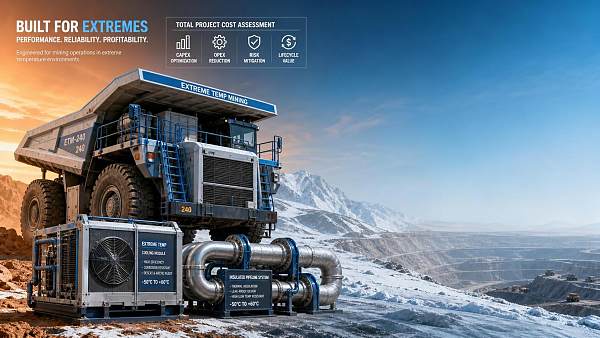
 Jul 27, 2026Extreme Temperature Mining Solutions Cost: What Drives Total Project Spend?Extreme temperature mining solutions cost depends on more than equipment price. Discover the hidden drivers of total project spend, from thermal packages and uptime to maintenance, logistics, and warranty risk.
 Jul 26, 2026How to Build an Infrastructure Compliance Strategy That Reduces Risk Across ProjectsInfrastructure compliance strategy tips for project leaders: reduce cross-project risk, prevent delays, tighten contract controls, and keep assets, permits, and audit evidence aligned.
 Jul 25, 2026How to Evaluate Large Lifting Systems for Heavy Infrastructure ProjectsLarge lifting systems evaluation starts with real load data, site limits, mobilization, risk, and total cost. Learn how to choose the safest, most efficient option for heavy infrastructure projects.

Prof. Marcus Chen
Weekly Insights
Stay ahead with our curated technology reports delivered every Monday.