
How mining machinery advancements are changing site safety
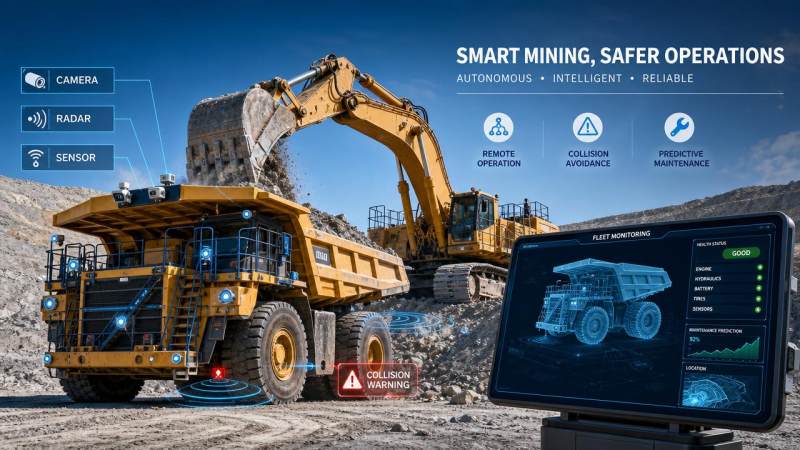
Mining machinery advancements are reshaping how safety is managed across modern mining sites. For quality control and safety managers, new systems such as real-time monitoring, remote operation, collision avoidance, and predictive maintenance are reducing human exposure to risk while improving operational consistency. Understanding these changes is essential for building safer workflows, meeting compliance standards, and supporting long-term site performance.
Why a checklist matters when evaluating mining machinery advancements
Mining sites combine moving equipment, unstable ground, dust, noise, and fatigue risk. Safety decisions fail when teams review new machines by headline features alone.
A checklist turns mining machinery advancements into measurable controls. It helps compare machines, verify integration, and confirm whether claimed safety gains work in actual field conditions.
This approach is especially useful across open-pit, underground, and heavy haulage operations, where different hazards demand different machine safety priorities.
Core checklist for safer adoption of mining machinery advancements
Use the following checklist to assess whether mining machinery advancements truly improve site safety rather than simply adding technical complexity.
- Verify hazard visibility by checking camera coverage, radar range, blind-spot mapping, and alarm clarity during loading, reversing, dumping, and maintenance access.
- Confirm remote operation stability under real signal conditions, including latency, fail-safe response, network redundancy, and operator takeover procedures during disruption.
- Test collision avoidance logic against mixed traffic, pedestrian zones, berm edges, and parked equipment instead of relying only on factory demonstrations.
- Review predictive maintenance outputs to ensure fault alerts identify brakes, steering, hydraulics, tires, and thermal events before they become safety incidents.
- Check human-machine interface design, including screen readability, alarm prioritization, control placement, glove use, and operation under vibration and dust.
- Audit machine access systems by examining ladders, platforms, handrails, lockout points, and slip resistance during wet, muddy, or icy conditions.
- Measure operator fatigue controls through seat ergonomics, cab pressurization, noise reduction, visibility, and automation support during long production cycles.
- Evaluate energy system risks for diesel, hybrid, or electric fleets, including thermal management, charging zones, battery isolation, and emergency response procedures.
- Integrate telemetry with safety reporting so near misses, harsh braking, overspeed, overload, and route deviation become traceable leading indicators.
- Validate maintenance readiness by confirming spare parts, software support, calibration routines, and technician competence for new digital safety systems.
How mining machinery advancements change safety in key operating scenarios
Open-pit loading and hauling
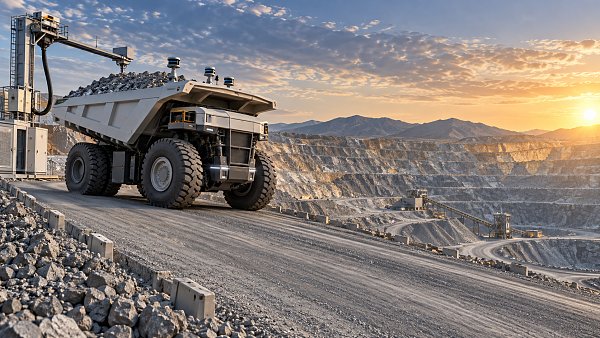
In open-pit mines, mining machinery advancements are improving control over the highest exposure moments: loading, reversing, grade descent, and dumping at edges.
Smart haul trucks now combine payload sensing, slope monitoring, tire pressure analytics, and collision warnings. These systems reduce rollover risk, brake overload, and poor spacing between mobile assets.
Excavation near unstable ground
Large excavators and shovels increasingly use sensor feedback to detect abnormal vibration, swing resistance, and hydraulic variation. That improves early recognition of ground instability or machine stress.
When machine data is linked with geotechnical monitoring, safety teams gain a better warning window before bench failure, edge collapse, or unsafe machine positioning develops.
Underground and restricted-visibility work
In confined environments, mining machinery advancements support safer movement through proximity detection, remote tramming, thermal cameras, and ventilation-linked operating rules.
The main advantage is reduced human presence in high-risk headings, drawpoints, and unsupported zones. Remote and semi-autonomous systems shift personnel away from direct exposure.
Maintenance and service interventions
Many severe incidents happen when equipment is stationary, not moving. Advanced diagnostics help schedule service earlier, lowering rushed repairs in unsafe field conditions.
Digital lockout verification, onboard fault isolation, and condition-based service intervals also reduce confusion during high-pressure maintenance windows.
Commonly overlooked gaps in mining machinery advancements
Alarm overload
More sensors do not automatically create better safety. If alerts are frequent, vague, or poorly ranked, operators begin to ignore them under production pressure.
Weak site integration
A machine may be safe alone but unsafe in a mixed fleet. Mining machinery advancements need compatibility with dispatch systems, traffic plans, and older equipment behavior.
Training limited to startup
Initial vendor instruction is rarely enough. Safety performance drops when software updates, sensor recalibration, or staffing changes are not matched by repeat training.
Poor data governance
Telemetry has little value if nobody owns review frequency, escalation rules, or corrective action thresholds. Unused data creates a false sense of control.
Energy transition blind spots
Battery-electric and hybrid fleets can lower some risks while introducing others. Charging traffic, arc flash procedures, and thermal incident response require separate planning.
Practical steps to apply mining machinery advancements safely
- Map the highest-risk tasks first, then match mining machinery advancements to those exposure points rather than upgrading equipment broadly.
- Run field validation trials across day, night, dust, rain, and peak traffic conditions before approving site-wide deployment.
- Set measurable safety indicators such as near-miss frequency, emergency braking events, maintenance deferrals, and unauthorized zone entry.
- Standardize response protocols so operators, supervisors, and maintenance teams react consistently when automated systems trigger alerts.
- Review performance monthly and adjust thresholds, routes, or maintenance intervals using operational data rather than assumptions.
Where strategic intelligence supports better safety decisions
Safety outcomes improve when machinery selection is connected to operating context, not separated from it. That is where industry intelligence becomes useful.
Platforms focused on heavy equipment, such as TF-Strategy, help connect machine parameters, fleet evolution, digital control trends, and infrastructure conditions. This broader view supports more disciplined evaluation of mining machinery advancements.
For operations handling ultra-large excavators, mining dump trucks, crawler cranes, or related earth engineering assets, safety planning benefits from understanding both machine capability and strategic deployment constraints.
Conclusion and next action
Mining machinery advancements are changing site safety by moving people away from hazards, improving visibility, and making equipment condition more predictable. But the real safety gain depends on disciplined implementation.
Use a checklist-based review to test remote operation, collision avoidance, predictive maintenance, and interface quality against real site risks. Focus on alarm quality, mixed-fleet integration, and recurring training.
The next practical step is simple: review one high-risk task, compare current controls with recent mining machinery advancements, and identify the gap between technology availability and field-ready safety performance.
Related News
 Oct 06, 2026Selecting Petrochemical Overhead Cranes for Hazardous Areas and Heavy Process LoadsPetrochemical overhead cranes for hazardous areas: learn how to match capacity, duty, controls, corrosion protection, and maintenance access for safer, reliable lifts.
 Oct 05, 2026Tunneling Equipment Specification Planning: Key Criteria for Ground and Project RisksEquipment specification planning tunneling: learn how to match TBM systems to ground risks, geometry, safety, logistics, and lifecycle cost for more reliable project delivery.
 Oct 04, 2026Nuclear Lifting Equipment Cost: Budgeting for Compliance, Testing, and Lifecycle RiskNuclear lifting equipment cost explained: budget for compliance, proof-load testing, installation, documentation, and lifecycle risk to make confident procurement decisions.
 Oct 03, 2026How to Assess TBM Manufacturers for Hard-Rock Tunneling Projects?Choose the right tunnel boring machine manufacturer for hard-rock projects. Explore key criteria for design, lifecycle cost, factory quality, and service support.
Prof. Marcus Chen
Weekly Insights
Stay ahead with our curated technology reports delivered every Monday.