
What global construction trends are reshaping project bids?
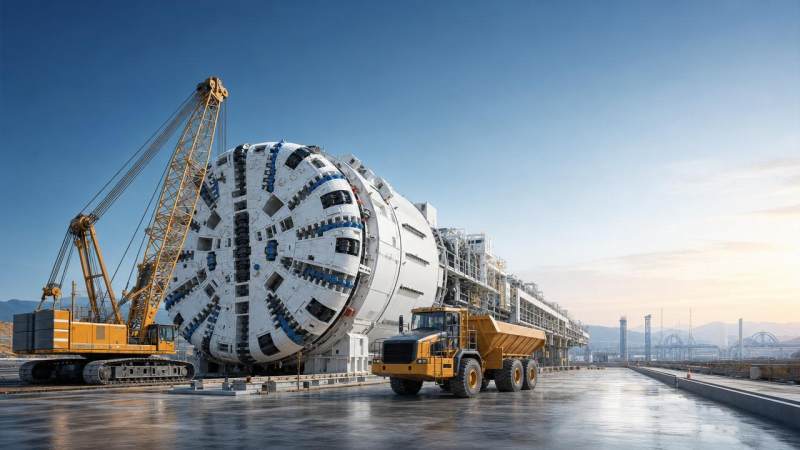
Global construction trends are rapidly changing how project bids are evaluated, priced, and won. For business assessment professionals, understanding shifts in equipment intelligence, green compliance, supply chain resilience, and large-scale infrastructure demand is now essential to making sharper bid decisions. This article examines the forces reshaping tender competitiveness and how strategic market insight can improve risk control, cost accuracy, and long-term project value.
Why are global construction trends changing bid logic so quickly?
In many markets, bids are no longer judged only on headline price. Owners, EPC contractors, and public buyers increasingly compare delivery certainty, emissions performance, digital traceability, equipment uptime, and the contractor’s ability to manage cross-border risk.
For business assessment teams, this means a major shift. A seemingly competitive number can become weak if it ignores cutter head wear in mixed geology, crane mobilization constraints, electric fleet charging gaps, or exposure to imported steel and hydraulic component volatility.
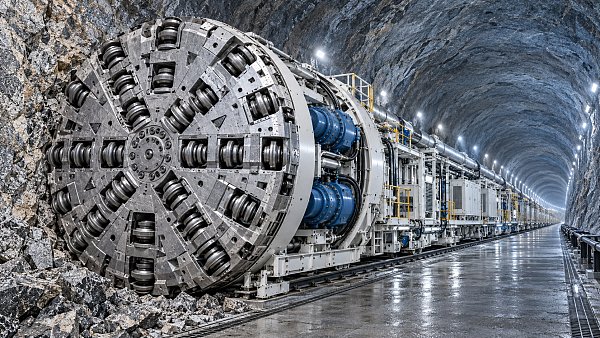
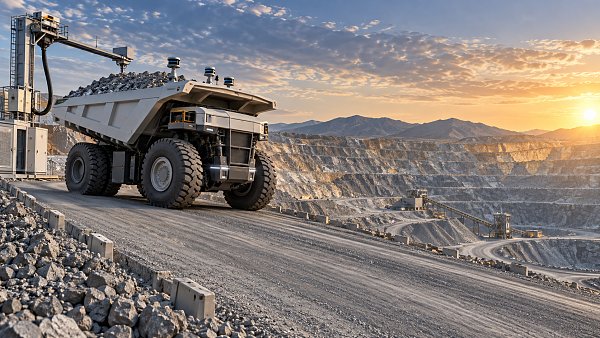
These global construction trends are especially visible in heavy infrastructure, where tunnel boring machines, open-pit mining fleets, crawler cranes, road machinery, and mining dump trucks are tied directly to schedule risk and total cost of ownership.
- Tender evaluation is becoming lifecycle-based, not purchase-price-based. Buyers ask what the machine will cost to operate, maintain, transport, and adapt over the project term.
- Technical compliance is becoming more granular. Noise limits, carbon reporting, safety documentation, and remote diagnostics can influence bid scoring.
- Execution credibility matters more. A bidder that can show realistic lead times, spare parts access, and construction-method fit often outranks a lower but less reliable offer.
What this means for business assessment professionals
The core challenge is not finding more data. It is connecting technical signals to commercial consequences. TF-Strategy focuses precisely on this connection by linking machinery parameters, construction methodologies, and infrastructure demand patterns across global heavy industry.
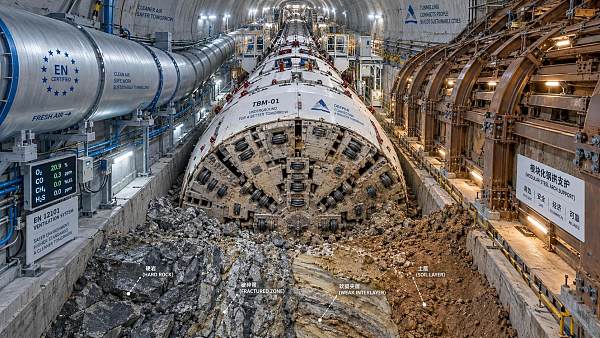
When procurement teams evaluate a TBM bid, for example, they need more than diameter and thrust. They need intelligence on ground conditions, cutter consumption, logistics access, specialist crew availability, and the project’s likely tolerance for downtime. That is where strategic market interpretation becomes a bidding advantage.
Which global construction trends have the biggest effect on project bids?
The following trends are reshaping how heavy construction bids are structured and scored. They affect not only pricing assumptions but also risk weighting, supplier selection, and contractual terms.
This comparison table helps business assessment teams translate global construction trends into bid-level implications.
The table shows a clear pattern. Global construction trends do not act as abstract market themes. They directly affect bid exclusions, price contingencies, schedule assumptions, and the credibility of a delivery plan.
Trend 1: Green compliance is now a bid variable, not a branding issue
In roads, mining, tunnels, and energy infrastructure, environmental requirements are moving closer to the commercial core of tenders. Contractors may need to disclose fuel plans, idle-time control methods, waste handling, and equipment emissions profiles.
For assessment teams, the practical question is simple: does the offered equipment align with local compliance expectations without creating hidden cost? Electric mining trucks may look attractive, but their business case depends on charging infrastructure, altitude, temperature, cycle distance, and power stability.
Trend 2: Intelligent equipment is changing the definition of value
5G remote-controlled excavation, machine health monitoring, and predictive maintenance tools are reshaping project bids because they reduce uncertainty. In difficult geology or remote sites, better visibility often matters more than a slightly lower equipment rental rate.
TF-Strategy tracks these changes across equipment categories, helping decision-makers judge whether digital features are commercially relevant or simply decorative in a specific bid environment.
Trend 3: Supply resilience now competes with price
A bid that depends on a single overseas supplier for hydraulic systems, cutter tools, tires, or power electronics carries a different risk profile than one built around regional support. That difference can materially affect project cash flow and liquidated damages exposure.
This is especially true for crawler cranes, TBM consumables, and mining haulage fleets, where one delayed component can stall an entire work front.
How should business assessors evaluate bids across heavy equipment scenarios?
Different construction segments respond to global construction trends in different ways. A tunnel package, a mine expansion, and a wind component lifting project may all involve heavy machinery, but their bid logic is not identical.
The next table is useful when comparing application scenarios and deciding what should carry the most weight in assessment.
This scenario view helps assessors avoid one-size-fits-all scoring. The same global construction trends produce different commercial consequences depending on geology, duty cycle, transport conditions, and project interfaces.
A practical assessment checklist
- Confirm whether the equipment specification matches the actual operating environment rather than the tender’s minimum wording.
- Check lead-time assumptions against current market congestion for heavy transport, steel fabrication, consumables, and critical subassemblies.
- Review maintenance support by region, including service engineers, spare stock, and remote diagnostics capability.
- Stress-test sustainability claims. Verify whether low-emission or electric options are feasible at the site’s power, climate, and utilization profile.
- Translate technical variance into cost variance. Small changes in wear rate, utilization, or mobilization timing can move bid competitiveness significantly.
Where do bids most often go wrong under current global construction trends?
Many bid losses and delivery disputes come from a narrow view of cost. Business assessment professionals are often asked to validate a number under time pressure, yet the most expensive mistakes usually sit outside the base equipment price.
Common misjudgments
- Treating digital features as optional when the owner expects traceable performance reporting and remote fault diagnosis.
- Ignoring regional material and consumable volatility, especially for cutter tools, structural steel, tires, hydraulic parts, and battery-related inputs.
- Assuming all low-carbon equipment options reduce total cost, even when charging, maintenance, or workforce capability is not ready.
- Underestimating logistics complexity for oversized components, especially in mountain corridors, mining plateaus, or restricted urban routes.
These mistakes explain why global construction trends should be read through project mechanics, not headlines. An intelligent bid is one that turns market signals into engineering and commercial assumptions that can survive execution.
How TF-Strategy helps reduce these errors
TF-Strategy’s value lies in intelligence stitching. It connects project tenders, raw material signals, heavy equipment evolution, and construction method changes into an assessment framework that supports better bidding decisions.
For example, if a contractor is pricing a tunnel or mine package, TF-Strategy can help clarify whether the market is moving toward certain cutter head materials, remote excavation methods, pure electric haulage logic, or alternative fleet structures. That insight can improve both cost accuracy and risk positioning.
What standards, compliance points, and documentation should be reviewed?
Under modern global construction trends, compliance is not limited to a certificate file. It includes safety methods, emissions records, quality controls, equipment traceability, and documentation that proves the proposed solution can legally and practically operate in the target jurisdiction.
While exact requirements vary, business assessment teams should usually ask for structured evidence in these areas:
- Applicable machinery safety and lifting documentation relevant to the project type and country of use.
- Environmental and emissions declarations where diesel, hybrid, or electric fleets are involved.
- Inspection, maintenance, and operator competency records for critical lifting and excavation equipment.
- Quality management and traceability evidence for high-wear or safety-critical components.
The point is not to collect paperwork for its own sake. The point is to test whether the supplier or contractor can support the promised execution model without late-stage compliance friction.
FAQ: how to respond to global construction trends in live tenders
How should I weigh price against technical resilience in a bid?
Start with the cost of failure, not only the cost of supply. In TBM, mining, and heavy lifting projects, a cheaper option may become expensive if downtime, mobilization delay, or spare shortages disrupt the critical path. Score price alongside support depth, local service access, and execution realism.
Are electric or low-emission machines always better for bid competitiveness?
Not always. They can strengthen a bid where the owner values carbon performance and the site can support the operating model. But in remote mines, high-altitude zones, or unstable power environments, the better commercial answer may be a phased transition rather than immediate full electrification.
What is the most overlooked factor in heavy equipment bid review?
Interface risk. Many assessors review the machine but not the system around it. For example, a crawler crane plan may fail because transport routes, assembly zones, and ground conditions were under-validated. A mine fleet plan may fail because haul roads and maintenance layout do not match the promised production profile.
How can market intelligence improve tender win rates?
It improves timing, assumptions, and positioning. When you know where component costs are moving, which infrastructure segments are tightening equipment demand, and how construction methods are evolving, you can build bids that are both sharper and more credible. That often matters more than aggressive discounting.
Why choose us for heavy-industry bid intelligence?
TF-Strategy is built for decision-makers who must convert global construction trends into practical bid action. Our focus on TBM systems, ultra-large excavators, crawler cranes, road machinery, and mining dump trucks gives business assessment professionals access to equipment-centered intelligence that is directly relevant to billion-dollar infrastructure choices.
We do not stop at sector headlines. We track global project tenders, specialized raw material signals, machinery evolution, remote-control excavation logic, and commercial implications across the heavy-equipment chain. That helps contractors and assessment teams reduce TCO blind spots, validate delivery assumptions, and strengthen commercial defensibility.
You can contact us to discuss bid-sensitive topics such as parameter confirmation, equipment selection logic, delivery-cycle risk, alternative fleet structures, compliance documentation priorities, and quotation communication for complex international projects. If your team is evaluating a tunnel, mining, lifting, or road package, TF-Strategy can help turn fragmented market data into a clearer bidding decision.
Related News
 Oct 06, 2026Selecting Petrochemical Overhead Cranes for Hazardous Areas and Heavy Process LoadsPetrochemical overhead cranes for hazardous areas: learn how to match capacity, duty, controls, corrosion protection, and maintenance access for safer, reliable lifts.
 Oct 05, 2026Tunneling Equipment Specification Planning: Key Criteria for Ground and Project RisksEquipment specification planning tunneling: learn how to match TBM systems to ground risks, geometry, safety, logistics, and lifecycle cost for more reliable project delivery.
 Oct 04, 2026Nuclear Lifting Equipment Cost: Budgeting for Compliance, Testing, and Lifecycle RiskNuclear lifting equipment cost explained: budget for compliance, proof-load testing, installation, documentation, and lifecycle risk to make confident procurement decisions.
 Oct 03, 2026How to Assess TBM Manufacturers for Hard-Rock Tunneling Projects?Choose the right tunnel boring machine manufacturer for hard-rock projects. Explore key criteria for design, lifecycle cost, factory quality, and service support.
Prof. Marcus Chen
Weekly Insights
Stay ahead with our curated technology reports delivered every Monday.