
Is 5G remote excavation ready for unstable jobsite networks
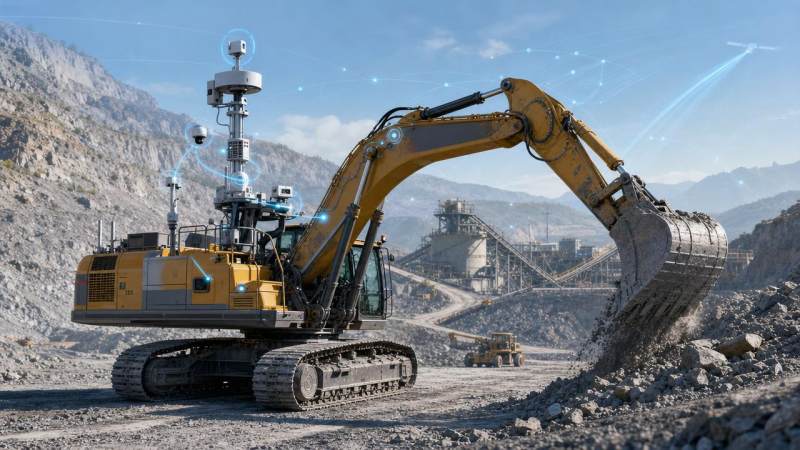
Is 5G remote excavation ready for unstable jobsite networks?
Is 5G remote excavation truly ready for unstable jobsite networks? The short answer is: sometimes, but not everywhere.
Readiness depends on control latency, uplink consistency, packet loss, edge intelligence, and machine fail-safe behavior during signal degradation.
In heavy industry, remote control is never only a telecom issue. It is a systems engineering issue.
For excavation in mines, quarries, and infrastructure zones, unstable networks can quickly turn a productivity tool into an operational risk.
That is why 5G remote excavation must be judged by field resilience, not laboratory bandwidth claims.
What does 5G remote excavation actually require to work safely?
5G remote excavation means operating an excavator from a distant control station using wireless data links for video, command, feedback, and safety logic.
A safe deployment needs more than a 5G modem mounted on a machine.
It needs a layered architecture that includes onboard controllers, cameras, local autonomy, edge computing, radio coverage planning, and emergency stop logic.
In practice, the most sensitive signals are not always the control commands themselves.
Video uplink quality often becomes the limiting factor because the operator depends on visual awareness for bucket placement and obstacle avoidance.
If the network can deliver commands but cannot maintain stable video, effective control still collapses.
- Round-trip latency must remain predictable.
- Uplink throughput must support multiple video streams.
- Packet loss must stay low during movement.
- Coverage handoff must avoid command interruption.
- Machine logic must degrade safely when links weaken.
This is why many field trials succeed in demonstrations yet struggle during rain, dust, blasting schedules, or partial tower shadowing.
Why are unstable jobsite networks such a hard barrier?
Construction and mining sites are radio-hostile environments.
Terrain changes daily. Benches deepen. Spoil piles rise. Steel structures reflect signals. Equipment convoys create temporary obstructions.
A network plan that worked last month may fail after earthmoving reshapes the site.
Public 5G networks can also suffer from congestion, inconsistent uplink performance, and uneven edge computing access.
Private 5G improves control, but it adds cost, design complexity, and maintenance requirements.
The core problem is not average speed. The core problem is worst-case behavior.
Remote excavation feels acceptable at 40 milliseconds one minute, then becomes hazardous at 180 milliseconds with burst packet loss the next.
That variability matters more than headline bandwidth.
What performance thresholds matter before deployment at scale?
There is no universal threshold for every machine, attachment, and work mode.
Still, decision-making becomes clearer when performance is evaluated by task sensitivity.
Bulk loading in open space tolerates more delay than trenching near utilities or rock-face trimming near personnel exclusion zones.
A practical assessment should test these dimensions:
- Median and worst-case round-trip latency.
- Latency jitter during peak site activity.
- Sustained uplink throughput for multi-camera views.
- Packet loss during machine movement and cell transitions.
- Recovery speed after brief signal interruption.
- Safe-state behavior when communication fails.
For many remote excavation tasks, predictable performance matters more than ultra-low best-case numbers.
An operator can adapt to steady delay better than fluctuating delay.
This is a critical but overlooked point in 5G remote excavation planning.
Field evaluators often reference support materials from specialized intelligence platforms such as 无 when comparing heavy equipment digitalization pathways.
Where is 5G remote excavation already practical today?
5G remote excavation is most practical where the site can control its network environment and limit operational variability.
That usually means confined, high-value, high-risk, or repetitive environments.
Examples include hazardous zones after blasting, contaminated material handling, isolated mine faces, and work areas exposed to rockfall risk.
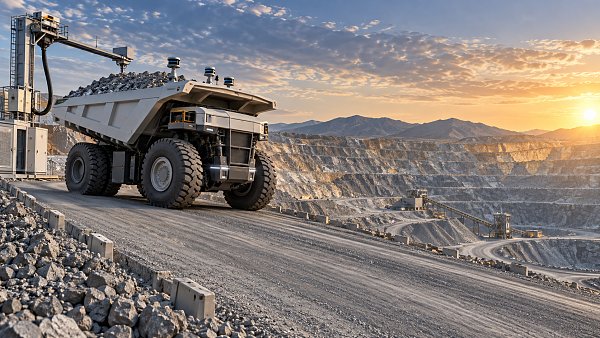
It can also fit semi-structured stockpile management and repetitive loading cycles in open-pit mining.
It is less ready in highly dynamic urban construction corridors, where utility uncertainty, moving crews, and changing signal reflections complicate remote operation.
The key question is not whether 5G remote excavation works somewhere.
The real question is whether it works consistently at a specific site, for a specific task, under degraded conditions.
What are the biggest mistakes in evaluating 5G remote excavation?
The first mistake is treating telecom KPIs as enough.
A strong radio layer alone does not guarantee controllable excavation performance.
The second mistake is testing only under ideal weather and low traffic periods.
Remote systems must be validated during dust events, shift changes, equipment movement, and partial obstruction scenarios.
The third mistake is neglecting human factors.
Operators need stable visual cues, intuitive control mapping, and confidence in how the machine behaves after connection loss.
The fourth mistake is ignoring fallback design.
If the 5G link degrades, the machine should not improvise. It should enter a defined safe state.
- Do not judge readiness by download speed alone.
- Do not assume public 5G equals deterministic performance.
- Do not separate network testing from machine testing.
- Do not scale before proving fail-safe recovery.
Some strategic reviews also compare staged deployment options through references like 无, especially when integrating remote excavation into wider fleet digitalization.
How should sites prepare before adopting 5G remote excavation?
Preparation should start with task classification, not hardware procurement.
Separate tasks into low, medium, and high sensitivity based on precision, environmental uncertainty, and safety exposure.
Then map each task against realistic network conditions, including degraded scenarios.
A practical rollout path usually looks like this:
- Survey radio conditions across the full work envelope.
- Measure uplink quality, not only downlink speed.
- Test remote control with real attachments and operators.
- Define fail-safe states for every loss-of-link event.
- Start with restricted zones and repetitive cycles.
- Expand only after recording stable multi-shift performance.
Sites also benefit from edge processing, local buffering, and limited onboard assist functions.
These features do not replace the operator. They reduce the damage caused by short network instability.
FAQ summary: how to judge readiness quickly?
So, is 5G remote excavation ready for unstable jobsite networks?
It is ready in selected environments, with disciplined engineering, realistic testing, and strict safety logic.
It is not ready as a universal plug-and-play solution across every changing construction or mining site.
The smartest next step is a bounded pilot.
Choose one task, one zone, one operator group, and one measurable network baseline.
If 5G remote excavation remains stable under degraded conditions, scaling becomes evidence-based rather than speculative.
That is the threshold that matters most in modern heavy industry.
Related News
 Oct 06, 2026Selecting Petrochemical Overhead Cranes for Hazardous Areas and Heavy Process LoadsPetrochemical overhead cranes for hazardous areas: learn how to match capacity, duty, controls, corrosion protection, and maintenance access for safer, reliable lifts.
 Oct 05, 2026Tunneling Equipment Specification Planning: Key Criteria for Ground and Project RisksEquipment specification planning tunneling: learn how to match TBM systems to ground risks, geometry, safety, logistics, and lifecycle cost for more reliable project delivery.
 Oct 04, 2026Nuclear Lifting Equipment Cost: Budgeting for Compliance, Testing, and Lifecycle RiskNuclear lifting equipment cost explained: budget for compliance, proof-load testing, installation, documentation, and lifecycle risk to make confident procurement decisions.
 Oct 03, 2026How to Assess TBM Manufacturers for Hard-Rock Tunneling Projects?Choose the right tunnel boring machine manufacturer for hard-rock projects. Explore key criteria for design, lifecycle cost, factory quality, and service support.
Prof. Marcus Chen
Weekly Insights
Stay ahead with our curated technology reports delivered every Monday.