
Mining Equipment Trends: Electrification, Automation, and Maintenance Costs
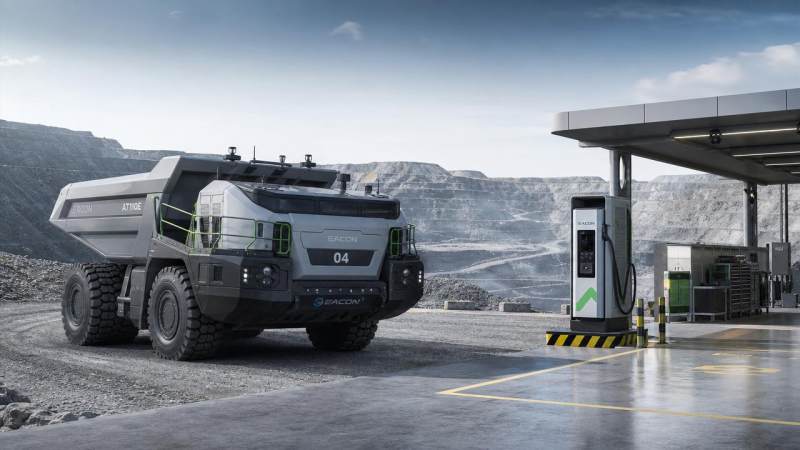
As global mines face tighter margins, stricter emissions rules, and rising productivity demands, mining equipment trends are shifting decisively toward electrification, automation, and smarter maintenance economics. For enterprise decision-makers, these changes are no longer technical upgrades alone—they directly influence total cost of ownership, fleet availability, safety performance, and long-term capital strategy. Understanding how battery-electric haulage, autonomous operations, predictive diagnostics, and lifecycle cost control converge will help mining leaders make more resilient equipment investments in an increasingly competitive and decarbonized heavy industry landscape.
For open-pit operators, contractors, infrastructure investors, and equipment procurement teams, the question is not whether heavy machinery will change. The question is how quickly fleets should adapt.
At TF-Strategy, mining equipment trends are evaluated through the lens of power, precision, uptime, and commercial intelligence. This perspective connects machine parameters with geological realities and board-level investment decisions.
Electrification Is Redefining Mine Fleet Economics
Electrification is one of the most visible mining equipment trends because it links emissions compliance with operating cost reduction. It affects haul trucks, drills, loaders, and auxiliary vehicles.
Battery-electric mining trucks typically require careful planning around charging windows, route profiles, payload cycles, and site power capacity. A 24-hour operation cannot treat charging as an afterthought.
Why battery-electric haulage is gaining board-level attention
Diesel fuel exposure can represent a significant variable cost in open-pit mines. Electric haulage helps stabilize energy planning when power contracts are predictable over 3–5 years.
The economics improve further when downhill loaded routes, trolley-assist corridors, or regenerative braking are available. In these cases, energy recovery can support more efficient duty cycles.
However, electrification is not a simple machine replacement project. It often requires 4 linked workstreams: fleet specification, charging infrastructure, grid resilience, and maintenance retraining.
The following comparison shows how decision-makers can interpret electrification options across typical mining environments, rather than selecting equipment only by purchase price.
The key lesson is that electrification succeeds when equipment selection is matched with mine design. A truck specification alone cannot solve grid, route, and maintenance constraints.
Procurement implications for enterprise buyers
Procurement teams should request energy modeling, charging scenarios, component life assumptions, and battery replacement logic before approving capital expenditure. A 5-year cost view is essential.
- Evaluate payload loss against energy savings, especially where gradients exceed 8% on loaded climbs.
- Confirm charging redundancy for peak production shifts, maintenance windows, and emergency dispatch requirements.
- Assess battery warranty terms by cycle count, temperature range, and depth-of-discharge assumptions.
- Include technician upskilling, high-voltage safety procedures, and spare component inventory in the business case.
Automation Is Moving From Pilot Projects to Production Systems
Automation is another major force within mining equipment trends, especially for haulage, drilling, dispatch, and remote-controlled excavation. Its value depends on operational maturity.
Autonomous fleets can improve consistency because machines follow defined speed profiles, braking patterns, and loading protocols. The benefit is strongest on repeatable routes with controlled intersections.
Where autonomous mining equipment delivers measurable value
Autonomy is not simply about removing operators from cabins. It is about reducing variability across thousands of haul cycles, drill patterns, and shift changes.
In many mines, a 1%–3% improvement in utilization can influence fleet sizing, fuel or energy consumption, tire wear, and maintenance scheduling.
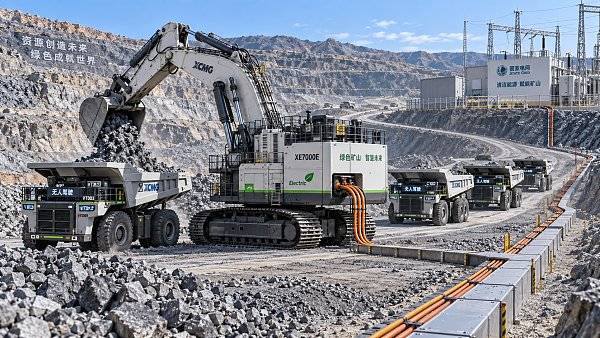
Remote operation also supports safety goals by reducing human exposure in unstable benches, high-dust zones, blast areas, and extreme temperature conditions.
- Start with a defined automation zone, not the entire mine footprint.
- Standardize road rules, berm conditions, intersections, and loading procedures.
- Integrate fleet management, dispatch, maintenance data, and collision avoidance systems.
- Train supervisors to manage exception handling, not only routine machine movement.
- Review production data every 30–60 days during the ramp-up stage.
Connectivity and control architecture
Automation depends on stable connectivity. Mines adopting 5G, private LTE, or hybrid networks should define latency thresholds before equipment acceptance testing.
For remote-controlled excavators or haul trucks, signal interruption procedures must be tested under realistic conditions. Fail-safe behavior should be documented in 3 operating states.
These states normally include normal operation, degraded communication, and emergency stop. Each state needs clear responsibility between operator, supervisor, and system controller.
Common automation risks decision-makers should avoid
One common error is treating automation as a software purchase. In reality, it is a mine-process transformation involving roads, people, maintenance, and governance.
- Poor road discipline can reduce autonomous truck productivity and increase tire damage.
- Unclear exception rules can create delays when machines encounter obstacles or loading deviations.
- Disconnected maintenance systems can hide early warning signals from dispatch teams.
- Insufficient change management can create resistance among operators, trainers, and supervisors.
Among current mining equipment trends, automation has one of the highest coordination requirements. The technology must be supported by disciplined site execution.
Maintenance Costs Are Becoming a Strategic Investment Variable
Maintenance is no longer a back-office service function. It is now central to mining equipment trends because downtime directly affects revenue, safety, and contract delivery.
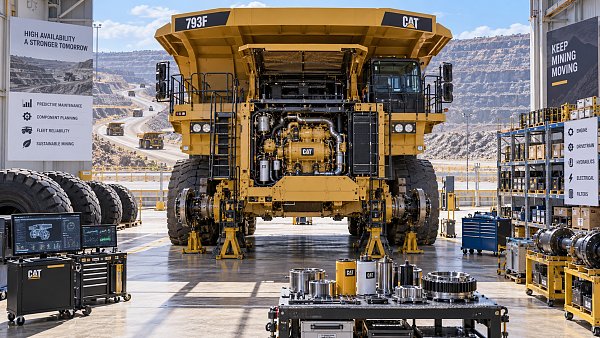
For ultra-large excavators, mining dump trucks, crushers, and drilling fleets, unplanned stoppages can disrupt the entire material movement chain within a single shift.
From preventive maintenance to predictive diagnostics
Traditional preventive maintenance relies on fixed intervals, such as 250-hour inspections, 500-hour oil sampling, or monthly component checks. This remains useful but incomplete.
Predictive diagnostics adds sensor data, vibration patterns, hydraulic pressure trends, thermal readings, and fault codes. It helps maintenance teams act before failure escalation.
The next table outlines practical maintenance cost levers that enterprise buyers should examine when evaluating new mining equipment or fleet modernization programs.
The strongest maintenance strategies combine data visibility with disciplined execution. Sensors create alerts, but technicians, planners, and parts logistics convert alerts into uptime.
TCO questions before purchasing mining equipment
A lower acquisition price may become expensive if parts lead times exceed 7–15 days or diagnostic tools are restricted to external service teams.
- What is the expected component replacement schedule across 10,000 operating hours?
- How many critical spare parts should be stocked for a fleet of 5, 20, or 50 units?
- Can the site maintenance team access diagnostic data without unnecessary delay?
- How does the equipment perform under high altitude, abrasive dust, or temperatures below -20℃?
These questions help transform maintenance from a reactive cost center into a strategic lever for production assurance and lifecycle value.
How Decision-Makers Should Evaluate the Next Fleet Investment
Mining equipment trends should be translated into procurement criteria. This requires a structured framework linking technical capability with project economics and operational risk.
A useful evaluation model includes 6 dimensions: productivity, energy system, automation readiness, maintainability, supplier support, and adaptability to future mine plans.
A practical fleet selection framework
Decision-makers should avoid comparing equipment only by rated payload, bucket capacity, or engine power. Real performance depends on site conditions and system integration.
- Define the production target, such as tonnes per hour, bank cubic meters, or shift availability.
- Map the operating environment, including gradients, altitude, dust, temperature, and haul distance.
- Model energy costs under diesel, electric, hybrid, or trolley-assisted scenarios.
- Test automation readiness through route discipline, network coverage, and dispatch integration.
- Calculate lifecycle cost using purchase price, maintenance, overhaul, downtime, and residual value.
- Review implementation risk across people, infrastructure, spare parts, and safety procedures.
Why strategic intelligence matters
The equipment market is becoming more complex. Buyers must interpret battery chemistry, software integration, hydraulic performance, supply chains, and emissions rules simultaneously.
TF-Strategy helps enterprise leaders connect technical parameters with commercial implications. This includes tender signals, component availability, technology maturity, and evolving project requirements.
For example, pure electric mining trucks may suit one copper project but underperform in another mine with longer hauls and unstable power infrastructure.
Similarly, autonomous drilling may deliver high value where blast patterns are standardized, yet require additional engineering where geology changes every few benches.
Red flags during vendor and technology assessment
As mining equipment trends accelerate, suppliers may promote broad claims. Decision-makers need evidence that matches their mine conditions, not generic performance language.
- Avoid proposals that lack duty-cycle assumptions, gradient data, payload profiles, or charging calculations.
- Question automation claims that do not define network requirements, safety zones, or exception procedures.
- Review spare parts commitments, especially for batteries, power electronics, tires, pumps, and control modules.
- Require maintainability evidence, including service access, diagnostic openness, and technician training plans.
This approach reduces procurement risk and helps leadership compare options across operational, financial, and strategic dimensions.
Strategic Outlook for Electrified, Automated, and Cost-Controlled Mining
The next phase of mining equipment trends will not be defined by a single machine category. It will be shaped by integrated fleet ecosystems.
Electrification will change energy sourcing, automation will reshape workforce deployment, and predictive maintenance will alter how mines plan availability across 12-month cycles.
What enterprise leaders should prioritize now
Executives should build phased roadmaps instead of waiting for perfect technology maturity. A staged approach reduces risk while preserving competitive learning advantages.
- Phase 1: audit fleet data, energy use, maintenance cost, and route constraints within 60–90 days.
- Phase 2: pilot electrification or automation in a controlled zone with measurable production targets.
- Phase 3: scale investment only after validating uptime, safety, cost, and workforce readiness.
This roadmap aligns capital discipline with innovation. It also creates clearer communication between mine operations, finance teams, safety managers, and procurement leaders.
Mining equipment trends are ultimately about resilience. The right fleet strategy should lower lifecycle uncertainty, improve delivery reliability, and support decarbonized infrastructure growth.
TF-Strategy provides intelligence for leaders evaluating TBMs, ultra-large excavators, crawler cranes, road machinery, and mining dump trucks across global heavy industry.
If your organization is reviewing fleet electrification, automation readiness, or maintenance cost control, consult TF-Strategy to obtain tailored insights and explore more solutions.
Related News
 Oct 17, 2026Tunnel Boring Machine Supplier List: Compare TBM Types and Service CoverageExplore our tunnel boring machinery supplier list to compare EPB, slurry and hard rock TBMs, assess service coverage and lifecycle costs, and build a smarter procurement shortlist.
 Oct 16, 2026Heavy-Duty Petrochemical Lifting: Selecting Cranes by Load, Radius, and Site AccessExplore heavy-duty petrochemical lifting solutions. Compare cranes by load, radius, site access, and ground support to reduce project risk and optimize lifting costs.
 Oct 15, 2026Crane Selection for Petrochemical Turnarounds: Capacity, Radius, and Site AccessExplore petrochemical lifting solutions cranes can deliver, with expert guidance on capacity, working radius, and site access to help you plan a safer, more efficient turnaround.
 Oct 14, 2026High-Capacity Heavy Lifting Solutions: Matching Load, Radius, and Ground ConditionsDiscover heavy lifting solutions high capacity projects demand—compare load charts, working radius, and ground conditions to select a feasible, cost-effective system.
Prof. Marcus Chen
Weekly Insights
Stay ahead with our curated technology reports delivered every Monday.