
Tunneling Equipment Innovations That Improve Ground Control and Advance Rates
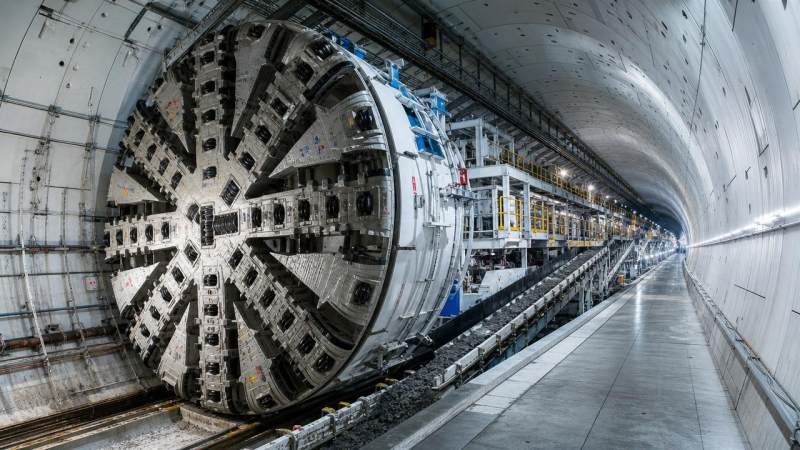
Tunneling Equipment Innovations That Improve Ground Control and Advance Rates
Under pressure to control risk, shorten schedules, and protect margins, tunneling equipment innovations are becoming decisive in underground construction performance.
From smarter TBM guidance to automated support installation, new systems improve ground control while increasing advance rates in complex geology.
This article explains how tunneling equipment innovations reduce downtime, improve safety, and support better equipment decisions across demanding tunnel projects.
What Do Tunneling Equipment Innovations Mean in Modern Ground Control?
Tunneling equipment innovations refer to mechanical, digital, hydraulic, and material upgrades that improve excavation stability and production consistency.
They include TBM sensing, cutterhead optimization, segment handling automation, probe drilling, grouting systems, and data-driven maintenance platforms.
The core purpose is simple: understand ground behavior earlier, react faster, and keep excavation within controlled operating limits.
Ground control depends on pressure balance, face stability, support timing, water management, and predictable machine response.
When these variables are poorly managed, overbreak, settlement, cutter damage, or face collapse can disrupt the tunnel drive.
Modern tunneling equipment innovations help connect geological information with machine parameters in near real time.
This connection allows teams to adjust thrust, torque, slurry density, foam injection, or support cycles before problems escalate.
Which Tunneling Equipment Innovations Improve Advance Rates Most Directly?
Advance rate is not only about machine power. It depends on reliable cutting, fast support, smooth muck removal, and fewer stoppages.
Several tunneling equipment innovations have a direct effect on daily progress and long-term production rhythm.
- Adaptive cutterhead designs reduce wear in mixed ground and fractured rock.
- High-capacity mucking systems prevent bottlenecks behind the excavation face.
- Automated segment erectors shorten ring-building time and reduce installation variation.
- Real-time guidance systems reduce alignment correction and rework.
- Predictive maintenance tools detect bearing, seal, and hydraulic risks earlier.
The strongest gains often come from combining these technologies rather than treating each improvement separately.
For example, a durable cutterhead helps excavation, but poor muck removal can still slow the entire system.
Likewise, automated support installation brings limited value if ground monitoring cannot confirm when support must be intensified.
Therefore, tunneling equipment innovations should be assessed as a production chain, not isolated machine features.
How Do Smart Sensors and Digital Platforms Reduce Geological Uncertainty?
Geological uncertainty remains one of the largest causes of tunnel delay, cost growth, and safety exposure.
Smart tunneling equipment innovations reduce uncertainty by turning machine behavior into practical ground intelligence.
Torque fluctuations, penetration rate changes, cutter temperature, vibration, slurry pressure, and screw conveyor load can reveal changing ground conditions.
When integrated into digital dashboards, these signals help identify transitions between clay, sand, gravel, rock, and fault zones.
Probe drilling and forward seismic detection add another layer of warning before the cutterhead reaches hazardous zones.
In water-bearing ground, early detection supports timely grouting, pressure adjustment, or temporary advance rate reduction.
These tunneling equipment innovations are especially valuable in urban tunnels, subsea crossings, mountain tunnels, and mixed-face drives.
Digital platforms also support post-shift analysis, helping compare planned geological models with actual machine response.
Over time, this feedback improves excavation strategy, spare parts planning, and contractor coordination.
How Should Different Ground Conditions Influence Equipment Selection?
Equipment selection should begin with ground risk, not with the most powerful machine specification.
The best tunneling equipment innovations match geology, groundwater, diameter, alignment, cover depth, and support requirements.
For open hard-rock drives, cutterhead wear, gripper performance, and ventilation capacity may dominate selection.
For shield tunneling, pressure control, segment logistics, annular grouting, and tail seal reliability become critical.
Effective tunneling equipment innovations should reduce the most likely failure mode in the specific tunnel environment.
What Risks and Misunderstandings Can Limit the Value of Innovation?
Not every advanced feature improves project performance. Some technologies underperform when integration, training, or maintenance planning is weak.
A common misunderstanding is assuming automation eliminates the need for experienced interpretation.
In reality, tunneling equipment innovations generate data that must be linked to geology, operating procedures, and risk thresholds.
Another risk is focusing on initial purchase price while ignoring downtime, cutter consumption, energy use, and spare parts logistics.
A lower-cost machine can become expensive if interventions are frequent or support cycles remain slow.
Data overload is also a practical issue. Too many alarms without clear response rules can reduce confidence.
Before adopting tunneling equipment innovations, define which parameters require action and who approves changes underground.
- Set alarm thresholds for pressure, torque, vibration, settlement, and water inflow.
- Prepare intervention procedures for cutter changes and ground treatment.
- Verify spare parts availability before peak excavation periods.
- Train crews on both normal operation and abnormal trend recognition.
How Do Cost, Schedule, and Total Ownership Shape Adoption Decisions?
The financial case for tunneling equipment innovations should be built around total project value, not hardware cost alone.
Useful evaluation includes productivity, risk reduction, maintenance predictability, energy efficiency, and quality of finished lining.
A machine upgrade may justify its cost if it prevents stoppages during high-risk geological transitions.
Automated ring building may reduce cycle time, but its benefit depends on segment supply and backup logistics.
Predictive maintenance may lower unplanned downtime, but only when sensors are calibrated and maintenance workflows are disciplined.
Schedule benefit should be assessed through realistic simulations, using expected geology and actual shift patterns.
This approach prevents overestimating advance rates based only on ideal factory or reference project data.
At TF-Strategy, the strategic view is that tunneling equipment innovations must connect power, precision, and construction methodology.
That connection supports safer underground work and stronger infrastructure delivery under complex global project conditions.
FAQ Summary: How to Judge Tunneling Equipment Innovations
The strongest tunneling equipment innovations do not simply add technology. They improve decisions at the face and behind the shield.
They help maintain ground control, protect assets, and convert machine capability into consistent advance rates.
Before selecting equipment, map geology, define risk triggers, compare lifecycle cost, and confirm support logistics.
Then evaluate tunneling equipment innovations against measurable outcomes, including stability, safety, cycle time, and intervention frequency.
For high-stakes underground projects, this disciplined approach turns heavy machinery intelligence into practical construction advantage.
Related News
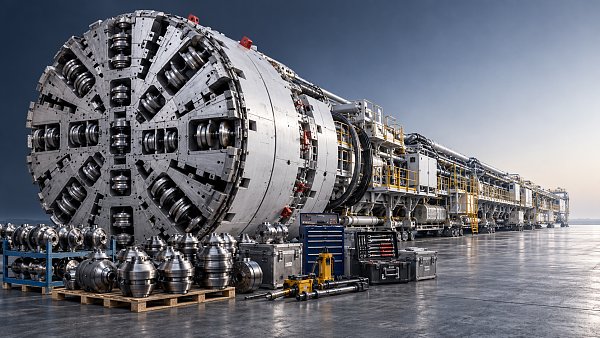
 Oct 17, 2026Tunnel Boring Machine Supplier List: Compare TBM Types and Service CoverageExplore our tunnel boring machinery supplier list to compare EPB, slurry and hard rock TBMs, assess service coverage and lifecycle costs, and build a smarter procurement shortlist.
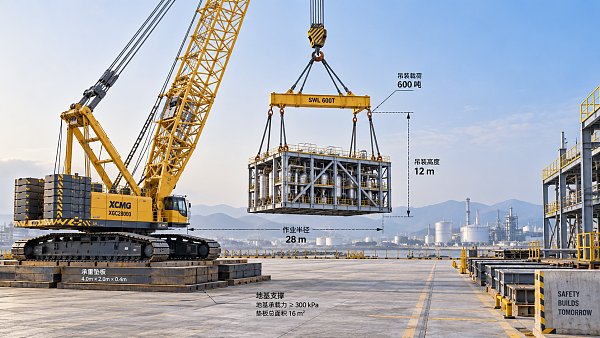
 Oct 16, 2026Heavy-Duty Petrochemical Lifting: Selecting Cranes by Load, Radius, and Site AccessExplore heavy-duty petrochemical lifting solutions. Compare cranes by load, radius, site access, and ground support to reduce project risk and optimize lifting costs.
 Oct 15, 2026Crane Selection for Petrochemical Turnarounds: Capacity, Radius, and Site AccessExplore petrochemical lifting solutions cranes can deliver, with expert guidance on capacity, working radius, and site access to help you plan a safer, more efficient turnaround.
 Oct 14, 2026High-Capacity Heavy Lifting Solutions: Matching Load, Radius, and Ground ConditionsDiscover heavy lifting solutions high capacity projects demand—compare load charts, working radius, and ground conditions to select a feasible, cost-effective system.
Prof. Marcus Chen
Weekly Insights
Stay ahead with our curated technology reports delivered every Monday.