
Mining equipment trends are changing fleet upgrade priorities
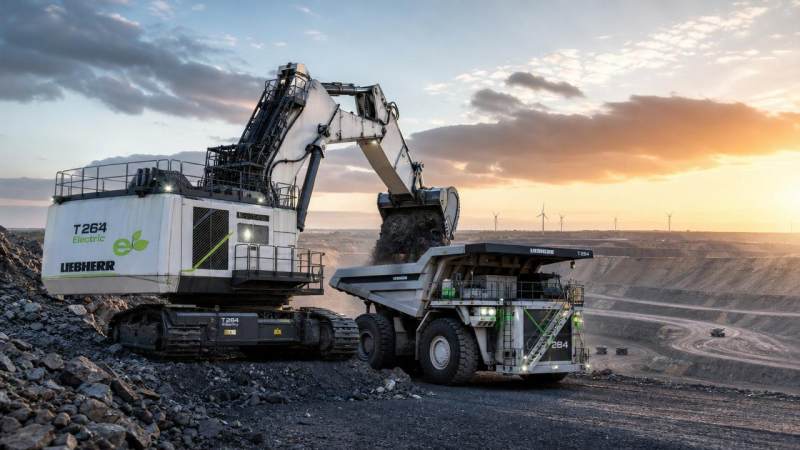
Mining equipment trends now define smarter fleet upgrade timing
Mining equipment trends are changing how fleets are renewed across open-pit, haulage, loading, and support operations.
Upgrade decisions now depend on measurable output, energy use, automation compatibility, and maintenance predictability.
In practical terms, the right upgrade is no longer the newest machine. It is the asset that best fits site conditions, duty cycles, and long-term cost targets.
For heavy industry intelligence platforms such as TF-Strategy, this shift matters because fleet planning now connects machine data, geology, haul design, and capital discipline.
That is why mining equipment trends should be read as scenario signals, not only as technology headlines.
Why site conditions change how mining equipment trends should be interpreted
The same trend can create different priorities in different mines.
A high-altitude copper site may value power derating control and brake management. A hot desert coal mine may care more about cooling resilience and tire life.
A short-haul quarry may delay autonomy investments. A multi-bench iron ore operation may accelerate them because route repetition supports faster returns.
This is where mining equipment trends become useful. They help compare not only machine categories, but also operating environments, infrastructure readiness, and service support depth.
Fleet upgrades therefore work best when they begin with operating context, then move to payload, powertrain, digital systems, and parts strategy.
The key evaluation lens behind modern upgrade decisions
- Material movement per hour, not only rated capacity
- Fuel or energy consumed per tonne moved
- Compatibility with dispatch, telemetry, and future autonomy
- Maintenance intervals, component life, and rebuild economics
- Operator support, safety systems, and training transition risk
Scenario one: open-pit expansion pushes payload and uptime to the front
When a mine is expanding, loading and haulage bottlenecks become highly visible.
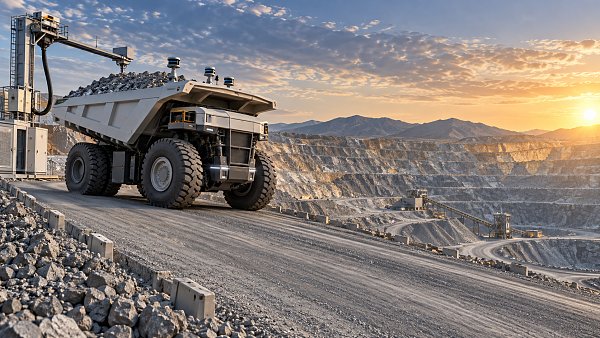
In this setting, mining equipment trends often favor larger excavators, better truck matching, and digital payload optimization.
The core judgment point is not machine size alone. It is whether the upgraded fleet reduces queue time and improves pass matching between excavators and dump trucks.
A bigger truck can underperform if haul roads, shovel fill factors, or dump point congestion stay unchanged.
Here, mining equipment trends support integrated upgrades. Better tire monitoring, onboard weighing, and route analytics often return value faster than isolated equipment replacement.
What matters most in expansion conditions
- Loader and truck pass matching accuracy
- Cycle-time variation across benches
- Tire, brake, and suspension durability under rising payload pressure
- Dispatch visibility for queue reduction
Scenario two: aging fleets shift focus toward lifecycle cost and rebuild value
Not every operation needs a full replacement cycle.
In mature sites, mining equipment trends increasingly support selective upgrades, powertrain retrofits, and condition-based maintenance.
The central question becomes simple: is capital better used on new assets, midlife rebuilds, or digital retrofits that extend reliable service?
This scenario often rewards disciplined analysis of engine hours, frame fatigue, hydraulic efficiency, and component failure history.
Mining equipment trends show that some older fleets improve significantly with monitoring systems, lubrication automation, and predictive parts planning.
That approach can preserve output while reducing sudden downtime and avoiding poorly timed fleet-wide replacement.
Signals that favor targeted upgrade over full replacement
- Strong structural life remaining in frames and undercarriages
- Service networks with proven rebuild support
- High downtime driven by specific components, not whole-machine fatigue
- Reasonable integration path for telematics and health monitoring
Scenario three: decarbonization goals raise interest in hybrid and electric pathways
One of the strongest mining equipment trends is the movement toward lower-emission fleets.
Yet adoption speed varies sharply by mine layout, grid access, charging strategy, and duty intensity.
Battery-electric trucks attract attention, but their real value depends on route length, elevation change, ambient temperature, and charging downtime.
For some sites, trolley assist, hybrid drives, or electric auxiliary systems may deliver stronger returns before full electrification.
Mining equipment trends therefore favor staged transition planning. The best pathway often begins with energy mapping rather than brand comparison.
This is especially relevant in heavy-duty haulage, where payload loss, charging infrastructure, and thermal management can alter economics fast.
Practical checks before low-emission fleet upgrades
- Power availability and charging or trolley infrastructure cost
- Battery performance under altitude and temperature extremes
- Impact on payload, shift scheduling, and standby planning
- Workshop safety requirements and technician capability
Scenario four: automation-ready mines prioritize digital architecture first
Automation is no longer a distant idea in large-scale mining.
Among current mining equipment trends, autonomy readiness is influencing truck, drill, and support fleet specifications earlier than before.
Still, autonomous performance depends on stable connectivity, accurate positioning, clean route design, and disciplined operational rules.
That means many fleets should upgrade communications, sensors, and dispatch systems before replacing every machine.
In scenario terms, mines with repeatable haul patterns and strong control rooms usually gain faster from automation-oriented fleet changes.
Complex mixed-traffic sites may need hybrid operating models during transition.
Best indicators of automation readiness
- Reliable high-coverage site communications
- Standardized haul roads and intersection control
- Integrated fleet management and health data
- Clear procedures for mixed manual and automated traffic
How different operating scenarios change upgrade priorities
Scenario-based recommendations for selecting the next fleet upgrade step
- Map current bottlenecks by tonne moved, delay minutes, and fuel intensity.
- Separate replacement needs from optimization needs before setting budget direction.
- Use mining equipment trends to shortlist technologies that fit actual road, bench, and climate conditions.
- Model service support, parts access, and technician readiness alongside purchase cost.
- Pilot digital tools or alternative power systems in a limited production zone first.
- Review compatibility with future automation, even if autonomy is not immediate.
Common misjudgments when reading mining equipment trends
A frequent mistake is treating global mining equipment trends as universal rules.
A technology that performs well in one ore body or climate may struggle in another.
Another error is focusing on unit price while underestimating downtime, infrastructure cost, software integration, or consumable wear.
Some upgrade plans also ignore the link between machine performance and road quality, blasting fragmentation, or operator workflow.
The strongest decisions connect mining equipment trends with full-system productivity, not isolated machine specifications.
Turning mining equipment trends into practical action
Effective upgrades begin with a structured review of site conditions, fleet age, production targets, and energy strategy.
From there, mining equipment trends can be ranked by relevance, technical readiness, and financial impact.
TF-Strategy supports this process by linking machinery intelligence, engineering context, and evolving heavy industry signals across mining and infrastructure sectors.
The next useful step is to compare one priority scenario against one upgrade pathway, then validate expected gains with field data.
When mining equipment trends are interpreted through real operating scenarios, fleet investment becomes clearer, safer, and more productive.
Related News
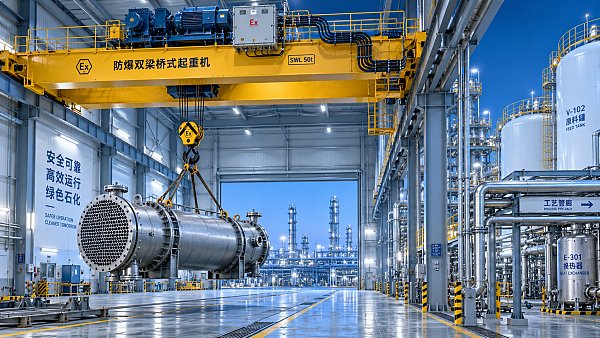
 Oct 06, 2026Selecting Petrochemical Overhead Cranes for Hazardous Areas and Heavy Process LoadsPetrochemical overhead cranes for hazardous areas: learn how to match capacity, duty, controls, corrosion protection, and maintenance access for safer, reliable lifts.
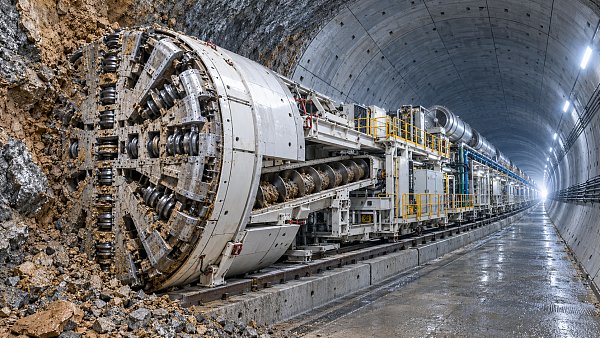
 Oct 05, 2026Tunneling Equipment Specification Planning: Key Criteria for Ground and Project RisksEquipment specification planning tunneling: learn how to match TBM systems to ground risks, geometry, safety, logistics, and lifecycle cost for more reliable project delivery.
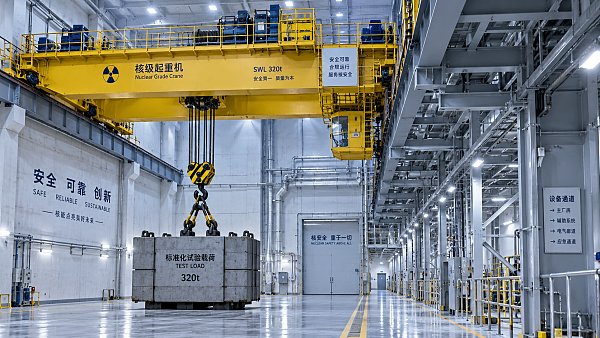
 Oct 04, 2026Nuclear Lifting Equipment Cost: Budgeting for Compliance, Testing, and Lifecycle RiskNuclear lifting equipment cost explained: budget for compliance, proof-load testing, installation, documentation, and lifecycle risk to make confident procurement decisions.
 Oct 03, 2026How to Assess TBM Manufacturers for Hard-Rock Tunneling Projects?Choose the right tunnel boring machine manufacturer for hard-rock projects. Explore key criteria for design, lifecycle cost, factory quality, and service support.
Prof. Marcus Chen
Weekly Insights
Stay ahead with our curated technology reports delivered every Monday.