
New Energy Construction Trends: Which Project Segments Are Driving Demand and Investment

New energy construction is no longer a side story in infrastructure
New energy construction has moved from policy ambition to capital discipline.
That shift matters because project value is now judged by buildability, grid readiness, and equipment efficiency, not installed capacity alone.
Across global markets, demand is spreading beyond turbines and panels.
Wind foundations, transmission corridors, storage hubs, access roads, and heavy lifting logistics are taking a larger share of investment attention.
This is where new energy construction becomes especially relevant to wider industrial decision-making.
The fastest-growing opportunities often sit in the physical systems that connect energy generation with terrain, transport, and delivery risk.
From the perspective of TF-Strategy, that change is visible in machinery deployment patterns.
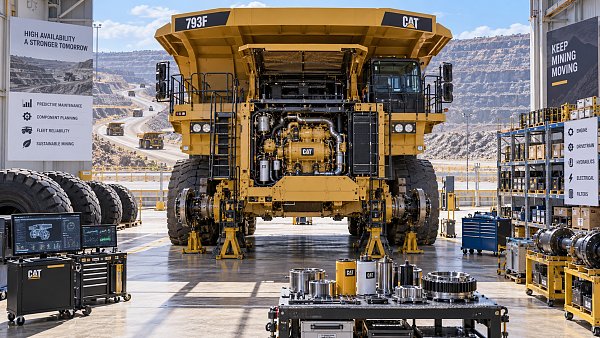
Crawler cranes, large road machinery, excavation fleets, and specialized haulage are increasingly tied to energy transition schedules.
The market signal is clear: new energy construction is becoming an engineering-intensive asset class, not just a clean power label.
Where demand is accelerating most visibly
Recent project pipelines show that not all segments are expanding at the same speed.
Some are attracting funding because they solve bottlenecks that stalled earlier renewable builds.
Others are gaining momentum because they fit national industrial policy and grid resilience targets.
Among these segments, grid-linked construction is becoming the strongest multiplier.
Without it, generation assets struggle to translate nameplate capacity into reliable returns.
That is why new energy construction now extends deep into corridor engineering, substation expansion, and terrain-specific civil work.
Why this shift is becoming more pronounced
Several forces are converging at the same time.
The first is project maturation.
Early renewable development favored locations with easier access and faster permits.
The next wave is moving into harsher terrain, longer transport routes, and more complex grid conditions.
The second force is equipment scaling.
Larger nacelles, longer blades, heavier modules, and denser storage systems create new construction thresholds.
These thresholds affect crane selection, soil bearing design, route modification, and assembly sequencing.
The third force is energy security.
Governments increasingly treat power networks as strategic infrastructure, not just utility assets.
That pushes investment toward interconnections, underground links, reserve capacity, and localized energy storage.
A fourth driver is financial scrutiny.
Investors are asking whether new energy construction can maintain schedules under inflation, permitting friction, and supply disruption.
In practical terms, projects with stronger engineering visibility are winning more confidence.
The impact does not stop at generation assets
One of the more important changes is how broadly the effects are spreading.
New energy construction is influencing upstream materials, logistics planning, civil design, and digital site control.
That makes the market more interconnected than headline capacity additions suggest.
Heavy equipment is being pulled into earlier project stages
Heavy machinery used to enter after permits and financing had largely settled.
Now equipment parameters affect feasibility much earlier.
Lift height, route width, ground pressure, turning radius, and excavation productivity are part of initial project screening.
That shift aligns with TF-Strategy’s view that physical parameters and strategic infrastructure choices are increasingly inseparable.
Terrain and access are becoming stronger value filters
A solar or wind project can look attractive on paper but lose value in execution.
Mountain corridors, soft soils, altitude constraints, and limited road access reshape both cost and schedule certainty.
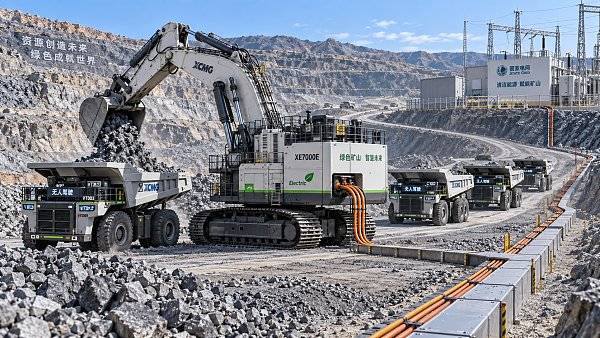
In this environment, large road machinery, excavation fleets, and specialized dump trucks matter as much as generation technology choices.
Underground and corridor works are gaining strategic weight
Another underappreciated area is subsurface infrastructure.
Urban cable tunnels, hydro connections, and protected transmission routes are reviving demand for TBM-linked intelligence and trenchless planning.
New energy construction increasingly depends on what happens below ground as much as above it.
What deserves closer attention in current project evaluation
The headline market remains positive, but not every project profile carries the same resilience.
A few indicators now offer better judgment value than broad capacity targets.
- Grid interface timing: delayed substations can erase the value of rapid generation build-out.
- Site logistics depth: route surveys and lifting studies now influence financing confidence.
- Foundation and civil intensity: heavier equipment often signals higher execution barriers and higher differentiation.
- Localization of supply: projects with regional fabrication and service support face fewer schedule shocks.
- Digital control capability: remote diagnostics and fleet coordination help stabilize output in difficult conditions.
More subtle signals also matter.
For example, when new energy construction moves into remote mining belts or industrial clusters, dual-use infrastructure becomes more attractive.
Road upgrades, electrified haulage support, and storage-linked substations can serve both power transition and industrial continuity.
That creates a stronger case for integrated capital deployment.
The next phase will reward execution intelligence more than scale alone
The market is unlikely to slow because decarbonization pressure remains structural.
What will change is the definition of quality growth inside new energy construction.
Projects that connect generation, transport, lifting, underground works, and grid access in one disciplined plan will stand out.
Projects that treat these links as secondary will face more overruns and weaker returns.
This is also why intelligence-led observation matters.
TF-Strategy’s focus on TBM systems, ultra-large excavators, crawler cranes, road machinery, and mining haulage reflects where construction friction actually appears.
Those friction points now shape investment outcomes across energy corridors, industrial parks, and hybrid infrastructure programs.
For the next planning cycle, the most useful approach is practical.
- Map which new energy construction segments in a target region depend on heavy civil execution.
- Compare project concepts against terrain, lifting, haulage, and underground constraints.
- Track whether grid and storage investments are keeping pace with generation announcements.
- Build a staged review model that combines equipment data, construction methods, and schedule exposure.
New energy construction is still expanding, but the center of gravity is shifting.
Demand and investment are moving toward segments where engineering difficulty, delivery certainty, and infrastructure linkage define real value.
That is the signal worth following next.
Related News
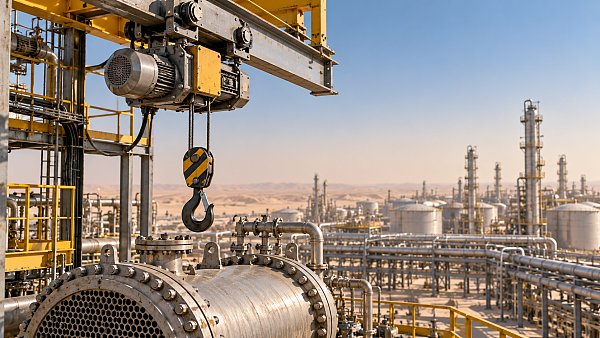
 Oct 24, 2026Choosing Lifting Equipment for Middle East Petrochemical Plants in Hazardous AreasExplore petrochemical lifting equipment Middle East plants can rely on. Compare hazardous-area certification, capacity, and heat limits to make informed procurement decisions.
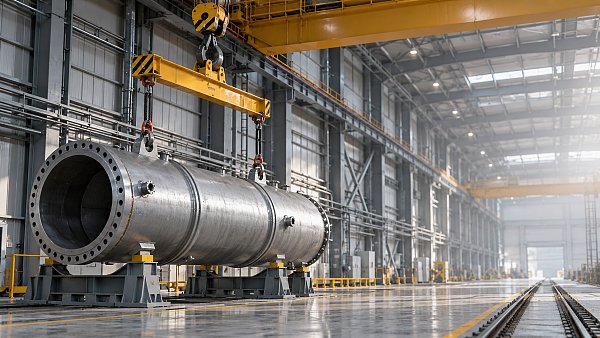
 Oct 23, 2026Selecting Lifting Equipment for Nuclear Component Transport: Key Safety CriteriaSelecting lifting machinery for nuclear component transport? Discover essential safety criteria, load control checks, and supplier requirements to guide confident procurement.
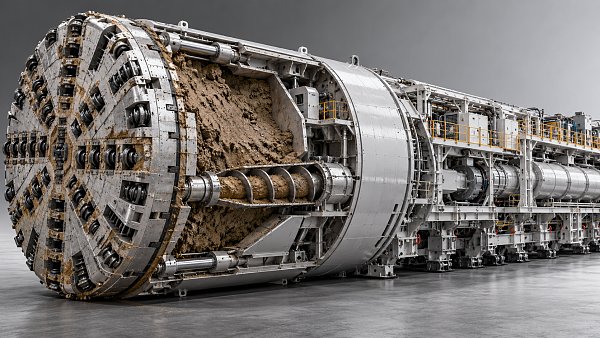
 Oct 22, 2026Tunnel Boring Machines in Southeast Asia: EPB vs. Slurry for Soft GroundCompare tunnel boring machines Southeast Asia projects rely on: EPB vs. slurry for soft ground. Discover how groundwater, settlement risks, and spoil handling shape the right choice.
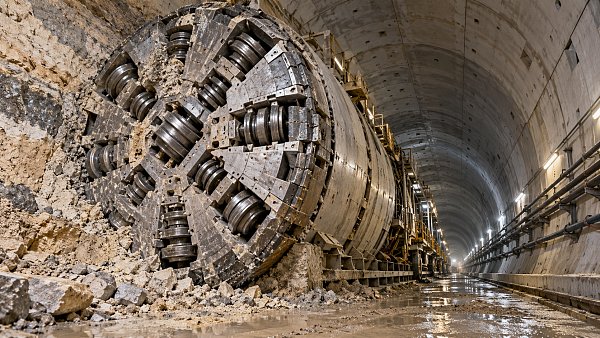
 Oct 21, 2026Choosing Tunneling Equipment for the Middle East: Rock, Soil, and GroundwaterCompare underground tunneling equipment Middle East projects need. Explore rock, soil, groundwater, and TBM options to reduce risk and make confident procurement decisions.
Related News

Prof. Marcus Chen
Weekly Insights
Stay ahead with our curated technology reports delivered every Monday.