
Why global infrastructure development is reshaping demand

Why is global infrastructure development reshaping demand across heavy equipment, engineering intelligence, and capital allocation? For enterprise decision-makers, the answer lies in the convergence of urbanization, energy transition, and mega-project execution. This article explores how shifting project requirements are redefining demand for TBMs, mining fleets, lifting systems, and strategic insights across global infrastructure markets.
Why global infrastructure development is changing procurement logic
Global infrastructure development no longer means simply building more roads, tunnels, ports, and power assets. It now means building under tighter timelines, stricter environmental constraints, more complex geology, and greater financing scrutiny.
For decision-makers, this shift changes demand in two ways. First, it increases the need for specialized heavy equipment that matches project conditions precisely. Second, it raises the value of intelligence that connects machine parameters, delivery risk, operating cost, and project strategy.
This is where TF-Strategy becomes relevant. Its focus on tunnel boring machines, open-pit mining systems, crawler cranes, road machinery, and mining dump trucks reflects the equipment categories most exposed to the new wave of global infrastructure development.
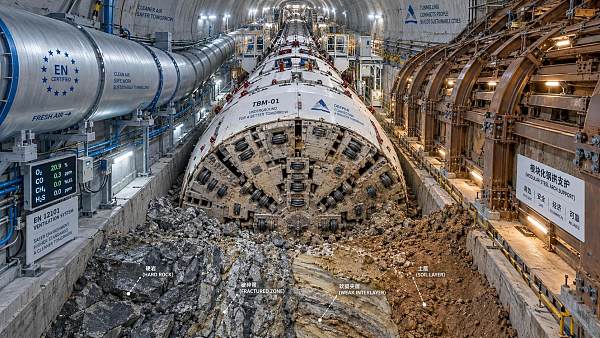
- Urban rail expansion is increasing demand for TBM selection based on geology, cutter wear, spoil handling, and segment logistics.
- Energy transition projects are driving crawler crane demand for wind, nuclear, petrochemical, and grid component lifting.
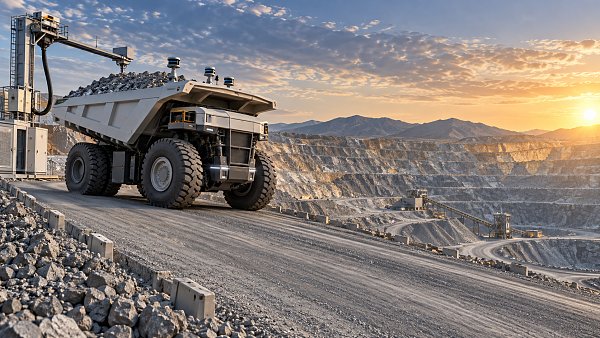
- Resource security concerns are reshaping demand for ultra-large excavators and mining trucks in strategic mineral extraction.
- Smart highway and regional logistics programs are increasing interest in precision road machinery and integrated paving workflows.
In other words, demand is not just growing. It is fragmenting, becoming more technical, and requiring better intelligence before capital is committed.
What enterprise buyers are really worried about
Most enterprise buyers are not asking only which machine is bigger or faster. They are asking whether the asset can deliver output under specific site constraints, whether spare parts and support are available, and whether the total cost of ownership stays acceptable over the contract life.
- Will equipment capacity align with project sequencing and utilization rates?
- Can the supplier support difficult geographies, altitude, temperature, or remote operation needs?
- How will electrification, digitalization, and safety standards affect the investment case?
- What happens if raw material costs or project schedules change mid-cycle?
Which equipment categories gain most from global infrastructure development?
Not every equipment class benefits in the same way from global infrastructure development. Some categories gain from volume. Others gain from technical complexity, replacement cycles, or higher project-critical importance.
The table below highlights how infrastructure demand translates into equipment demand across the heavy industry value chain.
The practical implication is clear. In global infrastructure development, demand follows bottlenecks. Equipment that solves delivery-critical bottlenecks often attracts stronger investment than equipment that only adds nominal capacity.
Why TBMs and lifting systems deserve special attention
TBMs and crawler cranes often sit at the center of schedule risk. A poor TBM match can slow advance rates and increase cutter consumption. An unsuitable lifting plan can delay turbine erection, module installation, or heavy civil assembly.
That is why TF-Strategy’s intelligence model matters. It links physical machinery parameters to engineering methodology and commercial outcomes, helping buyers avoid expensive mismatches early in the decision cycle.
How should decision-makers evaluate demand signals before buying?
In a volatile market, the biggest mistake is reading demand only from headlines about global infrastructure development. Buyers need to separate visible project announcements from bankable, executable equipment demand.
A practical evaluation framework
- Map project type to equipment intensity. Metro tunneling, wind erection, and open-pit expansion each have different equipment dependency profiles.
- Verify funding maturity. Tender visibility, permitting progress, and offtake certainty matter more than public announcements.
- Assess site constraints early. Geology, altitude, haul distance, transport routes, and labor capability affect the final machine choice.
- Estimate lifecycle cost, not acquisition price alone. Fuel, maintenance, downtime, cutters, tires, and crew efficiency can change the decision.
- Check technology fit. Remote control, electrification, telemetry, and digital diagnostics may improve long-term competitiveness.
This is also where a strategic intelligence portal adds value. Instead of treating every machine purchase as a standalone transaction, buyers can align equipment decisions with regional demand, raw material trends, and project pipeline quality.
Selection factors that should not be ignored
The table below is designed for enterprise teams reviewing heavy equipment options under global infrastructure development conditions. It can support investment committees, procurement managers, and project directors during early screening.
A disciplined framework like this helps enterprises avoid buying equipment that looks competitive on paper but performs poorly under real project conditions.
What role do intelligence and data play in capital allocation?
In global infrastructure development, information gaps can be as costly as equipment failure. Capital allocation decisions often suffer when buyers rely on fragmented supplier claims, incomplete tender visibility, or outdated assumptions about regional demand.
TF-Strategy’s Strategic Intelligence Center addresses this gap by connecting project tenders, specialized raw material signals, heavy machinery evolution, and commercial demand analysis. That matters because the investment case for a TBM or mining fleet is never purely technical. It is a combined judgment about market timing, risk transfer, and execution readiness.
Where better intelligence changes outcomes
- TBM programs benefit from earlier visibility into geology, segment production planning, cutter material shifts, and spoil management constraints.
- Mining fleets benefit from analysis of orebody continuity, haul route design, altitude effects, and the commercial logic of electric truck adoption.
- Lifting operations benefit from project packaging insights, transport corridor constraints, and component size trends in wind and industrial modules.
- Road machinery investment benefits from understanding pavement quality requirements, production balancing, and project sequencing across large corridors.
For enterprise leaders, this means intelligence should not be treated as a background service. It should be part of the investment process itself.
Cost, alternatives, and the hidden risks of under-specifying equipment
When budgets are tight, buyers often look for lower-capex alternatives. That is understandable. But in global infrastructure development, under-specifying equipment can create more expensive downstream consequences than paying more upfront for the right machine.
Common cost traps
- Choosing a TBM without adequate geological adaptation can increase cutter consumption, intervention frequency, and schedule slippage.
- Selecting mining trucks by payload alone may overlook route resistance, maintenance access, and tire strategy under harsh climates.
- Buying crawler cranes for peak tonnage only may lead to poor transport economics and slow site assembly.
- Reducing road machinery spend can hurt compaction consistency and surface tolerance, creating rework and reputational cost.
A better approach is to compare alternatives through total cost of ownership, schedule reliability, and strategic flexibility. The cheapest option at purchase may become the most expensive option in operation.
Standards and compliance considerations
Decision-makers should also review whether equipment selection aligns with common industry expectations around lifting safety, operator protection, emissions pathways, maintenance documentation, and regional import compliance. Requirements vary by market, but the principle is stable: compliance should be built into selection, not added later under pressure.
FAQ: how enterprises can respond to global infrastructure development
How do we know whether demand is structural or temporary?
Look beyond short-term tender volume. Structural demand usually combines policy support, financing visibility, supply chain alignment, and repeatable project types such as metro systems, renewable energy corridors, or strategic mineral expansion. Temporary demand is more likely to rely on one-off stimulus or politically uncertain projects.
Which equipment should be prioritized first in a multi-project pipeline?
Prioritize equipment that controls the critical path. In tunneling, that is often the TBM and segment logistics system. In wind or industrial assembly, it may be crawler crane capacity and erection planning. In mining, haulage and excavation matching usually decide output stability.
What is the biggest mistake buyers make during global infrastructure development cycles?
They assume more projects automatically justify faster purchases. In reality, market heat can hide weak supplier support, incomplete technical review, and unrealistic delivery schedules. A disciplined screening process is more important when demand looks strong.
How important are electrification and remote-control capabilities today?
Their importance depends on site economics and regulation, but they are moving from optional to strategic in many markets. 5G remote-controlled excavation, digital diagnostics, and electric mining truck concepts can improve labor deployment, safety, and long-term compliance readiness.
Why choose us for infrastructure intelligence and equipment decision support
TF-Strategy is built for enterprise decision-makers who need more than scattered market news. We connect heavy equipment parameters, construction methodology, and infrastructure demand so that procurement and capital allocation decisions become clearer and more defensible.
Our value is especially relevant when global infrastructure development creates fast-changing demand across tunneling, mining, lifting, road construction, and heavy haulage. Instead of relying on isolated data points, you can assess equipment needs through engineering logic and market intelligence together.
What you can consult with us about
- Parameter confirmation for TBMs, excavators, crawler cranes, road machinery, and mining dump trucks based on project conditions.
- Product selection guidance tied to geology, haul profile, lifting radius, pavement targets, and operational climate.
- Delivery cycle assessment, tender timing review, and supply risk evaluation for large project packages.
- Customized intelligence support covering raw material trends, technology evolution, and commercial demand signals.
- Compliance-oriented review for safety expectations, documentation needs, and market entry considerations.
- Quote discussion support with a stronger focus on TCO, utilization, and strategic fit rather than headline price alone.
If your team is evaluating how global infrastructure development will affect fleet planning, equipment sourcing, or project execution strategy, TF-Strategy can help structure the decision with actionable intelligence grounded in heavy industry reality.
Related News
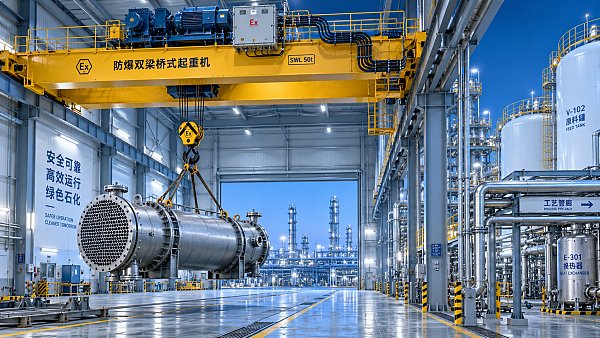
 Oct 06, 2026Selecting Petrochemical Overhead Cranes for Hazardous Areas and Heavy Process LoadsPetrochemical overhead cranes for hazardous areas: learn how to match capacity, duty, controls, corrosion protection, and maintenance access for safer, reliable lifts.
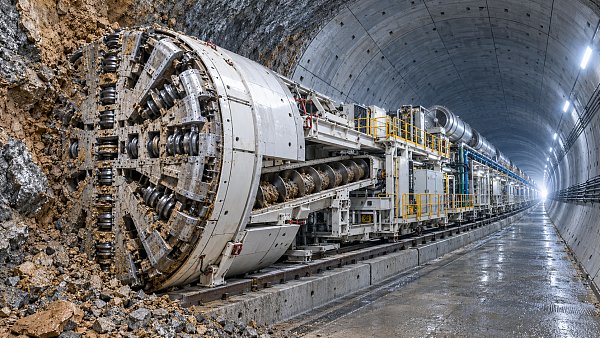
 Oct 05, 2026Tunneling Equipment Specification Planning: Key Criteria for Ground and Project RisksEquipment specification planning tunneling: learn how to match TBM systems to ground risks, geometry, safety, logistics, and lifecycle cost for more reliable project delivery.
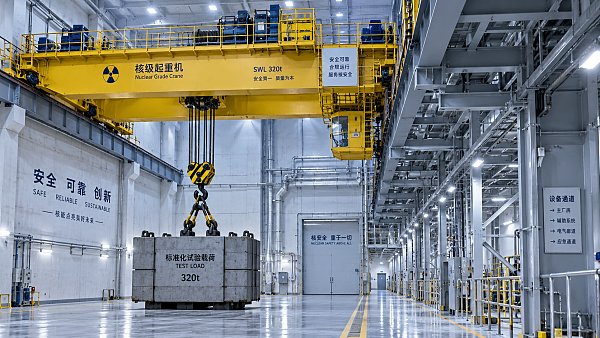
 Oct 04, 2026Nuclear Lifting Equipment Cost: Budgeting for Compliance, Testing, and Lifecycle RiskNuclear lifting equipment cost explained: budget for compliance, proof-load testing, installation, documentation, and lifecycle risk to make confident procurement decisions.
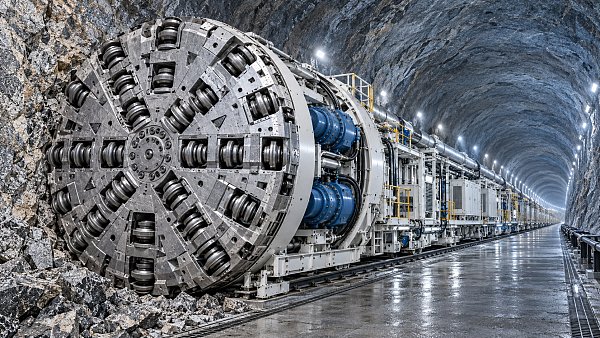
 Oct 03, 2026How to Assess TBM Manufacturers for Hard-Rock Tunneling Projects?Choose the right tunnel boring machine manufacturer for hard-rock projects. Explore key criteria for design, lifecycle cost, factory quality, and service support.
Prof. Marcus Chen
Weekly Insights
Stay ahead with our curated technology reports delivered every Monday.