
Global Construction Trends Shaping Equipment Demand, Project Risk, and Supply Chains
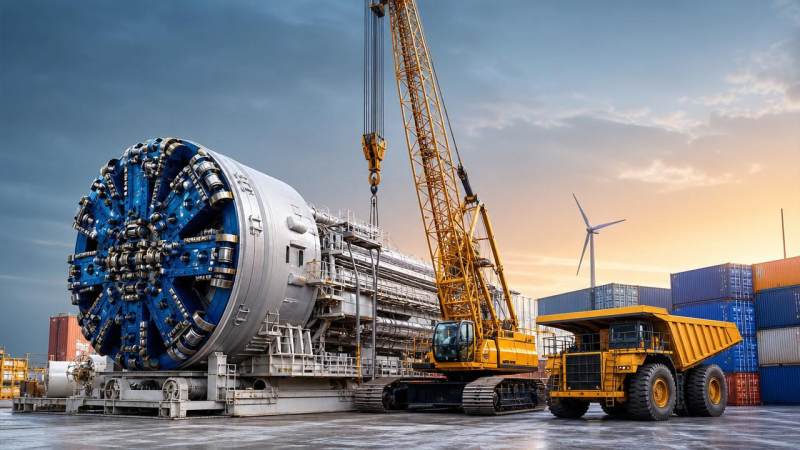
Global construction trends now do far more than indicate where concrete will be poured next. They shape equipment demand, shift project risk, and redefine how supply chains are built, financed, and protected.
That matters across tunneling, mining, heavy lifting, and road building. A delayed tunnel boring machine, an unavailable crawler crane, or a constrained haulage fleet can alter the economics of an entire project.
The bigger signal is structural. Urban expansion, energy transition, public investment cycles, and geopolitical friction are changing not only what gets built, but also which machines are needed, where risks accumulate, and how contractors plan asset deployment.
For that reason, global construction trends are no longer a background topic. They are a decision framework for evaluating project viability, equipment timing, supplier exposure, and long-term capital efficiency.
Why the current cycle looks different
The industry is moving through several transitions at once. Transport upgrades continue, but energy infrastructure, mineral extraction, and resilient logistics corridors are gaining equal strategic importance.
This creates uneven demand patterns. Some regions need TBMs for metro networks and mountain tunnels. Others need ultra-large excavators and mining dump trucks to support copper, lithium, or iron ore expansion.
At the same time, governments and investors expect better safety, traceability, carbon reporting, and schedule control. In practice, that pushes heavy equipment selection closer to financial and compliance decisions.
Seen through this lens, global construction trends are not only about volume. They are about quality of demand, technical fit, and the ability to keep billion-dollar projects moving under tighter constraints.
How equipment demand is being reshaped
Demand is becoming more segmented and more strategic. Generic capacity still matters, but project owners increasingly want machines aligned with ground conditions, lifting profiles, haulage environments, and digital operating requirements.
TBMs and underground expansion
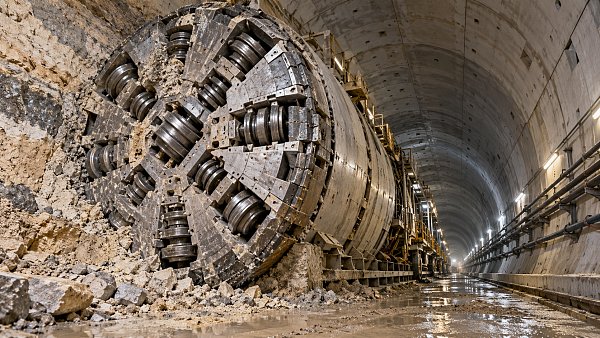
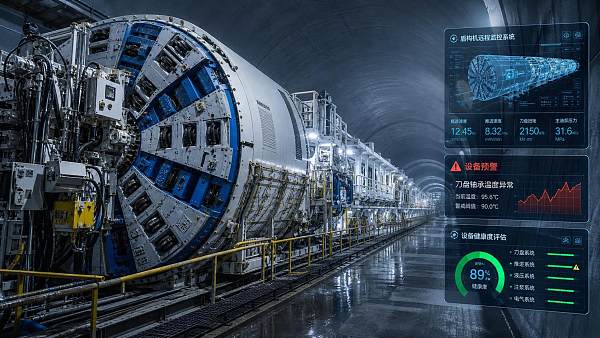
Dense cities and cross-mountain links keep underground construction active. TBM demand is influenced by geology, cutter head material performance, spare parts planning, and the reliability of specialist support teams.
In these projects, procurement errors are expensive. A machine that is technically impressive but poorly matched to abrasive rock, water pressure, or logistics access can create cascading delays.
Mining fleets and resource security
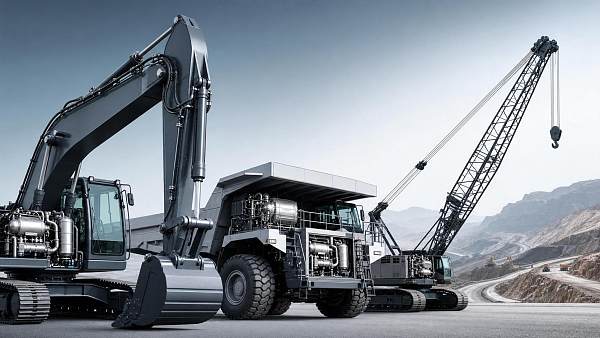
Energy transition is lifting demand for minerals, which supports purchases of large excavators and mining dump trucks. Yet the story is not just higher volumes. It is also about endurance, altitude adaptation, temperature resilience, and fuel strategy.
Pure electric and hybrid haulage attract attention, but adoption depends on site power availability, charging logic, payload economics, and maintenance capability in remote environments.
Crawler cranes and heavy industrial builds
Wind power, nuclear projects, petrochemical upgrades, and large modules sustain demand for crawler cranes. Here, capacity charts alone are not enough. Transportability, assembly time, ground preparation, and local lifting regulation can become the decisive variables.
Road machinery and network modernization
Road construction remains essential, but expectations are changing. Precision paving, digital monitoring, lower-emission operation, and lifecycle durability now affect machinery choices across highway and smart corridor projects.
Project risk is moving upstream
One of the clearest global construction trends is that risk appears earlier than before. It starts during tendering, technical specification, supplier qualification, and logistics mapping, rather than only during on-site execution.
A project may look strong on paper yet remain fragile if key machines rely on single-source components, long ocean freight routes, or volatile steel and hydraulic supply.
Digitalization changes this as well. 5G remote-controlled excavation, telematics, predictive maintenance, and connected fleet management can reduce downtime, but they also introduce software dependency and cybersecurity considerations.
Risk therefore becomes multidimensional. Mechanical failure is still important, but data quality, control system integration, regulatory timing, and cross-border sourcing have joined the same decision table.
Supply chains are now part of competitive strategy
Earlier cycles often treated procurement as a support function. Current global construction trends show that supply chain structure can determine whether a project remains bankable under stress.
Specialized raw materials, forged components, hydraulic systems, tires, cutter tools, and control electronics all influence equipment availability. A shortage in one tier can slow an entire fleet strategy.
More operators are responding with dual sourcing, regional service hubs, spare parts localization, and stronger visibility into subcontracted manufacturing stages. These moves may raise upfront cost, but they often reduce schedule volatility.
This is where intelligence platforms such as TF-Strategy become relevant. The value is not promotional visibility, but stitched insight across project tenders, machinery evolution, raw material signals, and commercial deployment logic.
That broader view helps connect physical machine parameters with project methods and infrastructure strategy. In heavy industry, those links often reveal hidden exposure before it appears in financial reporting.
Where the strongest signals appear
Not every market sends the same message. The most useful reading of global construction trends comes from comparing project type, resource priority, energy policy, and equipment intensity.
- Urban rail and water transfer schemes usually point to TBM demand, cutter wear concerns, and complex underground logistics.
- Open-pit mine expansion often signals demand for large excavators, dump trucks, autonomous functions, and high-availability maintenance contracts.
- Wind, nuclear, and petrochemical megaprojects typically strengthen crawler crane demand and require early transport and lifting studies.
- National road upgrades highlight paving precision, asphalt plant coordination, and lifecycle performance under heavier traffic loads.
These signals are stronger when matched with financing conditions and policy timing. A project pipeline can look large while still producing limited short-term machinery deployment.
Practical ways to read the market
A useful evaluation starts with three linked questions: what is being built, what machine profile is truly required, and what supply chain assumptions sit behind the delivery promise.
It also helps to separate demand headlines from executable demand. Announced infrastructure spending does not automatically translate into equipment orders with acceptable margins and manageable risk.
Key judgment points
- Check whether equipment specifications match the physical realities of the project, not just the tender language.
- Map the supply chain behind critical subsystems, especially where delivery depends on niche components or imported materials.
- Review the technology layer, including telematics, remote operation capability, data reliability, and service response time.
- Assess total cost of ownership rather than purchase price alone, particularly for high-intensity fleets and long-duration tunnel work.
- Track policy, permitting, and trade conditions that may disrupt deployment even when project funding appears secure.
Usually, the strongest decisions come from combining macro signals with machine-level detail. That is exactly where heavy industry analysis becomes more useful than broad construction commentary.
What deserves attention next
Global construction trends will keep evolving as decarbonization, mineral security, and infrastructure resilience compete for capital. The next advantage will come from reading those shifts early and translating them into equipment and sourcing choices.
That means watching not only project announcements, but also cutter head materials, remote-control adoption, electric haulage economics, regional service capacity, and the stability of specialist suppliers.
A disciplined next step is to build a comparison framework across project type, machine requirement, supply risk, and lifecycle cost. From there, market signals become easier to test, rank, and act on.
In a market where timing and fit matter as much as scale, a clearer reading of global construction trends can turn uncertainty into a more structured decision path.
Related News
 Oct 24, 2026Choosing Lifting Equipment for Middle East Petrochemical Plants in Hazardous AreasExplore petrochemical lifting equipment Middle East plants can rely on. Compare hazardous-area certification, capacity, and heat limits to make informed procurement decisions.
 Oct 23, 2026Selecting Lifting Equipment for Nuclear Component Transport: Key Safety CriteriaSelecting lifting machinery for nuclear component transport? Discover essential safety criteria, load control checks, and supplier requirements to guide confident procurement.
 Oct 22, 2026Tunnel Boring Machines in Southeast Asia: EPB vs. Slurry for Soft GroundCompare tunnel boring machines Southeast Asia projects rely on: EPB vs. slurry for soft ground. Discover how groundwater, settlement risks, and spoil handling shape the right choice.
 Oct 21, 2026Choosing Tunneling Equipment for the Middle East: Rock, Soil, and GroundwaterCompare underground tunneling equipment Middle East projects need. Explore rock, soil, groundwater, and TBM options to reduce risk and make confident procurement decisions.

Dr. Alistair Vaughn
Weekly Insights
Stay ahead with our curated technology reports delivered every Monday.