
Mining Industry Developments: What Equipment Buyers Should Watch in Supply and Pricing
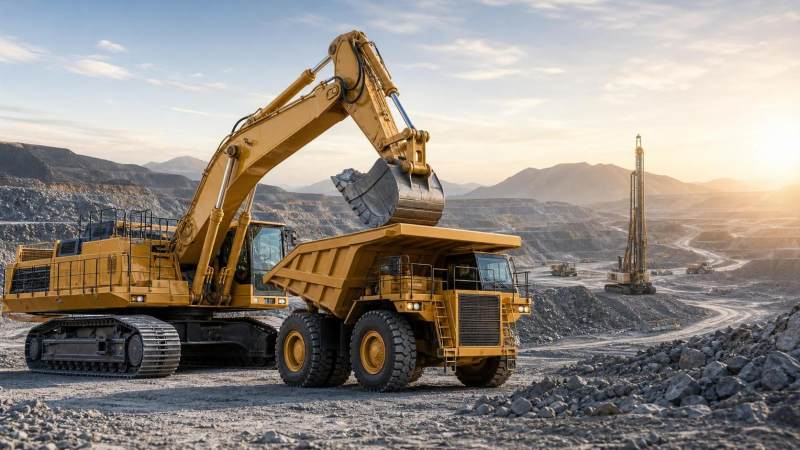
Mining Industry Developments: What Equipment Buyers Should Watch in Supply and Pricing
Mining industry developments are changing procurement decisions faster than many buying teams expected.
Supply stability, build slots, freight rates, and financing costs now move together.
That combination affects excavators, mining dump trucks, drilling systems, and support equipment alike.
For buyers, the real question is not whether prices will move.
It is which signals point to higher costs, slower deliveries, or better negotiation timing.
From recent market shifts, mining industry developments show a clear pattern.
Buyers who track upstream constraints early usually secure better total acquisition outcomes.
Those who react late often pay more through rush production, premium freight, or costly specification compromises.
Why Mining Industry Developments Matter More in Procurement Today
The mining equipment market is no longer shaped by OEM pricing alone.
Steel plate, hydraulic components, engines, tires, batteries, and semiconductors all influence final quotes.
At the same time, regional project booms can quickly absorb production capacity.
A surge in copper, iron ore, or coal investment can tighten supply across several equipment categories.
This is why mining industry developments deserve constant monitoring, not quarterly review only.
In practical terms, better visibility helps buyers protect budget accuracy and project readiness.
The Supply Signals That Deserve Immediate Attention
Not every market headline matters equally.
The strongest procurement signals usually come from four linked areas.
1. Raw Material Volatility
Steel remains the most visible cost driver in mining equipment manufacturing.
However, chromium, copper, rubber, and specialty alloys can shift costs just as sharply.
When these inputs rise together, OEMs often shorten quote validity periods.
That is usually an early warning of broader pricing pressure.
2. OEM Production Backlog
Longer backlogs do not always mean immediate price increases.
But they often reduce configuration flexibility and weaken buyer leverage.
If build slots are filling three to six months faster than normal, act early.
That trend is one of the clearest mining industry developments affecting lead time risk.
3. Freight and Port Friction
Large equipment does not move like container cargo.
Breakbulk capacity, heavy-lift vessel schedules, port handling, and inland permits all matter.
Even stable factory pricing can be offset by volatile logistics costs.
This matters especially for ultra-large excavators and mining dump trucks.
4. Regional Demand Concentration
When several mining regions expand at once, supply gets tight in surprising ways.
Sometimes the constraint is engines.
Sometimes it is tires, hydraulic pumps, or field service availability.
Watching mining industry developments by region helps explain these hidden bottlenecks.
What Is Driving Equipment Pricing Now
Pricing today is more layered than a simple list increase.
Buyers need to separate visible price from full delivered cost.
- Base machine cost may rise with raw material or component inflation.
- Optional packages may become more expensive when specialized suppliers face shortages.
- Freight and inland transport can erase discounts on ex-works pricing.
- Commissioning costs may increase when technicians are booked across multiple remote projects.
- Financing costs can rise even when equipment list prices stay flat.
A more obvious signal is the shift toward electrification and remote operation features.
These upgrades improve long-term efficiency, but they can raise initial capex.
So mining industry developments should be read through both cost and productivity lenses.
How Buyers Can Read Market Timing More Accurately
Good timing rarely comes from waiting for the cheapest month.
It comes from understanding when risk is increasing faster than price.
In actual business practice, three timing indicators are especially useful.
- Quote validity periods get shorter across several suppliers.
- Lead times stretch before formal price notices appear.
- OEMs become less willing to hold delivery slots without deposits.
When these signs appear together, procurement delay often becomes more expensive than early commitment.
That is one of the most actionable lessons from current mining industry developments.
A Practical Decision Framework for Supply and Cost Risk
A simple framework can improve buying discipline without slowing decisions.
This approach keeps mining industry developments tied to commercial decisions, not just market commentary.
Where Strategic Intelligence Adds Real Buying Value
Procurement quality improves when market data connects with equipment realities.
That is where a sector-focused intelligence platform becomes useful.
TF-Strategy follows the heavy equipment ecosystem from multiple angles.
It tracks tunnel boring machines, open-pit mining assets, crawler cranes, road machinery, and mining dump trucks.
More importantly, it links technical parameters with project method, supply shifts, and commercial logic.
That matters when evaluating 5G remote-controlled excavation, TBM cutter material upgrades, or electric haulage transitions.
Seen this way, mining industry developments become a tool for reducing TCO rather than just tracking news.
Action Steps for Smarter Equipment Buying
The strongest procurement teams usually follow a repeatable response pattern.
- Track monthly mining industry developments for materials, backlog, freight, and regional demand.
- Request cost breakdowns that separate machine price from logistics, commissioning, and support.
- Compare delivery commitments against project startup risk, not against list price only.
- Build alternative sourcing paths for high-risk components and service support.
- Review technology upgrades through lifecycle savings, not short-term capex alone.
In a volatile market, certainty is often worth more than a narrow upfront discount.
Mining industry developments will keep reshaping supply and pricing conditions.
The practical advantage goes to buyers who translate those signals into earlier, clearer, and more disciplined equipment decisions.
Related News
 Sep 16, 2026Infrastructure Equipment Market Reference: Demand, Pricing, and Supplier BenchmarksInfrastructure equipment market reference for buyers: assess demand signals, total cost, pricing risks, and supplier benchmarks for tunnels, mining, cranes, and road projects.
 Sep 15, 2026How to Evaluate Infrastructure Equipment Suppliers for Complex Project RequirementsInfrastructure equipment solutions supplier evaluation guide for complex projects: assess technical fit, lifecycle cost, reliability, local support, and contract risk.
 Sep 14, 2026What Drives Surface Mining Equipment Cost Across a Mine’s Operating Life?Surface mining equipment cost depends on fleet matching, fuel, wear, maintenance, availability, and rebuild timing. Explore lifecycle strategies that protect output and margins.
 Sep 13, 2026Crawler Crane Application Analysis for Wind Farms, Bridges, and Confined SitesCrawler crane application analysis for wind farms, bridges, and confined sites—optimize lift paths, ground conditions, access, and schedules for safer project delivery.
Dr. Alistair Vaughn
Weekly Insights
Stay ahead with our curated technology reports delivered every Monday.