
Mining industry developments that may change capex plans
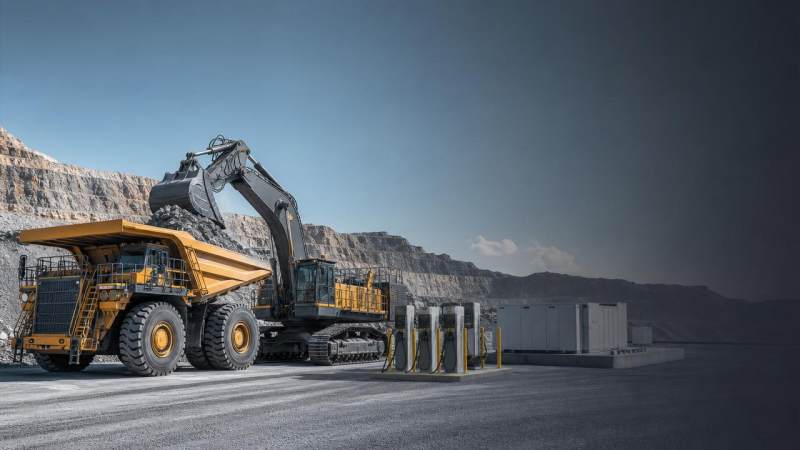
Mining industry developments are increasingly reshaping how enterprise leaders assess capital allocation, project timing, and equipment investment risk. From commodity volatility and decarbonization pressure to automation, electrification, and supply chain uncertainty, the forces influencing capex plans are becoming more strategic than cyclical. This article examines the shifts that matter most to decision-makers seeking resilience, efficiency, and long-term value in heavy industry planning.
For boards, mine owners, EPC contractors, and equipment planners, capex is no longer a simple response to commodity prices. It is now tied to fleet productivity, energy transition exposure, permitting speed, labor availability, and the ability to secure critical machinery on predictable timelines.
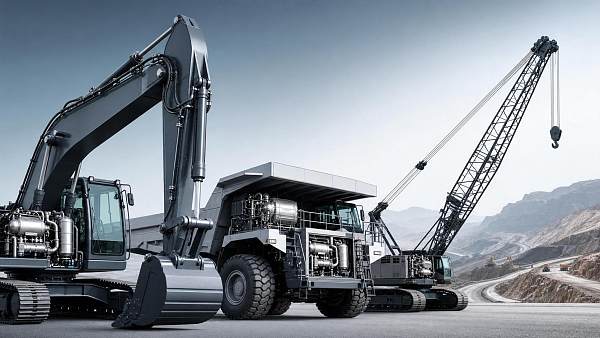
That matters directly to organizations operating across open-pit mining, heavy haulage, ultra-large excavation, and related earth engineering fields. In this environment, mining industry developments affect not only what companies buy, but when they buy, how they phase deployment, and which technical specifications they prioritize.
Why mining industry developments now influence capex more than past cycles
Historically, many mining capex plans moved in 12- to 24-month waves linked to ore prices and project approvals. Today, planning windows often stretch across 3 to 7 years because fleet electrification, digital infrastructure, and component lead times require earlier commitment and more scenario modeling.
A large open-pit project may now evaluate not only shovels, dump trucks, and crushers, but also charging layouts, dispatch software, remote operation readiness, and power supply resilience. A single change in haul route design can alter truck sizing, tire strategy, and maintenance bay investment.
The five pressure points affecting investment timing
- Commodity swings that can shift project IRR assumptions by 5% to 15%.
- Decarbonization targets that require lower-emission fleets within 3 to 8 years.
- Equipment lead times that can extend from 6 months to 18 months for large assets.
- Skilled labor shortages that increase the value of automation and remote control systems.
- Supply chain concentration in tires, batteries, high-strength steel, and hydraulic components.
These factors make mining industry developments more structural than cyclical. Decision-makers must stress-test capex against multiple operating states, including high fuel cost, constrained labor, unstable parts supply, and delayed grid connection.
From replacement capex to strategic capex
A replacement truck purchase used to be a fleet maintenance decision. Now it can be a strategic decision involving payload class, diesel versus electric architecture, autonomous readiness, telemetry integration, and TCO over 8 to 12 years. That changes approval thresholds at both operating and corporate levels.
The table below shows how current mining industry developments are changing the logic behind major capex approvals in heavy equipment operations.
The key lesson is that capex decisions now extend beyond machine price. Enterprises that compare only purchase cost may overlook infrastructure dependencies, commissioning risk, and operational flexibility over the life of the mine.
The specific developments most likely to change mining capex plans
Not every headline deserves a budget change. Enterprise leaders should focus on mining industry developments that alter cost structure, equipment utilization, or project sequencing in measurable ways. In practice, five developments stand out.
1. Electrification is moving from pilot to planning baseline
Battery-electric mining trucks, hybrid support fleets, and trolley-assist systems are no longer niche discussions. Even where full conversion is not practical, companies increasingly model partial electrification for routes under 5 to 8 kilometers, fixed-cycle segments, or high-fuel-cost operations.
This affects capex in at least four areas: vehicle procurement, charging or power distribution, workshop design, and operator training. A fleet transition may require a phased schedule of 2 to 3 stages rather than a single replacement event.
2. Automation is becoming a labor and safety hedge
Autonomous haulage, 5G-enabled remote-controlled excavation, and advanced dispatch systems are increasingly relevant where operators are hard to recruit or sites face safety exposure. Even partial automation can reduce idle time, improve cycle consistency, and support 24/7 utilization with fewer workforce bottlenecks.
For capex planning, the question is not only whether automation reduces headcount. The more important issue is whether it lifts asset productivity by 8% to 20% and lowers variability in loading, haulage, and maintenance scheduling.
3. Component supply risk is reshaping procurement strategy
Large mining trucks, excavators, and supporting machinery depend on specialized tires, engines, batteries, hydraulic systems, and structural steel. Lead times for some critical components can move from 10 weeks to more than 40 weeks during periods of disruption.
That means capex planning must include spare parts strategy at the approval stage. In some cases, adding 3% to 7% to initial package value for strategic inventory can prevent much larger losses from delayed commissioning or low fleet availability.
4. Ore complexity and stripping ratios are driving equipment re-evaluation
As mines move into deeper pits, harder rock, or more variable geologies, equipment assumptions can change quickly. Higher stripping ratios may justify ultra-large excavators and larger payload trucks, while difficult gradients may favor different powertrain or braking configurations.
A mine that previously optimized around one truck class may need to reassess loading match, haul road design, and fuel burn per ton. These are not marginal adjustments; they can redirect multi-year capital allocation.
5. Stakeholder pressure is linking capex to social license
Noise, dust, emissions, water management, and worker safety now shape permitting and community acceptance more directly than in past cycles. Equipment that supports lower emissions, better visibility, or digital safety control can improve project readiness, even if unit cost is higher.
In practical terms, mining industry developments tied to ESG can accelerate or delay investment by 6 to 18 months depending on jurisdiction, infrastructure access, and reporting obligations.
How enterprise leaders should evaluate capex under changing mining conditions
Decision-makers need a framework that translates mining industry developments into investment criteria. A useful model is to score each major capex item across five dimensions: productivity, resilience, decarbonization alignment, integration complexity, and payback visibility.
A practical five-point screening model
- Measure expected output gain in tons per hour, cycle time, or availability percentage.
- Test sensitivity to diesel price, power price, and maintenance labor constraints.
- Review infrastructure dependencies such as substations, charging, data networks, and road upgrades.
- Map supply risk for critical components over the next 12 to 24 months.
- Confirm whether the investment supports the mine plan for at least one major production phase.
Using this method helps avoid a common mistake: approving a technically advanced machine without funding the systems required to use it effectively. In open-pit operations, the hidden capex around power, software, workshops, and training can be material.
The table below provides a decision-oriented view of common capex categories and the questions executives should ask before approval.
A strong capex decision is therefore system-based, not machine-based. Leaders should demand clear links between equipment specification, site constraints, production targets, and support infrastructure before releasing budget.
Questions that belong in every board-level review
- Can this asset maintain target productivity across high altitude, extreme temperature, or deep-pit conditions?
- What is the expected availability range in year 1 versus year 3?
- Which parts have single-source exposure?
- What additional capex is required outside the OEM quotation?
- How quickly can the site train operators, maintainers, and planners?
Implementation priorities for heavy industry organizations
For companies in the TF-Strategy ecosystem, including those focused on open-pit mining, heavy haulage, and large machine deployment, the best response is disciplined sequencing. Capex should be organized around operational readiness rather than equipment arrival dates alone.
Build a 3-stage capex roadmap
Stage 1 should cover baseline diagnostics over 4 to 8 weeks: production constraints, fuel exposure, haul profiles, maintenance gaps, and infrastructure bottlenecks. Stage 2 should test options and vendor fit over 6 to 10 weeks. Stage 3 should manage phased execution, acceptance, and ramp-up over 3 to 12 months.
This sequence reduces the risk of buying advanced equipment into an unprepared site. It also helps procurement teams negotiate better package structure for parts, training, commissioning, and performance support.
Use intelligence to connect machine data with strategy
The most valuable insight often comes from linking physical parameters to business outcomes. Payload, dig force, cycle time, braking performance, and energy consumption should connect directly to TCO, production stability, and delivery risk. That is where specialized sector intelligence becomes commercially useful.
For enterprise leaders, the advantage is not simply having more information. It is having decision-grade interpretation across tenders, equipment evolution, specialized materials, and infrastructure trends. In capital-intensive sectors, the difference between timely intelligence and delayed reaction can be measured in quarters, not days.
Common mistakes to avoid
- Locking in equipment before confirming power, workshop, and road conditions.
- Assuming fuel savings alone justify electrification without utilization analysis.
- Ignoring operator and maintainer training time, which may require 4 to 12 weeks.
- Underestimating consumables risk, especially tires, wear parts, and hydraulic components.
- Evaluating digital systems separately from mobile equipment and site processes.
Mining industry developments will continue to shape capex plans through technology shifts, climate pressure, cost volatility, and supply risk. The enterprises that respond best will be those that treat capex as a coordinated operating system investment, not a collection of isolated purchases.
For decision-makers seeking stronger investment timing, lower TCO, and better alignment between heavy equipment and long-term mine strategy, a structured intelligence approach is essential. TF-Strategy supports that need by connecting machinery parameters, project methods, and strategic demand signals across global earth engineering markets.
If you are reviewing fleet renewal, open-pit expansion, remote operation readiness, or low-emission equipment pathways, now is the time to refine your capex assumptions. Contact us to discuss project-specific intelligence, request a tailored solution, or explore more decision support for mining and heavy industry investment planning.
Related News
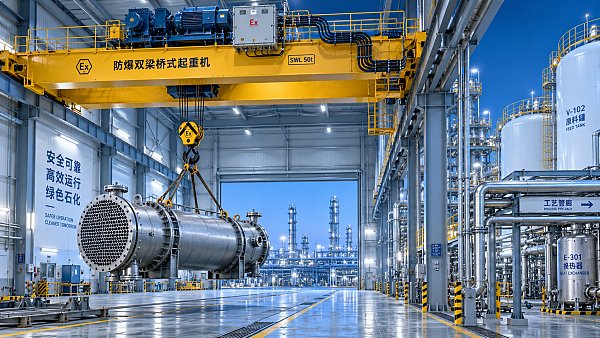
 Oct 06, 2026Selecting Petrochemical Overhead Cranes for Hazardous Areas and Heavy Process LoadsPetrochemical overhead cranes for hazardous areas: learn how to match capacity, duty, controls, corrosion protection, and maintenance access for safer, reliable lifts.
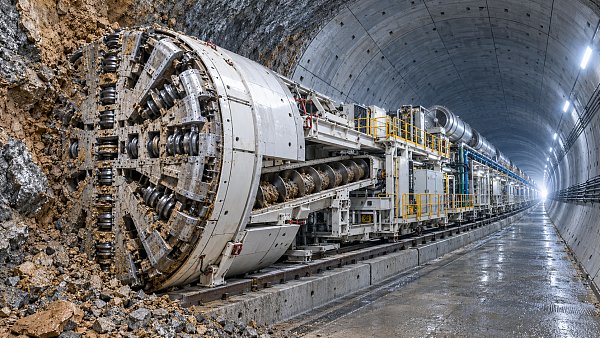
 Oct 05, 2026Tunneling Equipment Specification Planning: Key Criteria for Ground and Project RisksEquipment specification planning tunneling: learn how to match TBM systems to ground risks, geometry, safety, logistics, and lifecycle cost for more reliable project delivery.
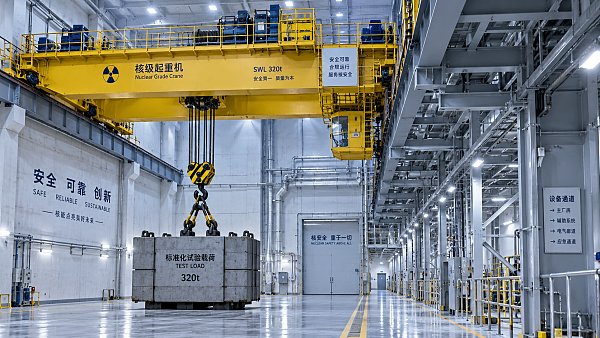
 Oct 04, 2026Nuclear Lifting Equipment Cost: Budgeting for Compliance, Testing, and Lifecycle RiskNuclear lifting equipment cost explained: budget for compliance, proof-load testing, installation, documentation, and lifecycle risk to make confident procurement decisions.
 Oct 03, 2026How to Assess TBM Manufacturers for Hard-Rock Tunneling Projects?Choose the right tunnel boring machine manufacturer for hard-rock projects. Explore key criteria for design, lifecycle cost, factory quality, and service support.
Dr. Alistair Vaughn
Weekly Insights
Stay ahead with our curated technology reports delivered every Monday.