
How to Select Highway Paving Equipment for High-Volume Asphalt Projects
Why the Equipment Decision Matters Before Mobilization
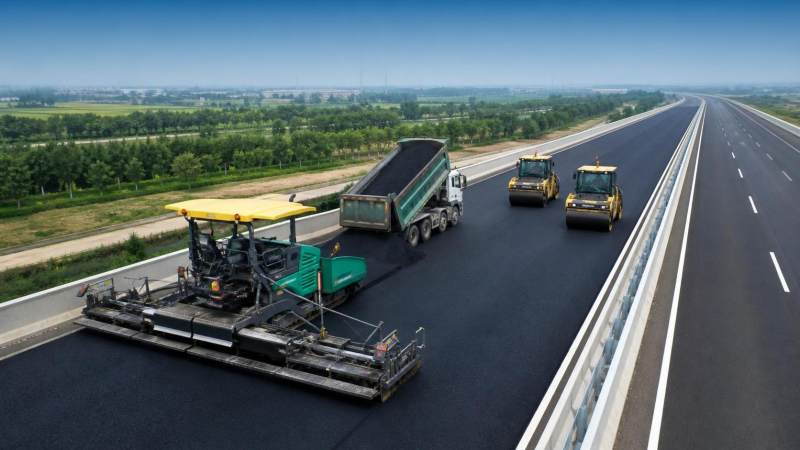
For high-volume asphalt work, selecting paving equipment is not a purchasing exercise conducted in isolation. It is a production-system decision that affects schedule certainty, pavement quality, crew utilization, material waste, traffic management, and the contractor's ability to recover when conditions change. A highway paving package can appear adequate on a specification sheet and still become the limiting factor once daily tonnage targets, long haul distances, restricted work windows, and quality requirements begin to interact.
Project managers searching for paving equipment for highways are usually trying to answer a practical question: can this fleet place the required volume at the required quality, every working day, without creating a fragile operation dependent on ideal conditions? The answer depends less on any single machine's maximum output than on whether the entire chain, from plant loading to final compaction, can maintain a stable and controlled flow.
That distinction is especially important on major corridors, airport links, logistics routes, and rehabilitation programs with substantial lane-kilometers. On these projects, a short interruption at the paver can create visible surface defects, density variation, temperature segregation, longitudinal joint problems, or unplanned shifts in the compaction pattern. The equipment must therefore be assessed as an integrated paving train rather than as a paver, roller, or material transfer vehicle selected independently.
Start With the Production Requirement, Not the Machine Brochure
The first selection input should be the actual production profile of the project. Many teams begin with nominal paving width or advertised tons per hour. Those figures are useful, but they are not a reliable basis for fleet sizing unless they are connected to the job's planned working hours, asphalt supply capacity, haul cycle, layer thickness, and expected interruptions.
A project with a high daily tonnage requirement but only a narrow night closure has a different equipment need from a greenfield highway project with broad access and two full paving shifts. The first may prioritize rapid setup, reliable material transfer, high-capacity compaction, and efficient night-service support. The second may place more value on continuous operation, wide paving capability, redundancy, and the ability to coordinate several paving fronts.
Before comparing suppliers, define a realistic operating envelope:
- Required average and peak asphalt tonnage per shift, including a reasonable allowance for delays.
- Planned paving width, lift thickness, lane configuration, shoulder work, ramps, and tie-in sections.
- Distance and travel time between the asphalt plant and the paving site, including congestion, weighbridge procedures, and unloading constraints.
- Mix types to be placed, such as base course, binder course, stone mastic asphalt, polymer-modified mixes, warm-mix asphalt, or recycled asphalt mixes.
- Permitted work hours, traffic closures, ambient temperature range, wind exposure, and seasonal weather risk.
- Target density, smoothness, texture, and joint-quality requirements under the contract specification.
- Availability of trained operators, maintenance personnel, service technicians, spare parts, fuel, and site power where relevant.
The objective is not to produce an overly precise forecast. It is to identify where the operating system will be constrained. On many large projects, the paver is not the real bottleneck. Asphalt plant output, truck dispatch reliability, material temperature retention, or roller availability may determine the actual paving rate.
The Paver Must Match the Work Geometry and the Material Flow
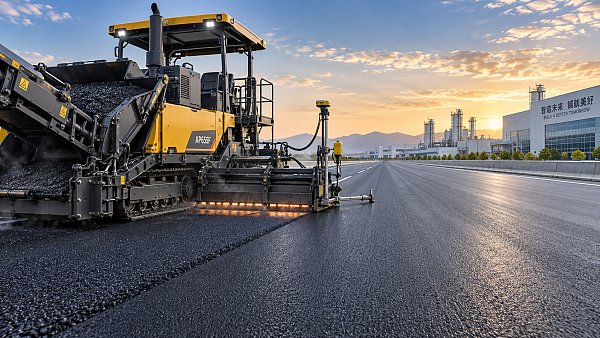
The asphalt paver remains the central machine in the paving train, but its correct configuration depends on more than headline capacity. A high-volume highway project typically needs a machine that can maintain a consistent head of material in front of the screed, provide stable traction, preserve grade and cross-slope control, and operate for long periods with limited adjustment. Stability under load matters because irregular material flow can translate directly into inconsistent mat thickness and surface appearance.
Tracked pavers are often favored for mainline paving where traction, longitudinal stability, and steady movement are important. Wheeled pavers can be advantageous where frequent relocation, constrained urban access, or specific maneuverability requirements are more prominent. Neither configuration is automatically superior; the choice should follow the project geometry, haul-road condition, lift design, and relocation frequency.
Screed selection deserves the same attention as the paver itself. The required paving width should be achievable without operating constantly at the far edge of the screed's effective range. Repeatedly running at maximum extension can reduce flexibility when widths change at merges, bridges, shoulders, and transition zones. For wide highway applications, project teams should confirm whether the screed can maintain uniform compaction and stable crown control across the intended width, particularly where one-pass paving is planned.
Automatic grade and slope systems can improve repeatability, but they do not replace survey control, operator judgment, or a well-prepared underlying layer. Digital control systems can hold a target only if the reference is trustworthy. On rehabilitation work, where existing pavement profiles vary, the choice of reference method and the quality of pre-paving survey data may be more consequential than adding another automation feature.
Maximum Capacity Is Not the Same as Sustainable Output
A paver marketed with a high theoretical output may only achieve that rate under favorable material supply, wide continuous runs, appropriate lift thickness, and experienced operation. In real conditions, truck exchanges, turns, joint work, temperature adjustments, and traffic-control constraints reduce sustained output. A prudent selection process therefore assesses the expected average production rate, not just the maximum published figure.
It is also worth asking what happens when supply is interrupted. Hopper capacity, conveyor design, auger performance, material management controls, and the ability to accept trucks smoothly all affect whether a brief delay becomes a stop-and-start event. On premium surface courses, avoiding unnecessary paver stops is often more valuable than pursuing a marginal increase in instantaneous output.
Material Transfer Equipment Can Protect Pavement Quality
Material transfer vehicles or reloading systems are sometimes treated as optional productivity equipment. On high-volume work, they can serve a more important role: stabilizing material flow and reducing the disruption caused by truck exchanges. Where mix delivery is uneven, a transfer unit can help the paver maintain movement while also improving remixing consistency, depending on the equipment design and operating practice.
This is particularly relevant for long haul distances, congested access routes, large asphalt plants serving several sites, and mixes that are sensitive to temperature variation or segregation. A transfer system cannot compensate for poor asphalt production or disorganized trucking, but it can provide a buffer that makes the overall paving train more resilient.
The case is less compelling for every project. On short, well-controlled hauls with reliable truck sequencing and modest daily volume, an additional machine may add cost, crew requirements, and coordination complexity without producing a proportional benefit. The right question is not whether transfer equipment is “necessary,” but whether the project has enough material-flow risk to justify the added control.
Roller Selection Should Be Built Around the Compaction Window
Compaction is where production pressure and quality risk often collide. If the roller fleet cannot keep pace with the paver, density targets may be missed even when the mat looks acceptable immediately after placement. If rollers are assigned without a clear sequence, crews may overwork the surface, damage aggregate structure, leave marks, or compact outside the most effective temperature range.
For highway work, the roller fleet should be selected by considering the mix design, layer thickness, paving speed, temperature loss rate, required density, and available lane width. A typical train may include a breakdown roller, an intermediate pneumatic-tire roller where appropriate, and a finish roller. The exact configuration should be validated through a trial section and the approved compaction plan rather than assumed from a standard fleet template.
Vibratory tandem rollers are commonly used for breakdown and finish rolling, but amplitude, frequency, drum width, and machine weight must align with the lift and aggregate structure. Pneumatic-tire rollers can support kneading action and help close certain mixes, yet their effectiveness depends on tire pressure management, ballast, operating temperature, and the mix being placed. Their use is not universally beneficial for all surface courses.
Intelligent compaction systems can provide useful pass-count and temperature visibility. They are most valuable when the project team has defined how that information will influence field decisions. Collecting coverage maps without connecting them to density testing, roller patterns, and corrective action creates data but not necessarily control.
Do Not Treat Haulage as an External Issue
Highway paving equipment is often selected by the paving team while truck scheduling is handled elsewhere. That separation can undermine the entire operation. A paver requires a predictable sequence of trucks arriving with usable material temperature and enough payload to support continuous placement. The truck fleet, dispatch system, plant loading process, and site access plan are therefore part of the equipment decision.
Project managers should calculate the truck count using actual round-trip cycle times, loading time, queue time, unloading time, and a contingency for variable traffic conditions. A fleet sized only for average travel time can fail during peak congestion or after a minor site disruption. Conversely, excessive trucks can create queues, temperature loss, traffic-control problems, and unsafe maneuvering around the paving operation.
Truck bodies, release agents, tarp use, cleanliness, and unloading procedures also deserve operational review. Material that sticks in a truck body, arrives segregated, or is dumped inconsistently into the paver can defeat the value of sophisticated paving controls. On large programs, it is often sensible to define common standards for hauling partners before production begins rather than attempting to correct inconsistent practices in the first week of paving.
Evaluate the Fleet as a System of Constraints
A useful selection workshop asks each equipment category the same questions: What production rate can it sustain? What conditions reduce that rate? How quickly can it recover from a disruption? What backup is available? This approach reveals whether a proposed fleet is balanced.
For example, a high-output paver paired with an undersized roller fleet creates a compaction bottleneck. A wide screed paired with insufficient truck volume produces repeated starvation. A large paver operating on a narrow rehabilitation site may lose more time maneuvering than it gains in theoretical capacity. In each case, the fleet is impressive in isolation but weak as a production system.
Redundancy should be considered in relation to the project's cost of downtime. A spare roller, backup sensor package, on-site screed wear parts, or service agreement with defined response expectations may be justified on a major schedule-critical contract. A second full paver may not be necessary, but the project should understand the consequence of losing the primary machine for a shift or several days.
Operating Cost Is Broader Than Fuel and Purchase Price
Capital cost remains important, especially where equipment will be purchased rather than rented or supplied through a subcontractor. Yet a lower acquisition price can be misleading if the machine requires more downtime, consumes more wear parts, lacks local technical support, or cannot meet the required paving precision under demanding conditions.
Total cost of ownership should include expected utilization, fuel or energy use, transport between work fronts, crew size, maintenance intervals, consumables, screed and conveyor wear, roller drum and tire costs, telematics subscriptions, training, and residual value. For rented fleets, the equivalent review should examine minimum rental periods, hour limits, mobilization charges, damage exposure, and the availability of replacement equipment.
Contractors should also separate productive utilization from engine hours. A machine can accumulate hours while waiting for trucks, standing in traffic closures, or idling through breakdowns elsewhere in the system. Improving material logistics may produce more value than selecting a machine with a small nominal efficiency advantage.
Digital Features Need a Clear Field Use Case
Telematics, remote diagnostics, machine guidance, automated screed controls, and compaction monitoring are increasingly common in road machinery. These tools can strengthen management control, but only when the project team decides in advance who will monitor the information and what decisions they are authorized to make.
For a project manager, the most useful digital capabilities are usually practical ones: machine location, fuel status, fault alerts, maintenance scheduling, operating hours, temperature tracking, and production reporting. These can help coordinate night shifts, prevent avoidable stoppages, and document whether the fleet is meeting the planned operating profile.
More advanced systems should be assessed for interoperability and support. A fleet with disconnected proprietary platforms can create extra work if data cannot be reconciled with plant records, truck dispatch information, quality logs, or project reporting. Before committing, confirm data access rights, network requirements, cybersecurity responsibilities, subscription terms, and whether local technicians can diagnose the system in the field.
Common Selection Assumptions That Need Testing
Several assumptions repeatedly lead to weak equipment decisions. The first is that a bigger paver automatically delivers better productivity. It may, but only where haulage, lane width, crew organization, and compaction capacity support it. The second is that automation solves workmanship issues. It can improve consistency, but it cannot correct poor mix supply, unstable base conditions, or inadequate operator training.
Another common assumption is that an equipment fleet proven on one highway will transfer directly to another. The same machines may perform very differently when the project changes from rural new-build work to urban reconstruction, or from thick base layers to thin polymer-modified surface courses. Climate, aggregate type, local asphalt practice, traffic restrictions, and service availability all change the operating environment.
Finally, teams sometimes assume that a technical specification guarantees delivery quality. Specifications establish a baseline. Quality is achieved through calibration, trial paving, preventive maintenance, crew discipline, quality testing, and fast correction when the process drifts.
A More Defensible Procurement Process
For major projects, equipment selection should be tied to a staged preconstruction process. Begin with the production model, then test the proposed fleet against representative paving scenarios. Require suppliers or rental partners to clarify not just rated capacities but machine configuration, working-width limits, service coverage, critical spare-part lead times, operator training, and the equipment's history with comparable mixes and climates.
A trial section remains one of the strongest decision tools available. It allows the team to verify paver speed, screed behavior, truck exchange procedures, roller pattern, density achievement, surface texture, and crew communication before full-scale production makes changes expensive. The trial should be treated as an operational test, not simply as a compliance formality.
In the end, successful highway paving is less about acquiring the most technologically advanced machine and more about selecting a fleet whose capacity, control systems, support model, and operating discipline match the project’s real constraints. For high-volume asphalt work, the best equipment choice is the one that keeps material moving, keeps compaction inside the workable window, and gives the project team enough control to deliver consistent pavement when the schedule is under pressure.
Related News
 Oct 14, 2026High-Capacity Heavy Lifting Solutions: Matching Load, Radius, and Ground ConditionsDiscover heavy lifting solutions high capacity projects demand—compare load charts, working radius, and ground conditions to select a feasible, cost-effective system.
 Oct 13, 2026OEM Equipment Suppliers in Europe: Vetting Quality, Lead Times, and SupportCompare OEM equipment Europe suppliers on quality, lead times, and after-sales support. Discover practical vetting steps to reduce downtime and buy heavy equipment with confidence.
 Oct 12, 2026How to Assess a High-Altitude Mining Equipment Manufacturer for Remote ProjectsHigh altitude mining manufacturer assessment guide: compare derating, cold-climate reliability, remote service, parts resilience, and lifecycle risk for smarter project decisions.
 Oct 11, 2026What Drives TBM Cutter Head Material Cost and Life-Cycle Value?Cutter head material cost explained: compare TBM alloys, wear protection, downtime risk, and life-cycle value to choose the most reliable, cost-effective solution.


Pavement Process Engineer
Weekly Insights
Stay ahead with our curated technology reports delivered every Monday.