
How water trucks change haul road cycle times
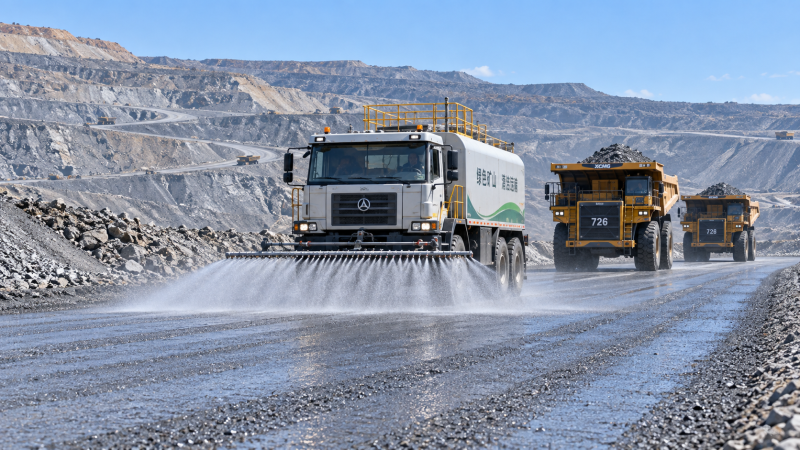
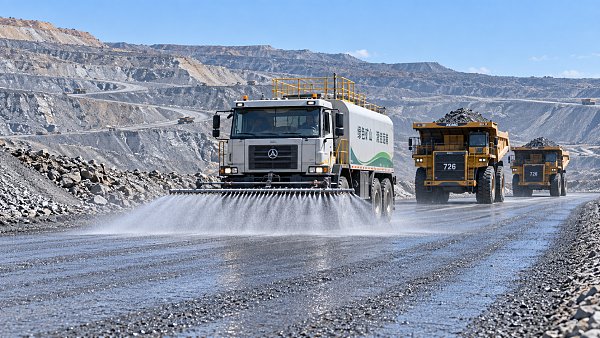
Water trucks can improve haul road cycle times, but only when their routes, application rate, and timing are managed as part of the haulage system. A controlled moisture program suppresses dust, preserves road surface cohesion, reduces loose material, and allows haul trucks to hold more consistent speeds. A poorly managed program can produce the opposite result: queuing behind the water truck, reduced speed on wet sections, muddy wheel paths, and added delays at loading or dumping interfaces.
For a project manager, the practical question is not whether water trucks are necessary. On most dry, high-traffic roads, they are. The question is whether watering is increasing the productive time of the haul fleet by more than it consumes in road access, water supply, and operating disruption. Cycle time changes are often small on a single pass, but repeated across a large fleet and multiple shifts, they can materially affect production, fuel use, tire condition, and schedule reliability.
Why road moisture affects the haul cycle
A haul cycle is usually measured from one loading event to the next, including spotting, loading, travel to the dump point, dumping, and return travel. Water trucks influence the travel portion directly, but their effects reach further. A dusty or deteriorated road can slow trucks well beyond the visible problem area, because operators adjust speed for poor visibility, vibration, wheel slip, or uncertainty about road edge conditions. The result is greater variation between individual cycles, even when the planned haul distance remains unchanged.
Water changes the operating condition of the road surface. On an unbound gravel or mine road, a suitable moisture level can help fine particles bind with larger aggregate. That improves surface integrity and limits the formation of loose dust, shallow ruts, and corrugations. A firmer, more uniform running surface generally reduces rolling resistance and gives drivers a more predictable path. Trucks can then sustain a safe target speed with fewer abrupt reductions and less steering correction.
The benefit is rarely expressed as a simple “wet road equals faster truck” rule. Road material, traffic density, grade, temperature, vehicle weight, tire type, drainage, and maintenance practice all affect the result. A water truck on a short, low-volume construction route may add more interference than value. On a long haul route with heavy dump trucks operating in dry conditions, the same unit can protect road quality and stabilize cycle performance across the shift.
Dust control improves speed consistency more than peak speed
Dust is often discussed as a visibility or environmental issue, but its production impact is just as important. A truck operator approaching a dense dust plume cannot safely maintain normal speed if the road centerline, berm, intersections, or following vehicle are obscured. Even where formal speed limits do not change, drivers will create larger gaps and brake earlier. Those decisions are appropriate, but they extend travel time and make fleet dispatch less predictable.
Effective watering improves line of sight and lets operators read the road ahead. The gain may not be a dramatic increase in maximum speed. More often, it is a reduction in speed fluctuations: fewer slow approaches to dusty sections, fewer defensive stops, and less variation between loaded and empty travel times. For project planning, that consistency can be more valuable than a temporary speed increase because loading units, crushers, and dump areas are easier to schedule when arrivals are less erratic.
Dust suppression must cover the locations that constrain the haul cycle. Applying water evenly across a lightly used straight section while leaving a loading approach, intersection, ramp, or dump queue dry may improve appearance without improving throughput. Road observations should identify where dust forces operators to reduce speed or creates unsafe following distances. Those locations should guide the watering plan.
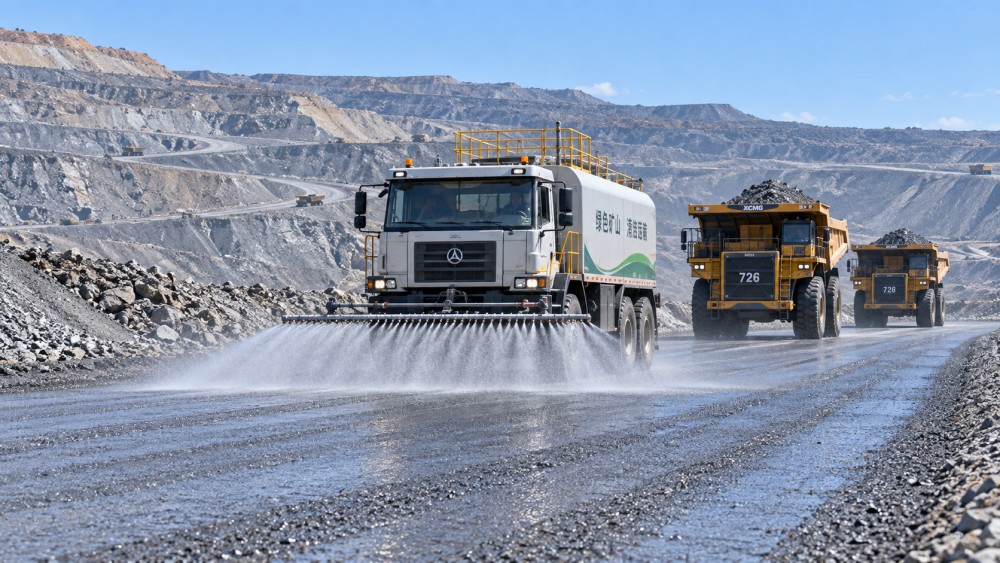
Too much water can lengthen the cycle
The same water that binds a dry surface can weaken it when applied excessively or without adequate drainage. Fine-grained materials can become slick, soft, or plastic. Truck tires may displace surface material, creating ruts that hold more water and degrade further under traffic. On grades, excess water can reduce available traction and require lower travel speeds, particularly for loaded vehicles climbing or descending.
A road does not need standing water to become operationally slow. A thin wet film on a compacted running surface can change braking behavior and make operators more cautious at corners and intersections. Watering immediately before a heavily loaded truck convoy also introduces avoidable exposure: the first trucks may encounter a condition different from the one assumed in their normal operating pattern.
Overwatering also creates indirect delays. Water trucks themselves are large, slow-moving units that need access to the same road network as production trucks. If a water truck works on a narrow route, at a single-lane ramp, or near a constrained loading area, haul trucks may have to wait, pass cautiously, or reroute. The water truck’s refill cycle can add another constraint when the supply point is poorly located or shares access with production traffic.
The operational target is therefore a damp, stable surface rather than a visibly saturated one. The right condition is defined by road behavior: dust remains controlled, the surface remains firm, tires do not cut deeply into the running layer, and drivers can maintain safe, consistent speed. A watering plan based only on tank loads per shift or a fixed time interval can miss that condition entirely.
Water truck timing matters as much as application volume
Watering schedules are often set for convenience: a route is covered every few hours, or a truck is dispatched whenever dust becomes visibly severe. Both approaches can be useful starting points, but neither accounts for traffic peaks, changing weather, or the road’s material response. Water demand can change quickly between early morning, midday heat, shift change, and late-afternoon wind.
For cycle-time control, water truck activity should be coordinated with the haul plan. The most productive schedule may involve shorter, more frequent applications to critical segments rather than full-route passes that disrupt the fleet. In some operations, watering before a high-traffic period is preferable to sending the truck into the route after the queue has already formed. In others, a road may benefit from maintenance and watering during a planned production lull, when reduced access has the lowest cost.
Managers should also distinguish between dust-control watering and road-conditioning watering. Dust-control passes are intended to keep visibility acceptable at the surface. Conditioning work may require a different application rate, grading sequence, or compaction response to restore the road structure. Treating both tasks as identical can lead to excessive water use and disappointing road performance.
Questions to ask when reviewing the schedule
- Which road segments create the largest travel-time variation for loaded trucks?
- Does the water truck enter those segments during peak haul periods?
- Are intersections, ramps, and loading approaches watered differently from long straight sections?
- How long does the applied moisture remain effective under the site’s temperature, wind, and traffic conditions?
- Is the road firm enough immediately after application for loaded equipment to travel at normal safe operating speed?
- Can water trucks refill without interfering with haul routes, fuel traffic, or service vehicles?
Road condition determines whether watering delivers a return
Water trucks cannot compensate for a road with unsuitable material, poor crossfall, failed drainage, inadequate width, or persistent structural deformation. If the running surface has widespread potholes, deep corrugations, exposed oversize aggregate, or weak subgrade, more water may simply make the symptoms harder to manage. In those cases, grading, material replacement, drainage correction, or traffic control may offer a larger cycle-time benefit than changing the watering interval.
Road geometry also shapes the outcome. On flat, wide segments, a water truck can often operate with limited disruption. On tight ramps and narrow switchbacks, the operational cost of its presence is higher. Water runoff on a descending route may collect at the low point, while insufficient drainage near a curve can create a localized traction problem. These locations should be inspected as operating constraints, not merely as maintenance defects.
The relationship between watering and rolling resistance deserves particular attention. Loose, dry fines and road roughness can increase the energy required to move a loaded truck. A well-maintained moisture condition can help maintain a smoother, denser running layer, reducing the power needed to sustain speed. But when material becomes saturated or churned, rolling resistance can rise again. Fuel consumption, engine load, and travel speed may then worsen together. This is why water management should be evaluated alongside road maintenance, rather than as an isolated environmental activity.
Measure the fleet effect, not just water consumption
A water program can appear efficient because the truck completes its assigned route, consumes the planned volume, and keeps visible dust down. That does not prove that it is improving haulage productivity. The useful measure is the fleet response before, during, and after watering activity.
Project teams can compare loaded and empty travel times by road segment, observe delays caused by passing or waiting behind water trucks, and track the spread between fastest and slowest cycles. A narrower spread in travel time can indicate that road conditions are becoming more controllable. Operators’ reports are also important, especially where they identify specific locations of reduced visibility, wheel slip, roughness, or water accumulation.
Dispatch data is valuable when available, but it should be read with operational context. A longer cycle after watering may result from a simultaneous loading delay, shift change, traffic queue, or weather event. Conversely, a shorter cycle may simply reflect lighter traffic. The objective is to identify recurring patterns across comparable conditions, not to attribute every minute of change to the water truck.
Water use itself should be treated as an operating input with a cost and a constraint. Long refill travel, unreliable supply, or excessive application can consume time and energy without improving production. In remote projects or water-constrained regions, this also affects the feasibility of the entire road-control approach. Some sites may need tighter application control, improved road material, or alternative dust-suppression methods to reduce dependence on repeated high-volume watering.
Turn watering into a dispatch decision
The strongest water-truck programs treat road moisture as a variable that can be managed alongside truck availability, road maintenance windows, and production targets. The water truck should have a defined service priority, clear radio coordination, and routes that avoid unnecessary conflict with loaded traffic. Its operator needs practical feedback on where the road is drying too quickly, where application is causing softness, and where production traffic is already constrained.
For project managers, the decision framework is straightforward: identify where road condition is adding travel-time variability; apply water only to the degree that improves surface behavior and visibility; schedule the work around fleet movement; then confirm the result through travel-time and road-condition observations. A water truck is productive when it helps the haul fleet move more predictably. When it becomes another obstacle on the route, the application plan, road condition, or both need to change.
Related News
 Oct 03, 2026How to Assess TBM Manufacturers for Hard-Rock Tunneling Projects?Choose the right tunnel boring machine manufacturer for hard-rock projects. Explore key criteria for design, lifecycle cost, factory quality, and service support.
 Oct 02, 2026How to Evaluate Heavy Equipment Technology Suppliers for Fleet Uptime and SupportHeavy equipment technology suppliers can make or break fleet uptime. Learn how to assess diagnostics, data access, parts, service coverage, and support terms before you buy.
 Oct 01, 2026How to Use Technical References to Benchmark Industrial Equipment PricesIndustrial equipment technical reference pricing: learn how to normalize specifications, scope, service life, and operating costs to benchmark quotes accurately and choose the best-value equipment.
 Sep 30, 2026What Does an Ultra-Large Excavator Really Cost Over Its Service Life?Ultra-large excavators cost far more than purchase price. Explore lifecycle expenses, uptime risks, energy use, maintenance, and cost-per-tonne insights.


Heavy Haulage Strategist
Weekly Insights
Stay ahead with our curated technology reports delivered every Monday.