
What should be verified before purchasing a used mining dump truck for underground operations?
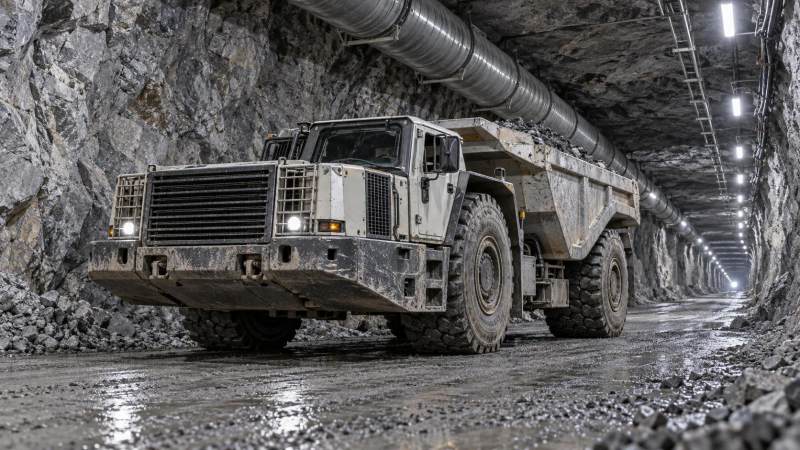
What Should Be Verified Before Purchasing a Used Mining Dump Truck for Underground Operations?
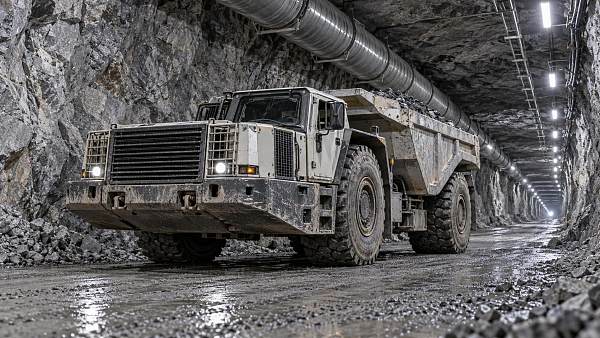
It’s not just about cost savings. In underground mining—where clearance is measured in centimeters, ventilation systems run at engineered limits, and brake response time can mean the difference between a near-miss and a stoppage—the decision to acquire a used mining dump truck isn’t procurement. It’s risk calibration.
At TF-Strategy, we track over 127 active underground projects across geologically extreme environments: Andean tunnels above 4,200 meters, Arctic mines where permafrost shifts tunnel alignment overnight, and Southeast Asian karst zones where sudden voids demand real-time load redistribution. In those contexts, a second-hand dump truck isn’t “pre-owned”—it’s a mission-critical node in a tightly coupled haulage chain. Its failure doesn’t just delay a shift. It cascades: ventilation rebalancing, fleet telematics recalibration, even revalidation of escape route clearances.
So what should be verified? Not just what’s visible—but what’s embedded in design intent, maintenance history, and operational context.
Structural Integrity: Beyond Surface Cracks
Underground trucks endure torsional stress no surface counterpart faces. Tight turns in 4.5-meter-diameter drifts, repeated loading on uneven muck piles, and constant vibration against rock walls fatigue frames asymmetrically. A visual inspection won’t catch micro-fractures in the subframe weld zones near the articulation pivot—or residual stress in the rear axle housing from prior overload events.
Verification requires access to original service records—not just oil changes, but documented frame straightness checks, axle alignment reports, and suspension bushing replacement logs. If those records are incomplete or unavailable, non-destructive testing (NDT) like magnetic particle inspection (MPI) on high-stress weld joints becomes non-negotiable—not optional.
Emission Compliance: Diesel Isn’t Neutral Underground
A Tier 3 diesel engine may pass emissions standards at sea level. But underground? At altitude, combustion efficiency drops. Exhaust gas recirculation (EGR) systems struggle with thin air—and particulate filters clog faster in high-humidity, fine-dust environments. That means higher backpressure, elevated exhaust temperatures, and accelerated aftertreatment degradation.
Check not only the engine’s certified emission tier, but also its actual performance envelope: Has it been derated for altitude? Does the DPF regeneration strategy align with your mine’s duty cycle (e.g., short-haul, frequent idle)? And critically—does the existing ventilation system have sufficient capacity to handle the unit’s real-world CO and NOx output during peak load, not just nameplate specs?
Braking System Redundancy: One Failure Is Not an Option
Underground haulage rarely uses engine braking alone. Most modern underground dump trucks rely on multi-circuit hydraulic retarders combined with spring-applied, hydraulically released parking brakes. But older units often lack dual-circuit fail-safe logic—or worse, use single-reservoir master cylinders feeding both service and parking circuits.
Verify the brake architecture: Are service, parking, and emergency functions truly isolated? Have caliper seals and accumulator pre-charge pressures been tested under simulated low-temperature conditions (common in deep, cold mines)? And don’t overlook the brake cooling ducts—clogged or misaligned ducts reduce thermal capacity by up to 40%, per field data from three Andean copper operations we’ve monitored since 2021.
Cab Ergonomics: Where Clearance Meets Cognitive Load
A cab that fits in a surface quarry may not fit underground. Low-ceiling drifts force operators into sustained forward-leaning postures. Reaching for controls while bracing against lateral sway increases fatigue—and reduces reaction time. We’ve seen cases where minor modifications (like relocating the hand throttle or adding a footrest) cut reported operator discomfort by over 60% across 12-hour shifts.
Measure actual headroom *with the seat fully adjusted*, not just at the factory spec line. Check sightlines to blind spots—especially rear corners, where tailgate swing and adjacent equipment create persistent hazards. And confirm that all warning lights, alarms, and HMI interfaces remain legible under helmet-mounted lighting and dust-laden airflow.
Fleet Telematics Compatibility: Data Is Not Plug-and-Play
Telematics platforms aren’t universal. A legacy CAN bus protocol from a 2014 Komatsu HD785 may not handshake with a 2023 Cat MineStar configuration without middleware—and even then, diagnostic depth (e.g., transmission clutch wear estimation, retarder fluid temperature decay curves) may be lost.
Request full protocol documentation—not just “CAN 2.0B compliant”. Ask for sample data streams: What parameters are broadcast? At what frequency? Are OEM-specific fault codes translated or masked? Without this, integrating a used unit into predictive maintenance workflows becomes guesswork—not intelligence.
Service & Support Realities: Who Fixes It When It Fails?
A machine’s age matters less than its support ecosystem. A 2016 Liebherr T 272 may still operate reliably—if local technicians hold certified training and spare parts are stocked within 72 hours. But a 2018 Belaz 75131—despite newer hardware—can stall production for weeks if regional dealers lack hydraulic pump rebuild capability or refuse to service units outside warranty.
Don’t rely on OEM promises. Contact third-party service providers active in your region. Ask for lead times on top-five failure-prone components: retarder control valves, articulation joint bearings, cab HVAC compressors. Cross-reference those answers with parts availability on global industrial marketplaces—and verify serial-number-level compatibility, not just model numbers.
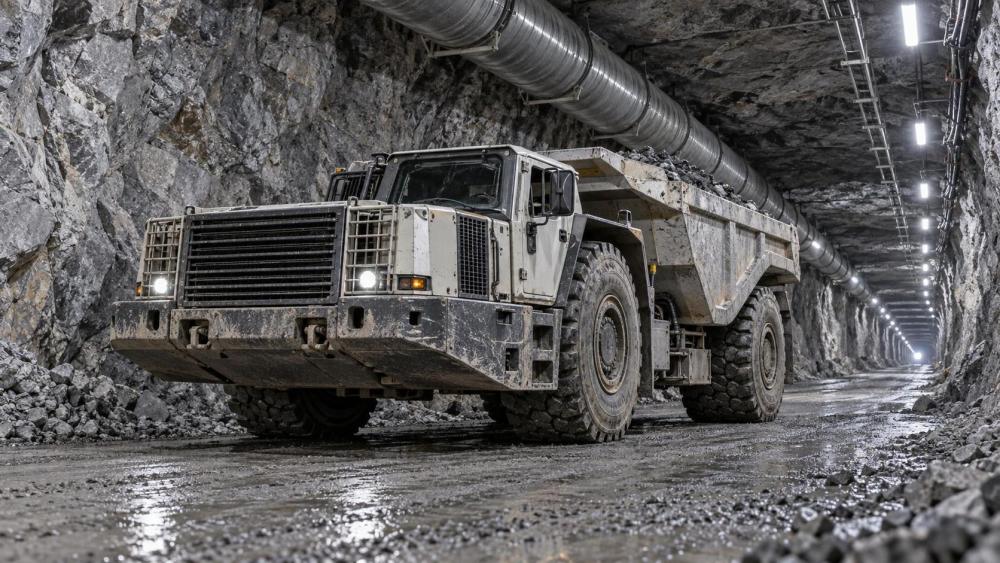
The Strategic Layer: Why This Isn’t Just About One Truck
TF-Strategy’s Strategic Intelligence Center treats heavy equipment not as isolated assets—but as nodes in a geological, logistical, and digital network. A used dump truck purchase sits at the intersection of three converging forces:
- Material flow physics—how payload distribution affects roof bolt loading in soft ground;
- Digital integration readiness—whether the unit’s sensor suite supports remote health monitoring under your mine’s LTE-M coverage;
- Energy transition trajectory—whether its current powertrain allows future hybridization or battery retrofit pathways, based on OEM roadmaps and third-party conversion feasibility studies.
That’s why our analysts don’t just review spec sheets. They map each candidate unit against your site’s ventilation model, haulage cycle simulation, and long-term fleet electrification plan—even before the first inspection report arrives.
Because buying used isn’t about settling. It’s about selecting with precision—so the machine doesn’t become a bottleneck, but a bridge to resilience.
Related News
 Sep 16, 2026Infrastructure Equipment Market Reference: Demand, Pricing, and Supplier BenchmarksInfrastructure equipment market reference for buyers: assess demand signals, total cost, pricing risks, and supplier benchmarks for tunnels, mining, cranes, and road projects.
 Sep 15, 2026How to Evaluate Infrastructure Equipment Suppliers for Complex Project RequirementsInfrastructure equipment solutions supplier evaluation guide for complex projects: assess technical fit, lifecycle cost, reliability, local support, and contract risk.
 Sep 14, 2026What Drives Surface Mining Equipment Cost Across a Mine’s Operating Life?Surface mining equipment cost depends on fleet matching, fuel, wear, maintenance, availability, and rebuild timing. Explore lifecycle strategies that protect output and margins.
 Sep 13, 2026Crawler Crane Application Analysis for Wind Farms, Bridges, and Confined SitesCrawler crane application analysis for wind farms, bridges, and confined sites—optimize lift paths, ground conditions, access, and schedules for safer project delivery.
Heavy Haulage Strategist
Weekly Insights
Stay ahead with our curated technology reports delivered every Monday.