
Heavy equipment technology is changing fleet ROI math
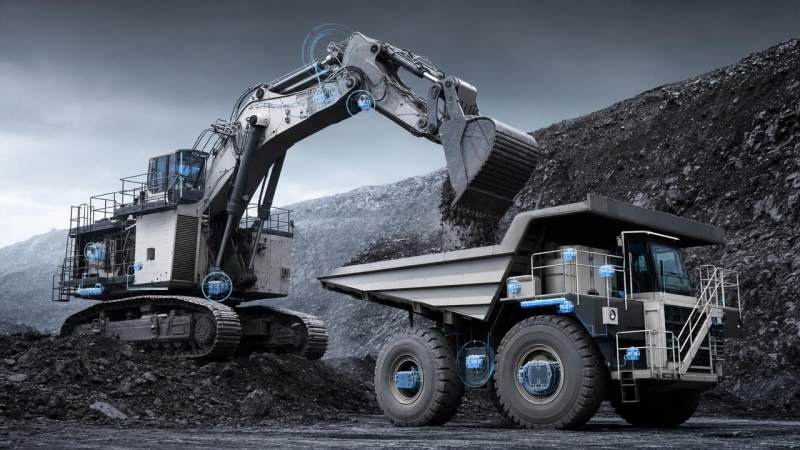
Heavy equipment technology is rewriting how finance leaders evaluate fleet ROI. From TBMs and ultra-large excavators to crawler cranes and mining dump trucks, smarter systems now influence utilization, fuel efficiency, maintenance cycles, and project risk at scale.
For financial approvers, the key shift is simple: returns no longer depend only on purchase price and asset life. They increasingly depend on data quality, automation capability, uptime performance, and how well equipment technology reduces uncertainty across major projects.
That means the real question is no longer whether advanced machines cost more. It is whether traditional ROI models are still accurate enough to guide capital allocation in a market defined by tighter margins, bigger contracts, and greater operational complexity.
What financial approvers are really searching for when they assess heavy equipment technology
When someone searches for heavy equipment technology in an ROI context, the core intent is rarely technical curiosity. It is usually a decision-support need: how new machine technologies change cost structures, project outcomes, and investment timing.
For finance leaders, that search intent typically centers on three practical concerns. First, which technologies truly improve returns. Second, how to measure those gains credibly. Third, what risks come with overpaying for features that do not translate into operational value.
In other words, the audience is not looking for a generic innovation overview. They want a framework for deciding whether connected, automated, electrified, and analytics-driven equipment can outperform conventional fleet assets on total economic contribution.
Why fleet ROI math has changed more than many approval models recognize
Traditional fleet evaluation often starts with acquisition cost, financing terms, fuel consumption, maintenance history, and residual value. Those metrics still matter, but they are no longer enough to capture the economics of modern heavy machinery.
Today, advanced systems influence revenue protection as much as cost reduction. A machine with better telemetry, predictive diagnostics, and operator assistance can prevent delays, reduce rework, and stabilize production rates across high-value infrastructure environments.
That distinction is critical in sectors such as tunneling, open-pit mining, and heavy lifting. In these settings, one unexpected failure does not just increase repair expense. It can trigger schedule slippage, contractor penalties, standby losses, and cascading coordination costs.
As a result, heavy equipment technology increasingly affects EBITDA through avoided disruption. For financial approvers, that means ROI models must move beyond static ownership cost and include the financial value of uptime, controllability, and project reliability.
Which technologies most directly affect ROI in modern heavy fleets
Not every innovation changes returns in the same way. The highest-impact technologies are usually the ones that improve utilization, reduce unplanned downtime, lower energy intensity, or strengthen decision visibility across the asset lifecycle.
Telematics is often the first and most measurable layer. It provides location, idle time, cycle counts, fuel burn, operator behavior, fault alerts, and maintenance data. That visibility helps fleet managers convert previously hidden inefficiencies into actionable cost savings.
Predictive maintenance systems add another layer of value. By using sensor data to flag wear patterns and failure risks, they allow maintenance to be scheduled before a breakdown disrupts production, crane lifts, or haulage continuity.
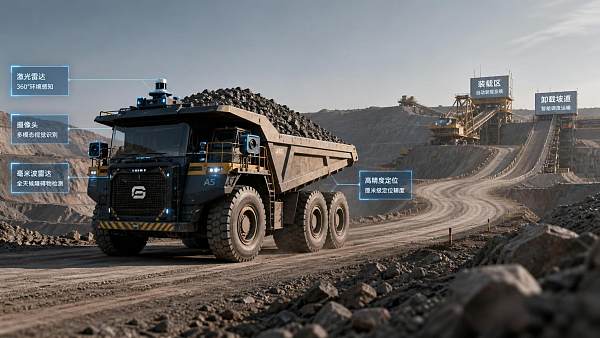
Automation and operator-assist functions are also changing the math. In large excavators, dump trucks, and road machinery, these features can improve cycle consistency, reduce overloading or inefficient movement, and lessen dependence on scarce high-skill operators.
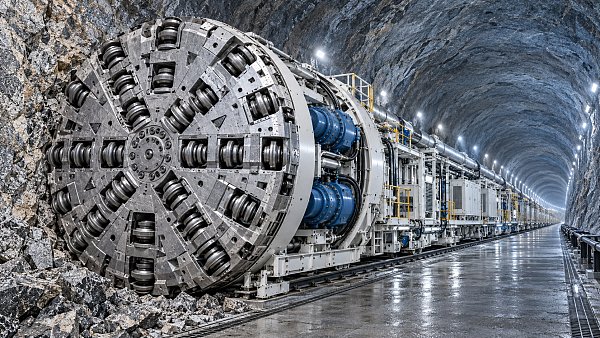
In specialized equipment such as TBMs and crawler cranes, technology can improve accuracy and process control. Better boring parameter monitoring or lift-path management does more than optimize machine output. It lowers execution risk in highly sensitive project phases.
Electrification and hybrid power systems are becoming more relevant as well. Their ROI depends heavily on duty cycle, energy pricing, charging or grid conditions, and emissions compliance requirements, but in the right environment they can materially improve lifetime economics.
How smarter equipment changes the biggest drivers of total cost of ownership
Financial approvers often focus on total cost of ownership because it provides a broader lens than sticker price. The challenge is that TCO itself is evolving. Technology now changes several TCO components at once, sometimes in opposite directions.
On the cost side, advanced machines often require higher upfront investment, software subscriptions, specialized training, cybersecurity provisions, and stronger service agreements. Those items can make a proposal look less attractive in a simple capex comparison.
On the savings side, the same assets may reduce fuel waste, extend component life, cut tire or undercarriage wear, lower incident frequency, and minimize emergency service calls. Over time, those operational gains can offset a meaningful premium.
Residual value is changing too. Equipment with strong digital architecture, OEM support, and software-upgrade pathways may hold value better than assets that become technologically outdated before their mechanical life ends.
Maintenance planning also becomes more financially precise. Rather than assuming average service intervals, companies can align interventions with actual operating condition. That can reduce both premature replacement and catastrophic failure exposure.
For this reason, the best TCO models now treat technology as an economic variable, not just a product feature. The question is not whether the machine is advanced. It is whether its technology changes cash flow timing, volatility, and asset productivity.
Why uptime has become the most undervalued ROI lever
In many heavy industries, a single percentage point of uptime can be worth more than a visible discount on acquisition cost. Yet capital approval processes still often underweight this factor because uptime benefits are harder to estimate in advance.
That is a mistake, especially for fleets tied to high-value project sequencing. If a tunnel boring machine stalls, if a crawler crane misses a lift window, or if a mining truck fleet loses cycle stability, the financial impact can exceed direct maintenance cost many times over.
Heavy equipment technology improves uptime not only by preventing failures, but also by shortening diagnosis and response time. Remote diagnostics, fault-code analytics, and service connectivity help maintenance teams intervene faster and with better parts readiness.
For finance teams, this means uptime should be modeled as a revenue and margin protection metric. It supports better forecasting, improves asset-backed utilization assumptions, and reduces the probability of budget shocks during execution.
How to evaluate ROI without being misled by vendor promises
One of the biggest approval risks is accepting broad efficiency claims without linking them to fleet reality. Technology vendors may cite strong improvements, but actual results depend on operator quality, site conditions, duty intensity, maintenance discipline, and digital adoption maturity.
A better approach is to evaluate each technology against a short list of financial questions. Does it reduce a known cost center. Does it protect a critical production bottleneck. Does it improve compliance or safety in ways that prevent material losses.
Finance teams should also ask whether the gain is direct, indirect, or conditional. Fuel savings may be direct. Reduced turnover from easier machine operation may be indirect. Autonomous functions may be conditional on site readiness and process redesign.
Pilot-based validation is usually stronger than full-fleet assumptions. A controlled deployment across comparable jobs, shifts, or machine classes can reveal whether a projected ROI case holds under actual operating conditions.
It is also important to separate feature availability from feature utilization. Many fleets own machines with advanced functions that are poorly configured, rarely used, or unsupported by training. Unused technology creates depreciation, not return.
Where ROI upside is strongest across major heavy equipment categories
In tunnel boring operations, technology creates value through better geological response, cutterhead monitoring, alignment precision, and maintenance planning. Financially, these improvements matter because tunneling delays are expensive, contract-sensitive, and difficult to recover once lost.
In ultra-large excavators, the upside often comes from cycle optimization, lower energy consumption per ton moved, and reduced structural stress through smarter machine control. Small efficiency gains become large when measured across continuous high-volume production.
Crawler cranes benefit from digital lift planning, stability monitoring, and service intelligence. In sectors such as wind, petrochemicals, and nuclear construction, the value lies less in raw operating hours and more in risk reduction during critical lift events.
Large road machinery sees ROI through paving consistency, material optimization, and reduced rework. When equipment technology supports tighter tolerances and better compaction control, contractors can protect margin while meeting demanding quality specifications.
Mining dump trucks offer some of the clearest technology-linked returns. Telematics, payload management, route analytics, and powertrain optimization all affect haul efficiency, tire life, fuel cost, and maintenance frequency under punishing operating conditions.
What a finance-ready decision framework should include
For financial approvers, the best response to changing fleet ROI math is not blind enthusiasm or blanket skepticism. It is a more disciplined evaluation model that reflects how heavy equipment technology creates or destroys value in practice.
Start with baseline economics: acquisition, financing, fuel or energy, labor, maintenance, and resale assumptions. Then add technology-driven variables such as uptime improvement, utilization lift, component life extension, and failure-risk reduction.
Next, incorporate project sensitivity. A machine supporting a non-critical process may justify a different premium than one tied to a high-penalty schedule path. Technology value rises sharply when downtime consequences are severe.
Then test organizational readiness. If a company lacks data governance, operator training, digital maintenance workflows, or OEM support access, expected returns may be delayed or diluted. Technology adoption capability is part of the investment case.
Finally, use scenario analysis rather than a single forecast. A base case, upside case, and execution-risk case can help decision-makers see whether the investment remains sound under realistic variations in utilization and adoption performance.
The strategic implication: heavy equipment technology is now a capital allocation issue
For years, equipment technology was often treated as an operational matter delegated to engineering or fleet teams. That is no longer sufficient. As machinery becomes more connected, automated, and energy-aware, technology choices directly shape capital efficiency.
This is especially true in global infrastructure sectors where machine classes are expensive, project environments are unforgiving, and schedule certainty carries premium value. In these conditions, financial approvers need better visibility into how technical capability affects economic outcome.
That does not mean every advanced machine deserves approval. It means every serious investment should be judged with an ROI framework that captures the modern realities of fleet performance, digital serviceability, and project-linked risk.
Companies that adapt their evaluation methods will be better positioned to lower TCO, improve asset productivity, and make smarter bets in tunneling, mining, lifting, and road construction. Those that rely on outdated purchase logic may save on capex while losing on execution.
Conclusion
Heavy equipment technology is changing fleet ROI math because value now comes from more than mechanical output. It comes from uptime, data visibility, operator support, predictive maintenance, energy efficiency, and risk control across the full asset lifecycle.
For financial approvers, the most useful question is not whether technology adds cost. It is whether that technology improves the economics of ownership and project delivery enough to justify the premium with credible, measurable returns.
In today’s heavy industry landscape, that answer increasingly depends on disciplined modeling, category-specific analysis, and a clear understanding of where technology translates into real operational leverage. Better approval decisions begin with better ROI math.
Related News
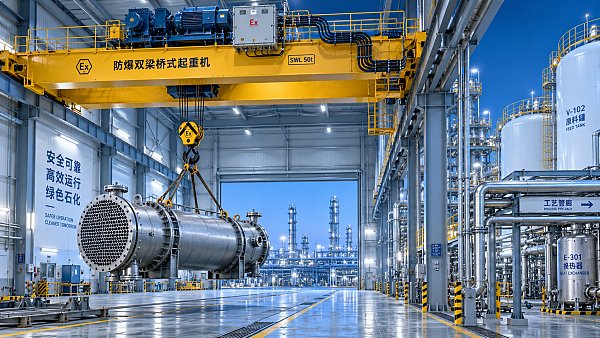
 Oct 06, 2026Selecting Petrochemical Overhead Cranes for Hazardous Areas and Heavy Process LoadsPetrochemical overhead cranes for hazardous areas: learn how to match capacity, duty, controls, corrosion protection, and maintenance access for safer, reliable lifts.
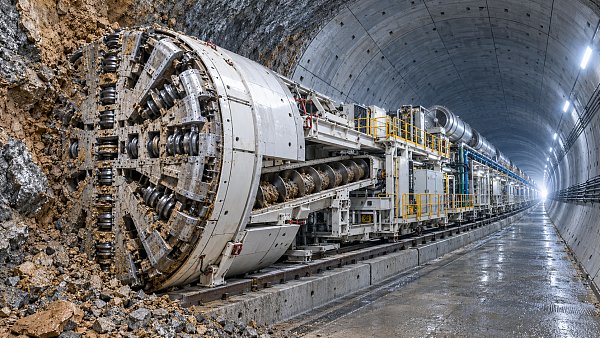
 Oct 05, 2026Tunneling Equipment Specification Planning: Key Criteria for Ground and Project RisksEquipment specification planning tunneling: learn how to match TBM systems to ground risks, geometry, safety, logistics, and lifecycle cost for more reliable project delivery.
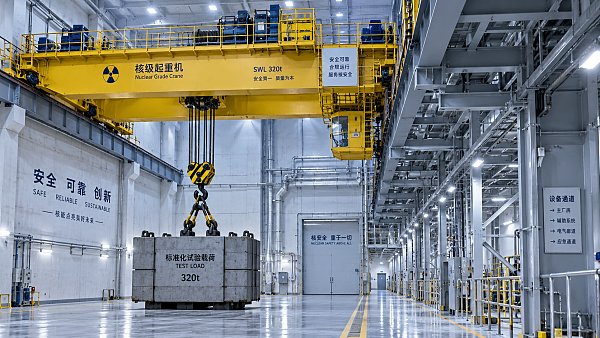
 Oct 04, 2026Nuclear Lifting Equipment Cost: Budgeting for Compliance, Testing, and Lifecycle RiskNuclear lifting equipment cost explained: budget for compliance, proof-load testing, installation, documentation, and lifecycle risk to make confident procurement decisions.
 Oct 03, 2026How to Assess TBM Manufacturers for Hard-Rock Tunneling Projects?Choose the right tunnel boring machine manufacturer for hard-rock projects. Explore key criteria for design, lifecycle cost, factory quality, and service support.

Heavy Haulage Strategist
Weekly Insights
Stay ahead with our curated technology reports delivered every Monday.