
Heavy Haulage Trucks: How to Match Axle Load, Payload, and Route Conditions
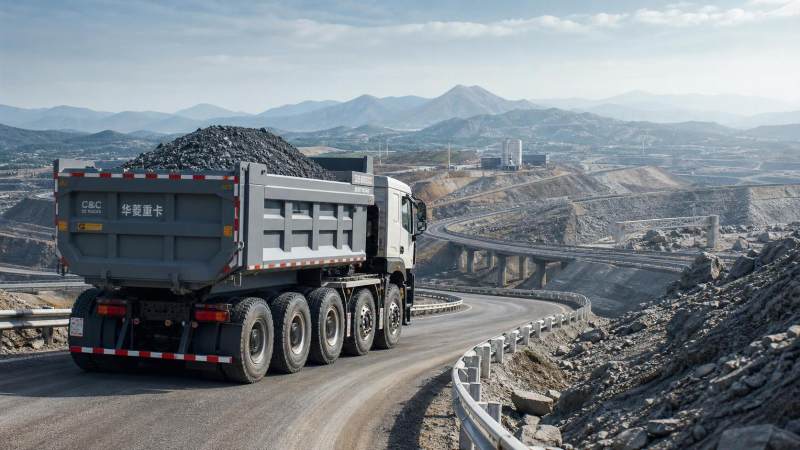
Heavy Haulage Trucks: How to Match Axle Load, Payload, and Route Conditions
Choosing the right heavy haulage trucks is not only about carrying more tons per trip.
It is about balancing axle load, payload, gradients, road limits, surface quality, and cycle efficiency.
When that balance is wrong, transport costs rise quickly.
Tire wear accelerates, fuel burn increases, and schedule risk becomes harder to control.
In mining, tunneling support, and large infrastructure work, route conditions often decide performance more than brochure payload figures.
That is why heavy haulage truck selection should start from the haul road, not the sales sheet.
From the recent market shift, the clearer signal is this.
Operators are choosing heavy haulage trucks that fit route reality, maintenance capacity, and total cost of ownership.
That also means payload decisions now depend on compliance, safety margins, and daily productivity stability.
Why axle load matters more than headline payload
Many teams begin by comparing rated payload.
That is useful, but it is rarely enough for choosing heavy haulage trucks correctly.
Axle load determines how truck weight is transferred to the road surface.
It affects legal compliance, pavement damage, bridge safety, tire stress, and turning stability.
A truck with a higher nominal payload may underperform if axle distribution exceeds route restrictions.
This happens often on mixed routes with weak subgrade, temporary access roads, or local bridge limits.
In practical operations, overloaded rear axles can create a chain reaction.
You may see rutting, suspension fatigue, slower cornering, and more unplanned stops.
That is why the best heavy haulage trucks are not always the biggest ones.
They are the units that keep axle loads within safe and legal limits while maintaining steady cycle times.
Key axle load questions before selection
- What is the maximum allowable load per axle on the full route?
- How does payload shift during braking, climbing, and uneven terrain travel?
- Are there local bridge, culvert, or temporary road restrictions?
- Will seasonal rain or freeze-thaw cycles reduce road bearing capacity?
- Can the selected tire size and suspension layout support the planned duty cycle?
These questions keep heavy haulage truck selection grounded in real operating constraints.
Match payload to route, not to ambition
Payload should be sized against the route profile and material density.
Trying to maximize every load can look efficient on paper.
In reality, it may reduce average speed, increase rollover risk, and shorten component life.
The right payload for heavy haulage trucks depends on four route facts.
- Average and peak gradient.
- Road width, turning radius, and traffic interaction.
- Surface type, rolling resistance, and maintenance condition.
- Haul distance versus loading and dumping delays.
For short, smooth, private haul roads, larger payload heavy haulage trucks may deliver strong output.
For longer routes with gradients, soft shoulders, and public road segments, moderate payload often wins.
The reason is simple.
Consistency usually beats peak capacity in daily transport economics.
A practical payload check
Compare three numbers before approving any model.
- Rated payload from the manufacturer.
- Legal or site-approved payload under axle load limits.
- Sustainable payload under actual route resistance and braking conditions.
The third number is often the one that truly matters.
How route conditions reshape truck choice
Route conditions should directly shape the specification of heavy haulage trucks.
This includes drivetrain, axle arrangement, suspension, braking system, and body design.
Steep gradients
Steep climbs demand torque, traction, and cooling capacity.
Long descents require reliable retarders, service brakes, and stable center-of-gravity control.
In these settings, heavy haulage trucks with balanced power-to-weight ratios often outperform oversized units.
Soft or damaged surfaces
Poor surfaces punish concentrated axle loads.
Wider tires, optimized load spread, and suspension tuning become more important than raw payload.
This is especially true on temporary roads supporting tunneling or remote site development.
Tight corners and mixed traffic
Large heavy haulage trucks may lose efficiency when maneuverability becomes a bottleneck.
A slightly smaller platform can reduce waiting time, tire scrub, and safety incidents.
That trade-off is often worth more than a higher single-trip payload.
High altitude and extreme temperature
Environmental conditions change engine output, brake behavior, tire pressure stability, and hydraulic response.
Heavy haulage truck selection for these zones should include derating assumptions, not ideal lab figures.
A simple decision framework for heavy haulage trucks
A clear selection process reduces expensive surprises later.
The most useful approach is to evaluate heavy haulage trucks in this order.
- Define material type, density, and daily movement target.
- Map the full route, including gradients, structures, and seasonal weak points.
- Set axle load limits for every route section.
- Estimate real cycle time under loaded and unloaded travel.
- Check braking, traction, and turning performance under worst-case conditions.
- Compare fuel, tire, maintenance, and downtime cost per ton moved.
- Choose the truck that delivers the best stable output, not the highest theoretical output.
This framework supports better decisions for mining roads, dam projects, tunneling logistics, and major civil works.
Common selection mistakes that raise total cost
Several mistakes appear again and again when buying or deploying heavy haulage trucks.
- Using rated payload without checking axle load compliance.
- Ignoring route deterioration during wet or cold seasons.
- Choosing truck size before confirming turning geometry.
- Underestimating brake demand on long downhill sections.
- Comparing purchase price without modeling lifetime operating cost.
- Assuming one truck configuration fits every route in a mixed project.
In real business, these errors usually show up as hidden cost rather than immediate failure.
That makes them more dangerous.
The project may still move, but at a lower margin and higher risk level.
What strong selection data should include
Better heavy haulage truck decisions come from better field data.
At minimum, the evaluation package should include the following.
- Route survey with grades, widths, surface notes, and structure limits.
- Material density range and loading variability.
- Expected weather impact by month or season.
- Projected tonnage, cycle target, and queuing assumptions.
- Maintenance support capability, parts lead time, and tire supply readiness.
- Safety requirements for braking, visibility, and load control.
This is where a strategic intelligence view becomes valuable.
A portal such as TF-Strategy connects machine parameters with route reality and project economics.
That helps decision makers compare heavy haulage trucks with fewer blind spots.
Final takeaway
The best heavy haulage trucks are the ones that fit the route, protect axle load compliance, and sustain productive payload every day.
That means looking beyond catalog capacity and focusing on the full transport system.
When route conditions, road restrictions, and operating cycles are measured carefully, truck selection becomes much clearer.
Start with axle load, test payload against real gradients, and verify performance under the worst section of the route.
That is the practical path to safer transport, stronger uptime, and lower cost per ton.
If the goal is better heavy haulage truck selection, the smartest next move is to evaluate the road before evaluating the truck.
Related News
 Sep 19, 2026Mining Truck Technology Trends: What Fleet Managers Should Prioritize for 2026Mining truck technology trends for 2026: prioritize electrification, autonomy, predictive maintenance, and road intelligence to improve fleet uptime, safety, and cost control.
 Sep 17, 2026How TBM Guidance Technology Maintains Alignment Through Curves and Variable GroundTunnel boring machine guidance technology helps teams maintain precise alignment through curves and variable ground, reducing risk, improving lining accuracy, and protecting schedules.
 Sep 16, 2026Infrastructure Equipment Market Reference: Demand, Pricing, and Supplier BenchmarksInfrastructure equipment market reference for buyers: assess demand signals, total cost, pricing risks, and supplier benchmarks for tunnels, mining, cranes, and road projects.
 Sep 15, 2026How to Evaluate Infrastructure Equipment Suppliers for Complex Project RequirementsInfrastructure equipment solutions supplier evaluation guide for complex projects: assess technical fit, lifecycle cost, reliability, local support, and contract risk.

Heavy Haulage Strategist
Weekly Insights
Stay ahead with our curated technology reports delivered every Monday.