
Geotechnical Engineering in Tunnel Projects: What Site Data Matters Most?
Geotechnical Engineering in Tunnel Projects: What Site Data Matters Most?
In tunnel delivery, geotechnical engineering is only as reliable as the site data behind it.
The real issue is not volume.
It is whether the right ground parameters reduce uncertainty before excavation starts.
Strong geotechnical engineering turns scattered borehole logs, lab tests, and groundwater readings into practical tunnel decisions.
That includes TBM selection, support design, settlement control, contract risk, and construction sequencing.
When site investigation misses critical data, projects often pay later through cutter wear, face instability, inflow events, or slow advance rates.
This is why geotechnical engineering must focus on decision-grade information, not just reporting completeness.
Below are the site data categories that matter most, and how they support better tunnel outcomes.
Start With the Ground Model, Not Isolated Test Results
Good geotechnical engineering begins with a usable ground model.
That model should explain what materials exist, where they change, and how those changes affect excavation behavior.
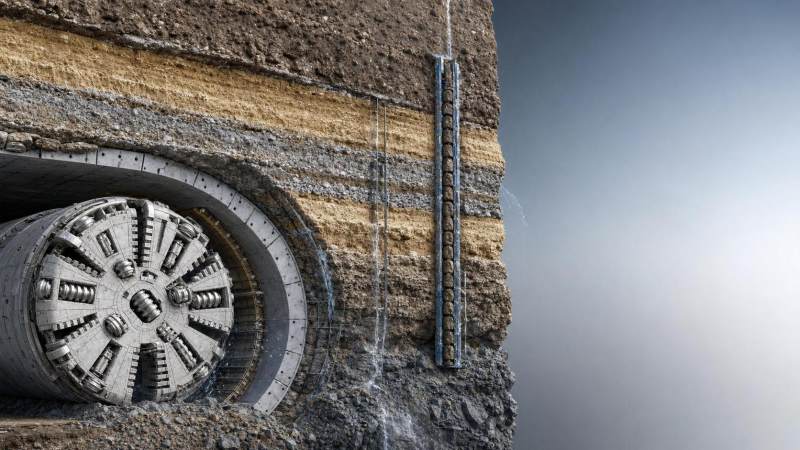
A tunnel alignment can cross soft clay, dense sand, weathered rock, faulted zones, and hard intact rock within short distances.
Each transition changes the geotechnical engineering response.
So the first priority is continuity.
Can the investigation define layer boundaries, mixed-face conditions, weak seams, karst features, and groundwater connectivity along the whole drive?
If not, even high-quality tests may still leave major blind spots.
Key Ground Model Inputs
- Stratigraphy by chainage, depth, and thickness.
- Rockhead variation and overbreak-prone interfaces.
- Faults, shear zones, cavities, and boulder concentrations.
- Expected mixed-face sections at the cutterhead.
- Groundwater regime, recharge paths, and seasonal change.
In practice, this model is the backbone of geotechnical engineering because every later design assumption sits on it.
Strength and Deformation Data Drive Design Confidence
The next question is how the ground will deform and fail under excavation.
This is where geotechnical engineering depends on strength and stiffness data.
For soils, the most useful parameters usually include undrained shear strength, friction angle, cohesion, density, compressibility, and permeability.
For rock, uniaxial compressive strength alone is not enough.
Geotechnical engineering also needs rock mass behavior, not only intact rock behavior.
That means looking at joint spacing, persistence, infill, orientation, weathering, and deformability.
Support classes, face pressure windows, and settlement predictions all depend on these values.
Most Decision-Critical Parameters
- Shear strength for stability checks at the face and crown.
- Elastic modulus for deformation and settlement forecasting.
- Poisson’s ratio where numerical modeling requires it.
- Rock mass classification such as RMR or Q.
- Discontinuity orientation against tunnel axis and excavation direction.
When these values are sparse or inconsistent, geotechnical engineering becomes conservative, and that often raises cost without removing real risk.
Groundwater Data Often Decides Whether Risk Stays Manageable
Many tunnel problems are water problems first.
Geotechnical engineering must therefore treat groundwater as a primary design input, not a background note.
Pore pressure affects face support, blowout risk, inflow control, lining loads, and nearby structure movement.
In fractured rock, water pathways can change abruptly.
In granular soils, small errors in permeability assumptions can shift the whole excavation strategy.
More importantly, groundwater data must be spatial and temporal.
A single reading rarely tells the real story.
Groundwater Data That Matters Most
- Static groundwater levels by season and location.
- Pore pressure response in confined and perched aquifers.
- Permeability from packer tests, pumping tests, or falling head tests.
- Hydraulic connectivity across faults, joints, and permeable lenses.
- Water chemistry relevant to corrosion, grouting, and spoil handling.
From a geotechnical engineering perspective, groundwater uncertainty is one of the fastest ways to turn a routine drive into a delayed one.
TBM Selection Needs Data About Variability, Not Just Averages
Tunnel boring machines do not excavate average ground.
They excavate what actually appears at the face, meter by meter.
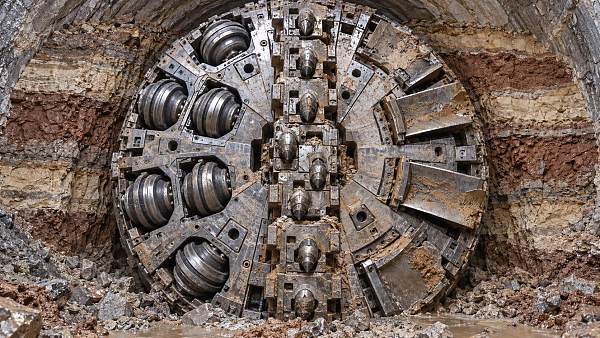
That is why geotechnical engineering for TBM selection must focus on variability, transitions, and adverse combinations.
An EPB machine may suit plastic fines and controlled groundwater.
A slurry TBM may perform better in high-pressure, permeable ground.
Hard rock or mixed geology may point to another setup entirely.
The wrong choice often comes from incomplete geotechnical engineering around fines content, abrasivity, cobbles, or mixed-face frequency.
Site Data Linked to TBM Performance
- Particle size distribution and plasticity of soils.
- Abrasivity indices and quartz content in rock.
- Boulder occurrence, block size, and frequency.
- Mixed-face intervals and transition lengths.
- Stickiness, clogging tendency, and conditioning response.
This is also where intelligence-led review matters.
At a platform level, TF-Strategy connects machine capability, ground behavior, and construction method logic in a way that supports sharper geotechnical engineering decisions.
Data Quality Matters as Much as Data Type
Not all site data carries equal confidence.
Geotechnical engineering should always ask whether the data is representative, traceable, and dense enough for the decision being made.
A clean lab report cannot compensate for poor sampling in disturbed soils.
Likewise, a few strong rock cores may hide weak fault gouge between boreholes.
The more complex the tunnel environment, the more geotechnical engineering should test for gaps, not just values.
A Quick Quality Check Framework
- Check whether borehole spacing matches geological complexity.
- Compare lab data with in situ tests and construction analogs.
- Review whether critical transitions are directly investigated.
- Separate measured values from interpreted assumptions.
- Assign confidence levels to each major geotechnical engineering parameter.
This approach makes reviews more practical because it highlights where added investigation can reduce the biggest delivery risks.
How to Prioritize Investigation Budget for Better Decisions
Most projects cannot investigate everything at maximum density.
So geotechnical engineering must prioritize the data with the highest decision value.
A useful rule is simple.
Spend more where uncertainty can change the excavation method, support demand, or delay exposure.
That usually means portals, fault crossings, urban sensitive zones, shallow cover sections, and expected mixed-ground stretches.
In actual project work, targeted geotechnical engineering often outperforms broad but shallow investigation campaigns.
High-Value Investigation Priorities
- Densify investigation at geological boundaries and risk hotspots.
- Expand hydrogeological testing where inflow consequences are high.
- Add abrasivity and clogging tests where TBM consumables are critical.
- Use probe drilling plans in areas with residual uncertainty.
- Link every added test to a design or procurement decision.
That is the point where geotechnical engineering becomes commercially useful, not just technically detailed.
What the Best Reviews Usually Conclude
The strongest tunnel reviews rarely ask for more data everywhere.
They ask for the right data in the right places.
That is the practical value of disciplined geotechnical engineering.
For tunnel projects, the site data that matters most usually falls into four groups.
- A continuous ground model that explains change along the alignment.
- Reliable strength and deformation parameters for realistic design.
- Groundwater data detailed enough for pressure and inflow control.
- TBM-relevant material data that captures variability and wear risk.
If these four areas are robust, geotechnical engineering can support better machine selection, steadier progress, and fewer construction surprises.
If they are weak, even experienced teams work with avoidable uncertainty.
A smart next step is to review current investigation packages against actual project decisions.
That simple check often reveals where geotechnical engineering can still remove risk before the tunnel meets the ground.
Related News
 Sep 19, 2026Mining Truck Technology Trends: What Fleet Managers Should Prioritize for 2026Mining truck technology trends for 2026: prioritize electrification, autonomy, predictive maintenance, and road intelligence to improve fleet uptime, safety, and cost control.
 Sep 17, 2026How TBM Guidance Technology Maintains Alignment Through Curves and Variable GroundTunnel boring machine guidance technology helps teams maintain precise alignment through curves and variable ground, reducing risk, improving lining accuracy, and protecting schedules.
 Sep 16, 2026Infrastructure Equipment Market Reference: Demand, Pricing, and Supplier BenchmarksInfrastructure equipment market reference for buyers: assess demand signals, total cost, pricing risks, and supplier benchmarks for tunnels, mining, cranes, and road projects.
 Sep 15, 2026How to Evaluate Infrastructure Equipment Suppliers for Complex Project RequirementsInfrastructure equipment solutions supplier evaluation guide for complex projects: assess technical fit, lifecycle cost, reliability, local support, and contract risk.
Geological Boring Fellow
Weekly Insights
Stay ahead with our curated technology reports delivered every Monday.