
Underground Construction Methods Compared: TBM, Cut-and-Cover, NATM, and Microtunneling
Underground Construction Methods Compared: TBM, Cut-and-Cover, NATM, and Microtunneling
Choosing among underground construction methods shapes cost, schedule, safety, and asset life. It also affects disruption above ground, stakeholder risk, and long-term maintenance performance.
That is why comparing underground construction methods is not a purely technical exercise. It is a strategic decision tied to geology, alignment, utilities, urban density, and procurement logic.
This guide reviews four core underground construction methods: TBM, cut-and-cover, NATM, and microtunneling. Each method solves a different problem, and each carries distinct operational trade-offs.
From the TF-Strategy perspective, method selection works best when equipment capability, ground behavior, and infrastructure strategy are evaluated together rather than in isolation.
Why Underground Construction Methods Matter
In practice, underground construction methods decide more than how a tunnel gets built. They influence ventilation planning, settlement control, traffic management, and even public acceptance.
A method that performs well in stable rock may fail economically in soft, water-bearing soil. A method that is fast in open land may be unacceptable in a crowded downtown corridor.
So the real comparison is not about naming the best technology. It is about matching the right construction system to the right underground and surface conditions.
- Ground type affects stability, support demand, and water control.
- Tunnel depth changes access, settlement exposure, and logistics.
- Urban constraints shape noise, vibration, and traffic impacts.
- Project length influences whether high-capex machinery makes sense.
- Utility congestion may limit excavation width and shaft placement.
TBM: Best for Long, Repetitive Tunnel Drives
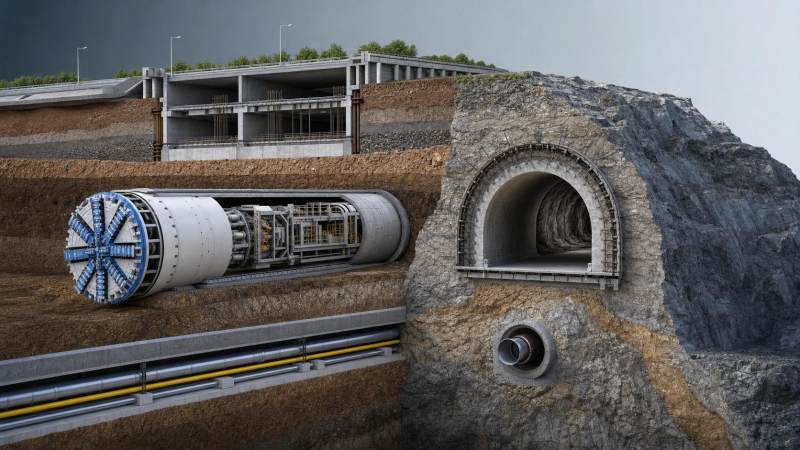
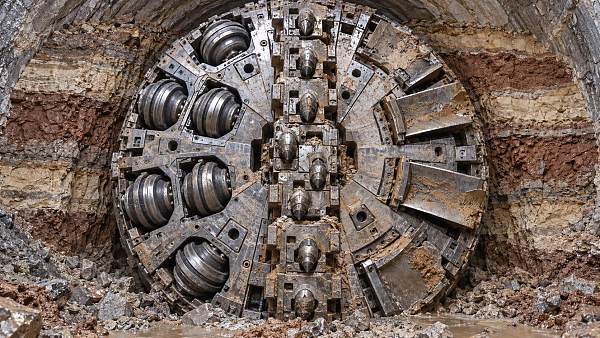
Among modern underground construction methods, TBM excavation is usually preferred for long tunnels with consistent geometry. It offers strong control, repeatable quality, and reduced surface disruption.
Tunnel boring machines are especially effective in metro lines, railway tunnels, utility corridors, and water transfer projects. Their value increases when alignment length can absorb mobilization cost.
The main advantage is process integration. Excavation, spoil removal, lining installation, and guidance all work as part of one continuous system.
Where TBM Performs Well
- Long alignments with limited access from the surface.
- Urban areas needing tight settlement control.
- Projects requiring circular tunnel sections.
- Ground conditions that justify EPB, slurry, or hard rock TBM selection.
Key Limits of TBM
TBM is not automatically the best choice. It requires major upfront investment, detailed geotechnical prediction, and highly disciplined logistics around shafts, segments, slurry, or muck handling.
It also becomes less flexible when alignment changes sharply or cross-section geometry varies often. Mixed ground and unexpected obstructions can create schedule pressure very quickly.
From a strategy angle, TF-Strategy often sees TBM success tied to the quality of interface management, not just the machine’s rated capability.
Cut-and-Cover: Simple Concept, High Surface Impact
Cut-and-cover remains one of the most familiar underground construction methods. The approach is direct: excavate from the surface, build the structure, then reinstate the ground above.
It is commonly used for shallow metro stations, underpasses, utility boxes, and short transportation tunnels. In the right setting, it can be cost-efficient and straightforward to inspect.
Why Engineers Choose It
- Shallow depth makes surface excavation feasible.
- Rectangular spaces are easier to build than circular bores.
- Stations and large chambers fit the method well.
- Construction access is simpler than deep tunneling.
Why It Becomes Difficult
The trade-off is obvious: cut-and-cover can heavily disrupt roads, businesses, pedestrians, and buried services. In dense cities, that social cost may outweigh apparent construction savings.
Groundwater control, retaining walls, utility diversion, and traffic staging can also become major budget drivers. So while the method looks simple, delivery complexity can escalate fast.
When comparing underground construction methods, cut-and-cover often wins on structural flexibility but loses on public interface risk.
NATM: Flexible in Variable Ground
NATM, or the New Austrian Tunneling Method, relies on observed ground behavior and staged support. It is widely used in tunnels with changing geology and non-uniform cross sections.
Compared with other underground construction methods, NATM offers adaptability. Excavation and support can be modified as field conditions evolve, which is valuable in uncertain ground.
Typical NATM Strengths
- Works well in complex mountain tunnels.
- Accommodates changing tunnel shapes.
- Allows responsive support design in the field.
- Useful where full-face mechanization is impractical.
Operational Risks to Watch
NATM demands rigorous monitoring, disciplined sequencing, and experienced interpretation of deformation data. It is not a loose method. It is a controlled observational system.
That also means outcomes depend heavily on workmanship, supervision quality, and timely support installation. Weak execution can erase the benefits of flexibility.
In current infrastructure planning, NATM often appears where ground uncertainty is high and machine standardization is less realistic than adaptive excavation.
Microtunneling: Precision for Small-Diameter Utility Crossings
Microtunneling is one of the most specialized underground construction methods. It is designed for small-diameter pipelines installed with remote guidance and minimal surface disturbance.
This method is common for sewer lines, water mains, stormwater systems, and crossings under roads, railways, and rivers. Accuracy is one of its strongest advantages.
Where Microtunneling Stands Out
- Minimal disruption at the surface.
- High line and grade precision.
- Strong fit for utility infrastructure.
- Effective under existing transport corridors.
Its Main Constraints
Microtunneling is not intended for large access tunnels or passenger infrastructure. Shaft construction, jacking loads, slurry management, and pipe design remain essential cost and risk factors.
Still, when utility owners need low-disruption installation, few underground construction methods can match its precision-to-footprint ratio.
A Practical Comparison of Underground Construction Methods
The table below summarizes how these underground construction methods differ in typical use, flexibility, and delivery impact. It is a starting point, not a substitute for geotechnical design.
How to Choose the Right Method
The best decision framework starts with constraints, not preferences. That sounds basic, but many early comparisons of underground construction methods still begin with contractor familiarity instead of project reality.
A more reliable process asks what cannot be compromised, then filters methods accordingly.
- Define ground profile, groundwater, and major geotechnical uncertainties.
- Map urban constraints, utilities, access points, and settlement sensitivity.
- Check tunnel length, diameter, and cross-section variability.
- Estimate social disruption alongside direct construction cost.
- Test procurement fit, supplier maturity, and equipment support capacity.
More clearly in recent projects, the winning method is often the one that reduces interface failure. That includes utility relocation delays, shaft bottlenecks, spoil logistics, and monitoring response time.
This is where TF-Strategy’s industry view matters. Heavy equipment selection, construction methodology, and infrastructure strategy should be stitched together from the start, not reviewed as separate packages later.
Final Takeaway
There is no universal winner among underground construction methods. TBM excels in long, controlled drives. Cut-and-cover suits shallow, open-access structures. NATM handles variable ground. Microtunneling delivers precise utility installation.
The smarter comparison asks where each method creates value, where it transfers risk, and how well it fits the actual project environment. That is the difference between technical selection and engineering strategy.
For anyone evaluating underground construction methods, the most practical next step is simple: align geology, surface constraints, equipment capability, and lifecycle goals before locking the delivery model.
When that alignment is done well, method choice becomes clearer, procurement becomes sharper, and infrastructure performance becomes far more predictable.
Related News
 Sep 15, 2026How to Evaluate Infrastructure Equipment Suppliers for Complex Project RequirementsInfrastructure equipment solutions supplier evaluation guide for complex projects: assess technical fit, lifecycle cost, reliability, local support, and contract risk.
 Sep 14, 2026What Drives Surface Mining Equipment Cost Across a Mine’s Operating Life?Surface mining equipment cost depends on fleet matching, fuel, wear, maintenance, availability, and rebuild timing. Explore lifecycle strategies that protect output and margins.
 Sep 13, 2026Crawler Crane Application Analysis for Wind Farms, Bridges, and Confined SitesCrawler crane application analysis for wind farms, bridges, and confined sites—optimize lift paths, ground conditions, access, and schedules for safer project delivery.
 Sep 12, 2026Open-Pit Mining in North America: Key Project Risks and Planning PrioritiesOpen-pit mining North America: uncover key risks and planning priorities for geology, permitting, water, fleet strategy, and resilient project delivery.

Geological Boring Fellow
Weekly Insights
Stay ahead with our curated technology reports delivered every Monday.