
How to Compare a Tunnel Boring Machine Manufacturer by Capacity, Geology Fit, and Support
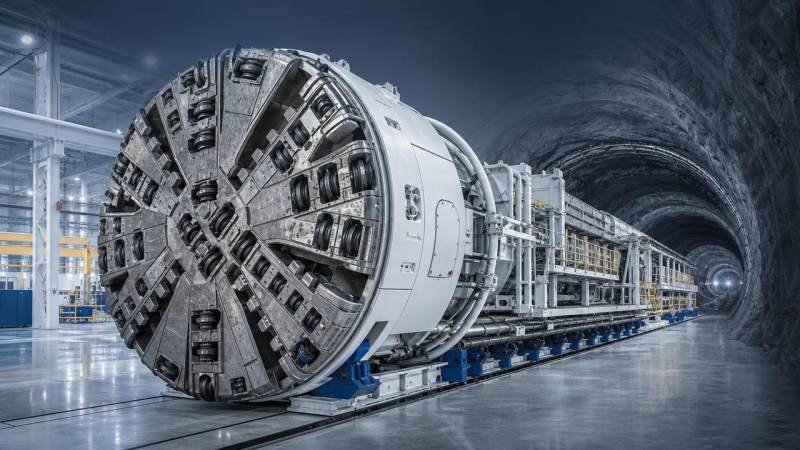
Choosing a tunnel boring machine manufacturer is rarely a simple price comparison. In practice, the better question is whether a supplier can match geology, deliver on time, and stay useful after launch.
That matters even more in today’s heavy-equipment market, where project schedules, carbon targets, and financing pressure are all tighter than before. A wrong fit can lock in cost overruns for years.
From the perspective of TF-Strategy, the strongest evaluations connect machine parameters, tunneling methods, supply-chain resilience, and field support. That is where a real comparison becomes meaningful.
If the goal is to compare a tunnel boring machine manufacturer with confidence, start with these practical checks and then validate them against the actual project environment.
Start with capacity, but do not stop there
A large factory does not automatically mean a better tunnel boring machine manufacturer. Capacity only matters when it supports customization, quality consistency, and realistic delivery windows.
- Check annual TBM output, but also review how many machines were customized for mixed ground, hard rock, or slurry conditions in the last three years.
- Ask whether key parts are made in-house or outsourced. Cutterhead fabrication, main bearing sourcing, and control systems often reveal true production control.
- Verify schedule credibility by comparing promised lead times with previous project records, not brochure claims. Delivery reliability is often more valuable than headline capacity.
- Review testing capability before shipment. A tunnel boring machine manufacturer with robust FAT procedures usually creates fewer surprises during assembly and commissioning.
- Look at concurrent project load. A supplier handling too many urgent orders may still have a big factory but weak engineering attention for your machine.
- Confirm whether design, procurement, and field teams work on one platform. Fragmented internal coordination often delays decisions once geology changes underground.
One common mistake is overvaluing nameplate manufacturing scale. In TBM projects, engineering bandwidth and supply-chain discipline can matter more than workshop square meters.
Geology fit is where comparisons become real
A tunnel boring machine manufacturer should be judged by geological compatibility, not only machine diameter or installed power. The wrong shield type can undermine the entire excavation plan.
Questions that quickly expose geology mismatch
- Request case histories in similar strata, groundwater pressure, and alignment curvature. Similar project references should match the difficult zones, not just the tunnel size.
- Check how the supplier selects EPB, slurry, hard rock, or convertible configurations. A strong recommendation should clearly connect machine type to risk zones.
- Review cutterhead opening ratio, wear protection, and muck handling design against expected abrasivity, clogging tendency, and boulder frequency.
- Ask for assumptions behind penetration rate and cutter consumption. Optimistic estimates without geology sensitivity ranges are a warning sign.
- Confirm how the machine design handles fault zones, mixed face conditions, and water ingress. These transitional sections usually decide project performance.
- Examine whether the tunnel boring machine manufacturer updates designs using recent cutterhead material improvements and digital monitoring data.
In urban tunneling, mixed ground is often the hardest test. A supplier may have excellent hard-rock references but limited experience with settlement-sensitive metro alignments.
For mountain tunnels, the pressure is different. Long drives, difficult logistics, and uncertain rock classes make maintainability and spare strategy much more important.
Support quality often decides total project value
Many comparisons focus too much on procurement and too little on support. Yet after launch, field response speed can have a bigger cost impact than the original machine price.
- Check whether site support includes resident engineers, remote diagnostics, and escalation rules. Support should be measurable, not described in vague service language.
- Review spare-parts stocking plans for main wear items and long-lead components. A tunnel boring machine manufacturer should distinguish critical stock from optional stock.
- Ask how quickly cutter tools, seals, sensors, and hydraulic parts can be delivered across borders. Customs delay can become a hidden downtime cost.
- Confirm training depth for operation, maintenance, and troubleshooting. Strong training reduces dependence on emergency callouts and improves early performance stability.
- Evaluate digital support tools, including machine health dashboards and data logging. Good data support helps settle disputes about output, wear, and performance guarantees.
- Check end-of-project support as well. Refurbishment, redeployment, and residual-value advice can meaningfully improve lifecycle economics.
This is where TF-Strategy’s broader heavy-industry perspective is useful. In cranes, mining fleets, and TBMs alike, strong after-sales ecosystems usually outperform impressive launch presentations.
Use a comparison table that reflects project risk
A practical evaluation becomes easier when every supplier is scored on the same dimensions. Keep the table simple, but weight the factors that can actually derail delivery.
If two tunnel boring machine manufacturer candidates look similar, give extra weight to geology fit and support response. Those two usually decide whether performance targets survive real conditions.
What gets overlooked in real evaluations
Some risks stay invisible until contract execution. By then, the cost of correction is high, especially if design assumptions were never challenged early.
- Do not treat reference projects as equal. A metro line under dense utilities is not comparable to a straight tunnel in stable rock.
- Watch for underdefined interfaces with backup systems, segment handling, and slurry treatment. TBM performance depends on the full system, not only the shield.
- Check currency, shipping, and raw-material exposure in the offer. Heavy-equipment projects are vulnerable to steel, logistics, and cross-border disruptions.
- Review control software ownership and update policy. Digital dependency grows every year, and unsupported systems can shorten usable machine life.
- Ask how the supplier manages design changes after more site data appears. Flexible engineering procedures are critical when geology becomes clearer later.
This is also where broader infrastructure intelligence helps. TF-Strategy tracks how component supply, materials evolution, and remote-control technologies are reshaping heavy equipment decisions across sectors.
A few project situations change the comparison logic
Urban rail and utility tunnels
Settlement control, confined launch shafts, and utility protection should move to the top of the evaluation. In these jobs, precision and response speed matter more than raw thrust alone.
A tunnel boring machine manufacturer with strong EPB tuning experience and dense service coverage usually offers better risk control in this environment.
Long mountain or cross-regional drives
Here, wear management, logistics planning, and maintainability become central. A small design weakness can become expensive when access windows are limited.
Look closely at cutter replacement strategy, backup robustness, and long-lead spare planning before ranking any tunnel boring machine manufacturer highly.
Projects with redeployment potential
If the machine may be reused, future adaptability matters. Conversion options, refurbishment support, and digital upgrade paths can shift the economics significantly.
That is often missed in first-pass evaluations focused only on procurement budget.
A practical way to move from comparison to decision
A strong decision process is usually simple. First, narrow the field using geology relevance. Then test capacity realism. After that, pressure-test support and contract clarity.
- Shortlist only suppliers with proven references in comparable ground and pressure conditions. This quickly removes attractive but risky options.
- Run a structured technical interview around difficult tunnel sections, not generic features. Useful answers are specific, quantified, and assumption-based.
- Visit the factory or request detailed virtual validation of production and testing flow. Real process visibility improves confidence in promised schedules.
- Score support commitments with service KPIs, parts lead times, and escalation contacts. If support cannot be measured, it cannot be trusted.
- Model lifecycle cost using wear, downtime, and redeployment assumptions. The cheapest offer often loses after operations begin.
In the end, the best tunnel boring machine manufacturer is not simply the biggest or the cheapest. It is the one whose capacity, geology fit, and support system align with the real tunneling risk.
A disciplined comparison makes that visible early. Use project-specific data, challenge assumptions, and treat support as part of the machine, not an extra.
That approach leads to better delivery confidence, lower lifecycle cost, and a far stronger basis for the next step in evaluation.
Related News
 Oct 19, 2026Sizing Industrial Hydraulic Power Packs: Pressure, Flow, and Duty CycleSize industrial hydraulic power packs with confidence. Learn how pressure, flow, and duty cycle affect performance, energy costs, and heat control—and avoid costly sizing mistakes.
 Oct 18, 2026How Equipment Specifications Affect Purchase, Installation, and Operating CostsExplore equipment specification planning cost factors that shape purchase, installation, and operating budgets. Compare lifecycle costs, avoid oversizing, and buy with confidence.
 Oct 17, 2026Tunnel Boring Machine Supplier List: Compare TBM Types and Service CoverageExplore our tunnel boring machinery supplier list to compare EPB, slurry and hard rock TBMs, assess service coverage and lifecycle costs, and build a smarter procurement shortlist.
 Oct 16, 2026Heavy-Duty Petrochemical Lifting: Selecting Cranes by Load, Radius, and Site AccessExplore heavy-duty petrochemical lifting solutions. Compare cranes by load, radius, site access, and ground support to reduce project risk and optimize lifting costs.
Geological Boring Fellow
Weekly Insights
Stay ahead with our curated technology reports delivered every Monday.