
What tunnel boring machine technology improves safety most?
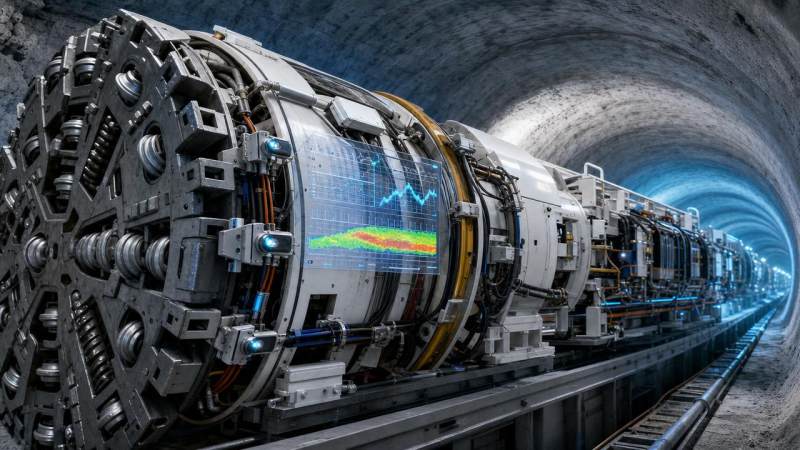
For quality control and safety managers, choosing the right tunnel boring machine technology is no longer just about efficiency—it is critical to risk reduction, worker protection, and project continuity. From real-time monitoring systems to automated cutterhead control and ground condition detection, modern tunnel boring machine technology is reshaping how underground hazards are predicted and managed before they escalate.
What tunnel boring machine technology improves safety most?
The strongest safety gain usually comes from integrated monitoring and automation, not from one isolated feature.
In practical terms, the most effective tunnel boring machine technology combines sensing, prediction, control, and rapid operator response.
A modern TBM becomes safer when it can detect unstable ground, track machine loads, and reduce human exposure near hazardous zones.
Among all upgrades, real-time condition monitoring often delivers the broadest safety impact across geology, mechanics, and operations.
It links cutterhead torque, thrust, penetration rate, chamber pressure, vibration, and temperature into one decision picture.
That picture helps crews identify warning patterns before they become face collapse, tool failure, flooding, or entrapment incidents.
Still, the answer depends on project conditions.
In variable urban ground, prediction systems may matter most.
In hard rock tunnels, cutterhead diagnostics and automated control may create the biggest safety improvement.
Why is real-time monitoring considered core tunnel boring machine technology for safety?
Real-time monitoring turns hidden underground risk into visible operating data.
That matters because most tunnel incidents do not start suddenly.
They begin as small deviations in pressure balance, rotation resistance, slurry flow, bearing heat, or ground movement.
Advanced tunnel boring machine technology captures those deviations continuously.
It then sends alerts before limits are exceeded.
This is especially valuable in mixed-face geology, water-bearing strata, and dense urban corridors.
A well-designed monitoring system usually covers:
- Cutterhead torque and rotational stability
- Thrust force and penetration resistance
- Face pressure and chamber balance
- Slurry or spoil transport conditions
- Main bearing temperature and vibration
- Segment erection alignment and deformation
The safety benefit is not only early warning.
It also creates traceable records for incident review, compliance checks, and process improvement.
For a portal like TF-Strategy, this data-centered view is essential.
Physical machine parameters become actionable intelligence when connected to geology and construction methodology.
How do automation and remote control reduce underground risk?
Automation improves safety by removing avoidable human exposure from the most dangerous locations.
This includes the cutterhead zone, pressurized chambers, unstable face areas, and high-energy mechanical interfaces.
Automated tunnel boring machine technology can stabilize machine behavior when ground conditions change quickly.
Examples include automatic face pressure adjustment, torque balancing, navigation correction, and spoil flow regulation.
Remote operation adds another layer of protection.
It allows operators to supervise high-risk functions from protected control areas rather than directly beside active components.
The most valuable safety effects include:
- Lower exposure during inspections and interventions
- More consistent machine response than manual correction
- Faster shutdown when alarms trigger
- Reduced fatigue-related operating errors
However, automation is not automatically safer in every project.
If sensors are poorly calibrated, crews may trust wrong inputs.
If interfaces are confusing, alarms may be missed or misunderstood.
The safest tunnel boring machine technology always pairs automation with training, testing, and override discipline.
Which tunnel boring machine technology matters most in difficult ground conditions?
In difficult ground, prediction and adaptability matter more than raw cutting power.
Geological uncertainty creates many of the most severe tunnel safety events.
These include sudden water inflow, squeezing ground, face instability, boulder impacts, and settlement above the tunnel.
For these environments, the most useful tunnel boring machine technology often includes probe drilling, seismic prediction, and ground conditioning control.
Probe drilling can identify unexpected voids or water-bearing zones ahead of the cutterhead.
Seismic forecasting helps interpret changing geology before the machine reaches the danger point.
Ground conditioning systems improve spoil behavior and pressure stability in EPB operations.
In slurry machines, separation and circulation control are equally critical to maintain face support.
A useful decision rule is simple:
- If the geology is uncertain, prioritize detection technology.
- If pressure balance is sensitive, prioritize control technology.
- If intervention risk is high, prioritize remote and automated functions.
This is why no single answer fits all tunnels.
The best safety solution is the tunnel boring machine technology that addresses the dominant failure mode of the project.
What are common mistakes when evaluating safer TBM systems?
One common mistake is focusing only on production rate.
High advance speed means little if the system creates more stoppages, interventions, or unstable ground behavior.
Another mistake is buying advanced tunnel boring machine technology without planning the supporting workflow.
Sensors need maintenance.
Data needs interpretation.
Alarms need escalation rules.
Remote functions need cybersecurity and communication reliability.
Other frequent errors include:
- Ignoring compatibility with existing site systems
- Underestimating training time for crews
- Treating alarm volume as safety quality
- Failing to test emergency procedures under realistic conditions
- Neglecting cutter wear analytics until failures occur
A safer TBM is not the one with the longest feature list.
It is the one whose tunnel boring machine technology fits the geology, intervention limits, and response capability of the project team.
How should safety value be compared before implementation?
Safety value should be measured across prevention, exposure reduction, and recovery speed.
That means comparing not only purchase cost, but also avoided incidents, downtime, damage, and rework.
The table below helps structure that comparison.
When comparing options, ask four direct questions:
- Which hazard does this technology prevent first?
- How much worker exposure does it remove?
- How fast can the site act on its alerts?
- What happens if the system itself fails?
What should be the next step for selecting tunnel boring machine technology?
Start with the project risk profile, not with a catalog.
Map the top hazards by geology, tunnel length, urban sensitivity, intervention frequency, and machine type.
Then match each hazard to the tunnel boring machine technology that prevents it most directly.
For many projects, the best sequence is clear.
First, deploy reliable real-time monitoring.
Second, add automation where operating stability matters most.
Third, strengthen geological forecasting in uncertain ground.
Fourth, reduce exposure through remote functions and safer intervention planning.
The question is not whether advanced tunnel boring machine technology is valuable.
The real question is which combination delivers the highest safety return under actual site conditions.
At the level of global heavy industry intelligence, that decision should connect machine parameters, construction methods, and risk strategy.
That is where informed analysis creates safer tunnels, stronger continuity, and better long-term project performance.
Related News
 Oct 07, 2026How to Evaluate a Hydraulic System Component Supplier for Heavy Equipment UptimeChoose a hydraulic system component supplier with proven quality, technical fit, and reliable delivery to reduce heavy equipment downtime and lifecycle costs.
 Oct 06, 2026Selecting Petrochemical Overhead Cranes for Hazardous Areas and Heavy Process LoadsPetrochemical overhead cranes for hazardous areas: learn how to match capacity, duty, controls, corrosion protection, and maintenance access for safer, reliable lifts.
 Oct 05, 2026Tunneling Equipment Specification Planning: Key Criteria for Ground and Project RisksEquipment specification planning tunneling: learn how to match TBM systems to ground risks, geometry, safety, logistics, and lifecycle cost for more reliable project delivery.
 Oct 04, 2026Nuclear Lifting Equipment Cost: Budgeting for Compliance, Testing, and Lifecycle RiskNuclear lifting equipment cost explained: budget for compliance, proof-load testing, installation, documentation, and lifecycle risk to make confident procurement decisions.
Geological Boring Fellow
Weekly Insights
Stay ahead with our curated technology reports delivered every Monday.