
Which tunnel boring machine parts fail most often underground?
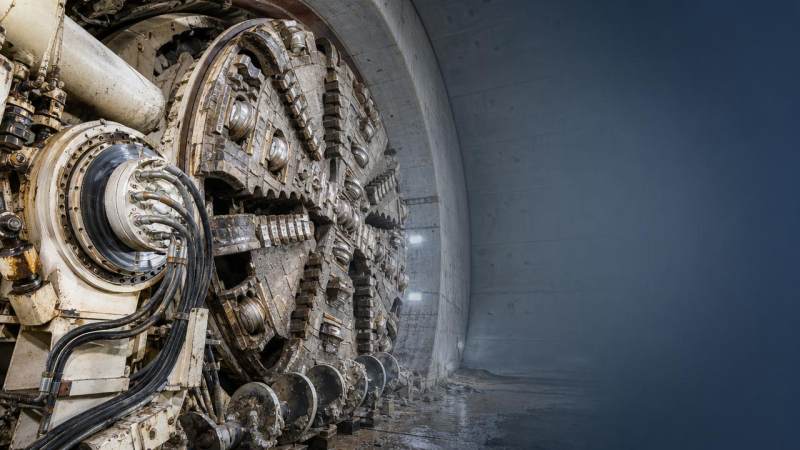
Underground reliability depends on knowing which tunnel boring machine parts are most likely to break under pressure, abrasion, heat, and vibration. For aftermarket maintenance teams, identifying these high-failure components early is critical to reducing downtime, controlling repair costs, and keeping excavation schedules on track. This article highlights the parts that fail most often and what those patterns mean for smarter service planning.
Which tunnel boring machine parts fail most often in real underground service?
Not all tunnel boring machine parts fail at the same rate. Failure frequency depends on geology, machine type, maintenance discipline, and shift intensity. In hard rock, cutter-related wear dominates. In mixed ground and EPB conditions, seals, slurry pathways, screw conveyor components, and hydraulic parts often become the weak links.
For aftermarket maintenance personnel, the practical question is not only what fails, but what fails often enough to justify stock planning, inspection intervals, and replacement strategy. The most common high-risk categories usually sit at the intersection of abrasion, load cycling, poor access, and delayed diagnosis.
- Disc cutters and cutter rings exposed to constant impact, abrasive rock, and uneven face conditions.
- Main bearing seals and rotary sealing elements affected by contamination, pressure fluctuation, and lubrication issues.
- Hydraulic hoses, cylinders, and valve blocks suffering from pulsation, heat, and contamination.
- Screw conveyor wear parts, mixing tools, and slurry line elbows in soft ground machines.
- Electric motors, sensors, cabling, and connectors operating in wet, vibrating, enclosed environments.
These tunnel boring machine parts are not equally expensive, but they are equally important from a downtime perspective. A modest seal failure can trigger a long stoppage if it contaminates adjacent systems. A sensor fault can reduce machine confidence and slow excavation even when major mechanical assemblies remain intact.
Failure frequency by subsystem
The table below helps maintenance teams rank tunnel boring machine parts by how often they fail, how quickly they affect production, and what inspection style usually works best underground.
This ranking is useful because it separates “high wear” from “high consequence.” Some tunnel boring machine parts are consumed routinely and should be budgeted as wear items. Others fail less often but create much larger schedule and safety consequences when they do.
Why do cutterhead tunnel boring machine parts fail first?
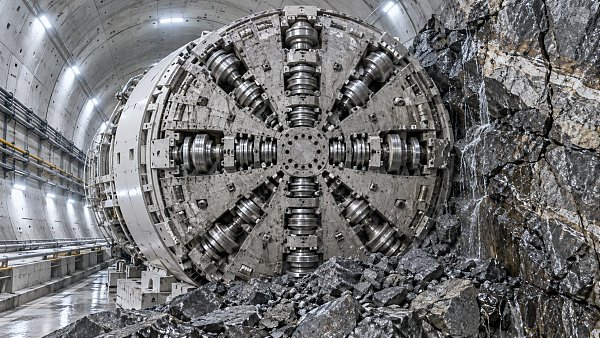
The cutterhead is the most visible failure zone because it is where geology directly attacks the machine. Disc cutters absorb rolling contact stress, edge chipping, and heat generation. In fractured hard rock, uneven loading can accelerate bearing failure inside the cutter assembly. In abrasive ground, ring wear may outrun planned change intervals.
Aftermarket teams often focus on the cutter itself, but the surrounding tunnel boring machine parts matter just as much. Cutter housings can ovalize. Fasteners can loosen under impact. Wear plates can thin to the point that adjacent structural steel becomes exposed. Once that happens, a routine cutter intervention turns into fabrication work.
Common warning signs at the face
- A drop in penetration rate without a matching change in geology or thrust setting.
- Temperature rise around cutter positions or unusual grease condition during inspection.
- Abnormal vibration, flat wear patterns, or concentrated wear on one cutterhead sector.
- Repeated replacement of the same cutter position, indicating local geometry or ground-flow issues.
TF-Strategy closely tracks material iteration trends for TBM cutter heads and related wear systems because this is where service economics shift quickly. A small improvement in ring material, sealing, or monitoring practice can reduce intervention frequency and lower total cost of ownership more effectively than simply buying larger spare inventories.
Which hidden tunnel boring machine parts create the most expensive downtime?
The most expensive failures are not always the most frequent. Main bearing seals, rotary joints, hydraulic manifolds, and critical sensors can turn a manageable maintenance event into a prolonged underground recovery. These tunnel boring machine parts are harder to access, harder to diagnose, and often linked to multiple subsystems.
A leaking seal is not just a seal problem. It may allow fines, water, or slurry to enter lubrication zones. A damaged hose is not just a hose problem if it releases contamination into servo valves. A failed encoder is not just an electrical problem if it disrupts synchronized cutterhead control or guidance feedback.
High-frequency failure versus high-consequence failure
For maintenance planning, it helps to classify tunnel boring machine parts using both dimensions. The next table supports spare policy and service priority decisions.
This comparison shows why low-cost components still deserve disciplined sourcing and documentation. Many maintenance teams lose time not because the failed part is rare, but because the approved substitute, material grade, or connector specification is unclear when the machine is stopped.
How should aftermarket maintenance teams inspect tunnel boring machine parts?
Inspection should follow failure physics, not only calendar intervals. Tunnel boring machine parts exposed to abrasion need wear mapping. Parts exposed to contamination need cleanliness checks. Parts exposed to cyclic pressure need trend monitoring for leakage, pressure instability, and temperature growth.
A practical inspection sequence underground
- Start with production symptoms such as penetration rate, thrust response, cutterhead torque, slurry pressure, and screw conveyor stability.
- Match symptoms to subsystem exposure: abrasion, water ingress, vibration, overload, or heat.
- Inspect fast-moving wear items first, then trace secondary damage around interfaces, supports, housings, and lines.
- Record dimensional loss, leak points, contamination state, and repeat failure locations rather than only logging part numbers.
- Update spare policy after each intervention, especially if the same tunnel boring machine parts fail earlier than expected in one geology band.
The best service teams build a feedback loop between inspection records and procurement decisions. If wear liners fail faster in one section of the tunnel, stock allocation and supplier discussions should change immediately. If hydraulic hose failures cluster around one articulation zone, routing and shielding should be redesigned rather than simply replaced.
What should you stock, repair, or upgrade when tunnel boring machine parts fail repeatedly?
Aftermarket budgets are always limited, so maintenance leaders need a selective approach. Not every tunnel boring machine part should be stocked at the same level. The right strategy blends critical spares, repairable assemblies, and engineering upgrades based on lead time, failure pattern, and impact on excavation continuity.
Spare parts planning priorities
- Stock wear parts with predictable consumption, such as cutters, seals, wear plates, and selected hose assemblies.
- Pre-qualify substitutes only where material, pressure rating, interface size, and operating temperature are fully verified.
- Repair large-value assemblies only if turnaround time beats new-part delivery and failure root cause is well understood.
- Upgrade repeat-failure locations with improved lining, routing protection, sealing design, or sensor shielding where justified.
TF-Strategy’s value in this process is not limited to news gathering. Its cross-sector intelligence helps teams compare material evolution, supply risks, and operating logic across heavy equipment classes. Lessons from mining wear management, hydraulic power analysis, and remote-monitoring trends can sharpen decisions on TBM spare mix and lifecycle cost control.
What standards and compliance points matter when replacing tunnel boring machine parts?
Maintenance teams should be careful with replacement decisions that focus only on price and availability. Tunnel boring machine parts must match not just dimensions, but duty profile. Pressure ratings, material compatibility, hardness range, sealing media, cable protection, and traceability documents all influence underground reliability.
Depending on project geography and contract terms, teams may also need to review common industrial references for hydraulic assemblies, electrical protection, lifting interfaces during maintenance, and documented quality controls. Generic compliance discipline reduces disputes between site maintenance, OEM support, and third-party suppliers.
- Check material and hardness consistency for wear components exposed to abrasion and impact.
- Verify sealing materials against temperature, grease type, slurry chemistry, and water condition.
- Confirm pressure class and impulse resistance for hydraulic replacements.
- Review ingress protection and connector integrity for sensors and electrical interfaces.
This disciplined approach matters because a replacement part that “fits” may still shorten service life if its material or sealing behavior does not match the machine’s actual underground environment.
FAQ: common maintenance questions about tunnel boring machine parts
How often should tunnel boring machine parts be inspected?
There is no single interval that fits every project. Cutterhead wear items may need review by advance distance, rock abrasivity, and intervention opportunity. Hydraulic and sealing tunnel boring machine parts should be checked through pressure, leakage, and oil cleanliness trends between physical inspections. The key is to link intervals to operating conditions, not just calendar dates.
Which tunnel boring machine parts should never be sourced only by lowest price?
High-consequence items deserve the strictest control. These usually include main sealing elements, critical hydraulic hoses, valve components, instrumentation tied to machine guidance or cutterhead control, and wear parts whose material quality directly affects intervention frequency. Lowest purchase price often becomes highest downtime cost when traceability and service life are inconsistent.
Are repeated failures always a part-quality problem?
No. Repeated failure may come from misalignment, unstable geology, wrong installation practice, contamination, poor lubrication, pressure spikes, or delayed replacement timing. Good troubleshooting starts with the failed tunnel boring machine parts, but it should end with the operating condition that made the failure repeatable.
What is the best way to reduce downtime from tunnel boring machine parts failure?
Combine four actions: rank parts by consequence, not only frequency; keep a clean and documented spare list; inspect by failure mechanism; and use field data to adjust procurement. When maintenance, stores, and engineering work from the same failure map, underground response becomes faster and more predictable.
Why choose us for tunnel boring machine parts intelligence and maintenance planning support?
TF-Strategy supports aftermarket maintenance teams with a decision-oriented view of tunnel boring machine parts, not just surface-level industry updates. We connect wear behavior, hydraulic risk, construction methodology, and supply-side intelligence so your team can plan around real underground failure modes.
You can contact us for practical support on parameter confirmation, spare category prioritization, replacement strategy, delivery-cycle evaluation, material comparison for high-wear parts, and service planning for mixed-ground or hard-rock conditions. We also help teams frame questions for supplier discussions, especially where downtime risk, TCO pressure, and tight project schedules intersect.
- Confirm which tunnel boring machine parts should be stocked locally versus ordered against lead time.
- Review part selection factors such as abrasion profile, sealing media, pressure class, and access constraints.
- Discuss upgrade paths for repeat-failure locations and difficult underground interventions.
- Evaluate quotation logic and scope gaps before procurement decisions affect project continuity.
If your team is trying to reduce stoppages, tighten spare budgets, or improve replacement decisions for tunnel boring machine parts, a focused technical consultation can turn fragmented maintenance data into a clearer action plan.
Related News
 Oct 07, 2026How to Evaluate a Hydraulic System Component Supplier for Heavy Equipment UptimeChoose a hydraulic system component supplier with proven quality, technical fit, and reliable delivery to reduce heavy equipment downtime and lifecycle costs.
 Oct 06, 2026Selecting Petrochemical Overhead Cranes for Hazardous Areas and Heavy Process LoadsPetrochemical overhead cranes for hazardous areas: learn how to match capacity, duty, controls, corrosion protection, and maintenance access for safer, reliable lifts.
 Oct 05, 2026Tunneling Equipment Specification Planning: Key Criteria for Ground and Project RisksEquipment specification planning tunneling: learn how to match TBM systems to ground risks, geometry, safety, logistics, and lifecycle cost for more reliable project delivery.
 Oct 04, 2026Nuclear Lifting Equipment Cost: Budgeting for Compliance, Testing, and Lifecycle RiskNuclear lifting equipment cost explained: budget for compliance, proof-load testing, installation, documentation, and lifecycle risk to make confident procurement decisions.
Geological Boring Fellow
Weekly Insights
Stay ahead with our curated technology reports delivered every Monday.