
Heavy Equipment Maintenance Checklist: Key Service Intervals, Failure Signs, and Downtime Risks

Heavy Equipment Maintenance Checklist: Key Service Intervals, Failure Signs, and Downtime Risks
Heavy equipment maintenance is the frontline defense against breakdowns, unsafe operation, and project delays.
A good checklist does more than protect components.
It protects uptime, repair budgets, service credibility, and customer confidence in harsh field conditions.
In real operations, even one missed inspection can trigger a chain of expensive problems.
That chain often starts with heat, contamination, vibration, or delayed lubrication.
This heavy equipment maintenance guide focuses on service intervals, failure signs, and downtime risks that matter most.
The goal is simple: catch issues early, standardize action, and keep high-value machines available for work.
Why Heavy Equipment Maintenance Fails in the Field
Most failures are not sudden.
They build slowly through small warning signs that get ignored or misread.
From recent service trends, three causes appear again and again.
- Intervals are based on calendar dates, not duty cycle or load severity.
- Visual checks happen, but data checks do not.
- Minor leaks, noise, and heat are accepted as normal behavior.
That is where heavy equipment maintenance becomes reactive instead of preventive.
For machines in mining, tunneling, lifting, and road construction, reactive maintenance is usually the most expensive option.
The Core Heavy Equipment Maintenance Checklist
A practical heavy equipment maintenance checklist should be built around daily, weekly, and interval-based actions.
It should also reflect machine type, site conditions, and component criticality.
Daily Inspection Points
- Check engine oil, coolant, hydraulic oil, and fuel condition.
- Look for external leaks around pumps, hoses, cylinders, and seals.
- Inspect filters, breathers, and air intake restrictions.
- Listen for abnormal knocking, whining, grinding, or cavitation.
- Check tire, track, undercarriage, or rope wear, depending on machine type.
- Verify gauges, warning lamps, fault codes, and telematics alerts.
Weekly Inspection Points
- Measure battery voltage, terminal condition, and charging performance.
- Inspect lubrication points for dry pins, uneven grease flow, or contamination.
- Check belt tension, hose clamp security, and mounting bolt torque.
- Review brake response, steering behavior, and travel alignment.
- Compare actual fluid consumption against the previous service period.
Scheduled Service Actions
Heavy equipment maintenance intervals vary by OEM guidance and operating severity.
Still, the following structure works well as a control baseline.
The more severe the dust, heat, altitude, or load swings, the shorter those intervals should become.
Early Failure Signs You Should Never Ignore
The best heavy equipment maintenance programs are built around early detection.
More clearly than any manual, machines often show distress through behavior changes.
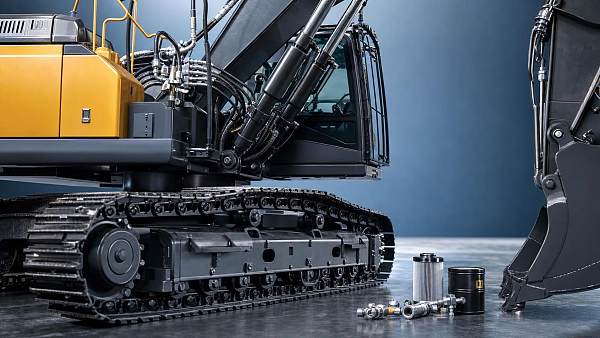
Hydraulic System Warnings
- Slow actuation or weak breakout force
- Foaming oil or milky fluid appearance
- Jerky cylinder movement or uneven response
- Pump whining, rising case drain, or hot return lines
These signs often point to contamination, aeration, internal leakage, or pump wear.
Engine and Cooling Warnings
- Hard starting, rough idle, or power drop under load
- Black, blue, or white exhaust changes
- Frequent fan engagement or rising coolant temperature
- Oil dilution, coolant loss, or pressure imbalance
When these issues appear together, the downtime risk rises fast.
Structure, Undercarriage, and Lifting Warnings
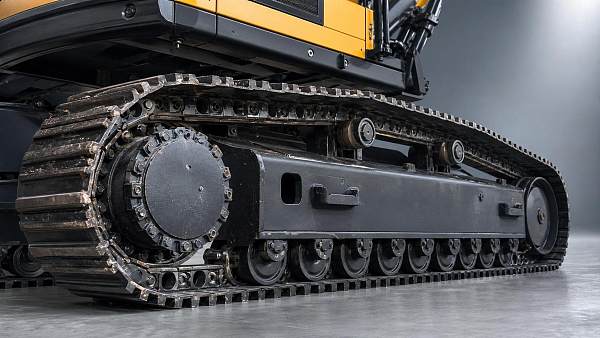
- Uneven track wear or abnormal sprocket contact
- Boom, stick, or frame cracks near stress points
- Loose pins, bushing play, or abnormal vibration
- Wire rope birdcaging, crushing, or corrosion
For crawler cranes, excavators, and mining fleets, these are not cosmetic issues.
How Downtime Risks Multiply
Downtime is rarely just a repair event.
It spreads across labor planning, rental substitution, site coordination, and customer trust.
That is why heavy equipment maintenance must be tied to operational risk, not only workshop tasks.
- A minor hose leak becomes oil loss and heat buildup.
- Heat buildup damages seals and lowers hydraulic efficiency.
- Poor efficiency increases cycle time and fuel burn.
- The machine misses output targets and stops unexpectedly.
- The site loses production while waiting for parts and labor.
This also means a smart checklist should rank components by downtime impact.
Hydraulic pumps, final drives, swing systems, cooling packs, and structural weld zones usually deserve priority attention.
Building a Better Heavy Equipment Maintenance Routine
A strong routine is simple enough to repeat and detailed enough to catch risk.
In practice, the most effective heavy equipment maintenance routine includes five habits.
- Use hour-based and condition-based triggers together.
- Record temperature, pressure, and fluid trends, not only pass or fail results.
- Separate urgent defects from monitor-only observations.
- Link each finding to a recommended action window.
- Review repeat failures by machine model, site, and operating pattern.
This is where field intelligence becomes useful.
At a broader industry level, platforms like TF-Strategy show why maintenance decisions should connect technical data with application context.
A tunnel machine, a mining excavator, and a crawler crane may share principles, but their stress patterns are very different.
Checklist Priorities by Equipment Environment
Heavy equipment maintenance should always reflect the environment where the asset works.
Dust-Heavy Mining Sites
Focus on filtration, cooling pack cleanliness, undercarriage wear, and crack inspection around high-load structures.
Tunneling and Confined Underground Work
Watch hydraulic heat, moisture contamination, hose abrasion, electrical integrity, and sensor reliability.
Heavy Lifting Projects
Pay close attention to ropes, sheaves, boom connections, slew systems, and load moment indicators.
High-Temperature or High-Altitude Sites
Shorten service intervals for cooling, air intake, fuel quality, and fluid condition monitoring.
Final Action Checklist
If you want better results from heavy equipment maintenance, start with consistency.
Then improve the quality of what gets checked, recorded, and escalated.
- Review OEM intervals against actual site severity.
- Standardize daily and weekly inspection points.
- Treat heat, leaks, noise, and contamination as early risk signals.
- Prioritize parts that create the biggest downtime exposure.
- Track recurring issues and adjust the checklist over time.
The strongest heavy equipment maintenance programs are never static.
They evolve with machine data, workload changes, and field service feedback.
When the checklist is practical and the response is timely, uptime improves, repair costs fall, and every machine delivers more value over its working life.
Related News
 Oct 24, 2026Choosing Lifting Equipment for Middle East Petrochemical Plants in Hazardous AreasExplore petrochemical lifting equipment Middle East plants can rely on. Compare hazardous-area certification, capacity, and heat limits to make informed procurement decisions.
 Oct 23, 2026Selecting Lifting Equipment for Nuclear Component Transport: Key Safety CriteriaSelecting lifting machinery for nuclear component transport? Discover essential safety criteria, load control checks, and supplier requirements to guide confident procurement.
 Oct 22, 2026Tunnel Boring Machines in Southeast Asia: EPB vs. Slurry for Soft GroundCompare tunnel boring machines Southeast Asia projects rely on: EPB vs. slurry for soft ground. Discover how groundwater, settlement risks, and spoil handling shape the right choice.
 Oct 21, 2026Choosing Tunneling Equipment for the Middle East: Rock, Soil, and GroundwaterCompare underground tunneling equipment Middle East projects need. Explore rock, soil, groundwater, and TBM options to reduce risk and make confident procurement decisions.

Hydraulic Power Analyst
Weekly Insights
Stay ahead with our curated technology reports delivered every Monday.